


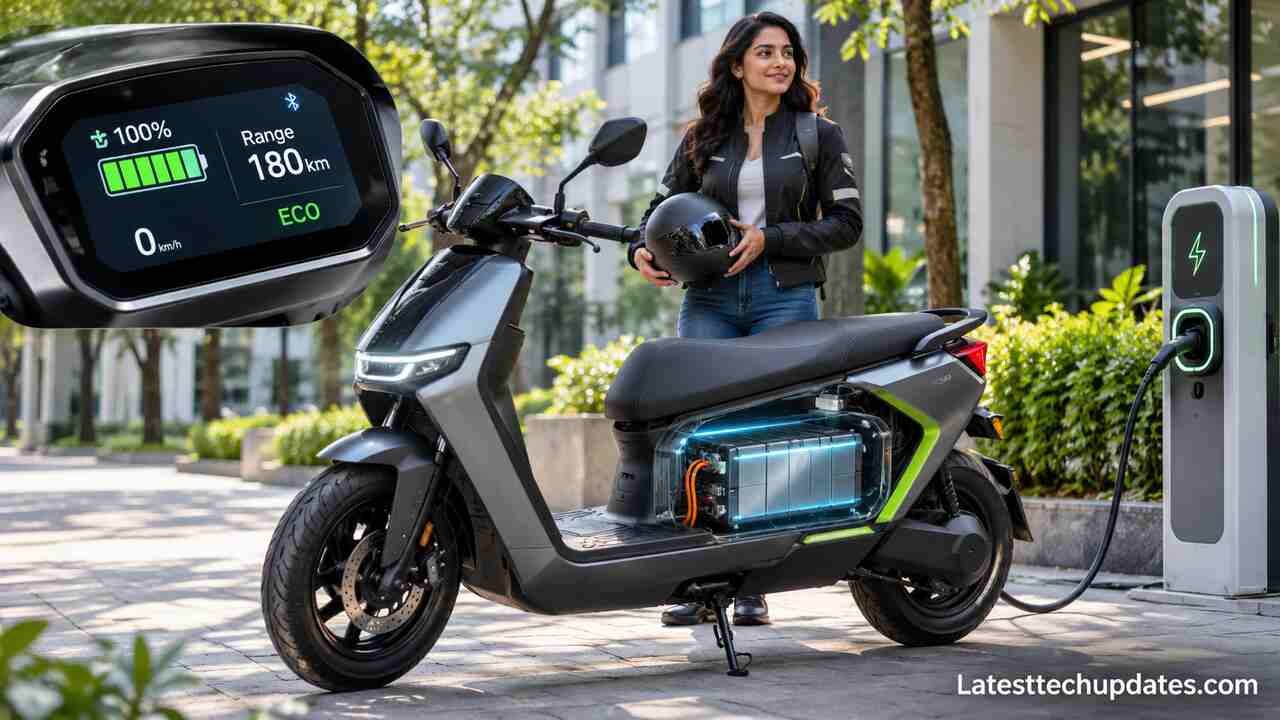
Battery innovation is one of the most significant technological developments in electric bikes. Modern lithium-ion batteries offer a combination of energy storage capacity, manageable weight, and rechargeable performance.
Manufacturers are also improving battery management systems to monitor voltage, temperature, and charging conditions. These developments help improve battery reliability and protect electrical components.
Similar advancements in battery integration and energy efficiency are shaping the wider electric mobility industry, as demonstrated by the technological competition between BYD and Tesla.
However, an electric bike’s actual riding range depends on battery capacity, rider weight, terrain, temperature, and the selected pedal-assist level.
Smart Connectivity and Real-Time Ride Monitoring
Connected electric bikes increasingly incorporate Bluetooth, GPS tracking, digital displays, and smartphone applications. These features allow riders to monitor battery levels, track riding distances, plan routes, and receive maintenance notifications on compatible models.
The underlying technology shares similarities with vehicle telematics systems, which collect and analyze transportation data to provide insights into vehicle usage and performance.
Some advanced e-bikes also offer movement alerts, electronic locking, and location tracking. These features can support theft prevention, although they should not replace a reliable physical bike lock.
Integration of Electric Bikes Into Smart Cities
Electric bikes can support urban mobility by providing an alternative to cars for suitable short-distance journeys. Their relatively compact size makes them practical for commuting, local deliveries, and connecting with public transportation.
As urban transportation becomes increasingly connected, technologies such as digital curb management systems can help cities organize shared transportation spaces, parking areas, and delivery zones.
Dedicated cycling infrastructure, secure parking, and accessible charging facilities remain important factors in supporting wider e-bike adoption.
Sustainable Energy and Electric Transportation
Electric bikes produce no direct exhaust emissions while operating under electric assistance. Their overall environmental impact, however, also depends on electricity generation, battery manufacturing, transportation, and end-of-life recycling.
Using electricity generated from renewable sources can help reduce the emissions associated with charging electric transportation.
Ongoing developments in alternative energy sources could further support the transition toward lower-emission transportation systems.
Replaceable batteries, durable components, and responsible recycling can also contribute to a longer and more sustainable product life cycle.
The Future of Electric Bike Technology
The future of electric bikes is likely to involve more efficient motors, improved battery safety, integrated sensors, smarter pedal-assist systems, and better connectivity.
As the broader transportation industry evolves, the shift from traditional and hybrid vehicles to electric transportation demonstrates the growing importance of energy efficiency and electrification.
Future e-bike innovations should focus not only on performance but also on affordability, repairability, rider safety, and long-term reliability.
For everyday riders, the most valuable technological improvements will be those that make electric bikes more dependable, comfortable, and practical without introducing unnecessary complexity.
