


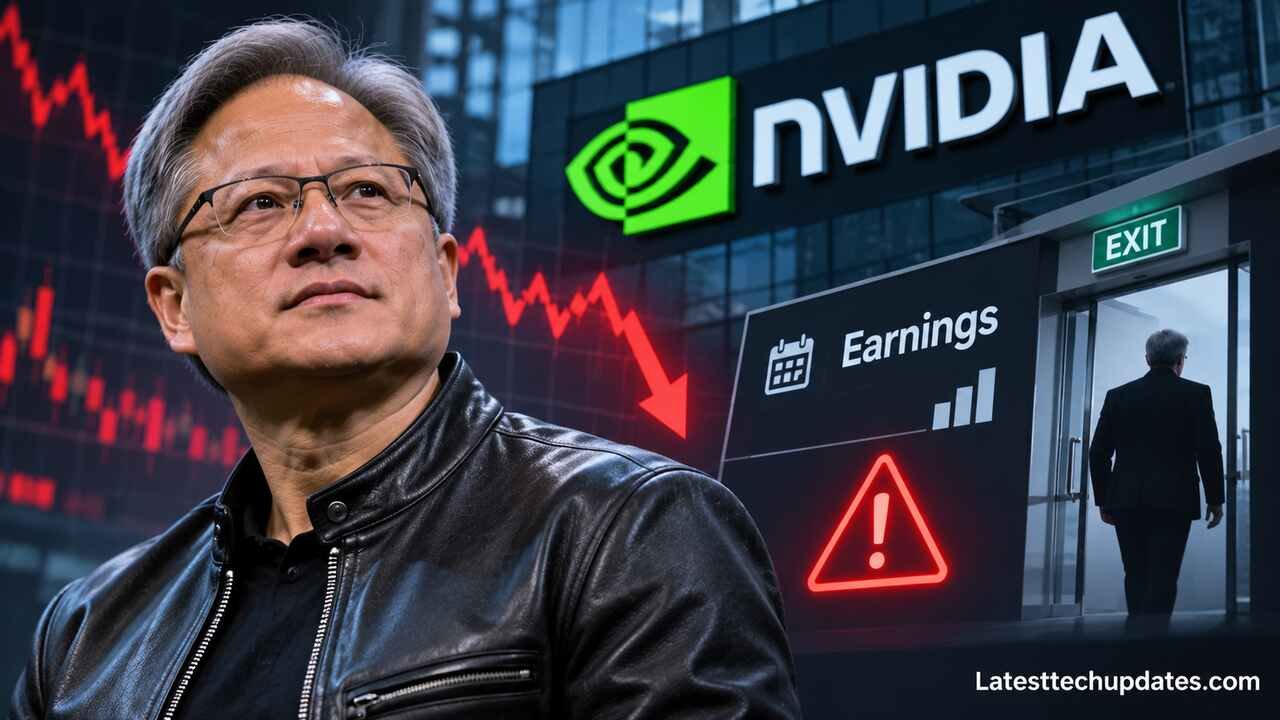
Nvidia will report its third-quarter fiscal 2027 earnings on Tuesday, November 17, 2026, as falling share prices, Jensen Huang’s resignation and uncertainty over U.S. semiconductor export policies put the chipmaker under growing pressure.
Wall Street analysts expect revenue of approximately $108.85 billion and earnings of $2.47 per share, according to MarketBeat. Beyond those figures, investors will be looking for reassurance that Nvidia can maintain its AI-driven growth under interim CEO Colette Kress.
Nvidia Earnings: What Wall Street Expects
According to Nvidia’s official earnings announcement, the company will release its results at approximately 4:20 p.m. ET on November 17, followed by an earnings conference call at 5 p.m. ET.
Analyst expectations remain high despite recent market volatility.
| Financial metric | Reported or expected value |
|---|---|
| Q3 FY2026 revenue | $57.01 billion |
| Q2 FY2027 revenue | $96.22 billion |
| Q3 FY2027 expected revenue | $108.85 billion |
| Q3 FY2027 expected EPS | $2.47 |
Source: MarketBeat and Nvidia financial disclosures. Third-quarter FY2027 estimates are forecasts, not reported results.
Nvidia’s second-quarter financial results showed revenue of $96.2 billion, representing annual growth of 106%. Data center revenue reached $89 billion, up 117% from the same period a year earlier.
The company’s August guidance projected third-quarter revenue of $108 billion, plus or minus 2%.
Nvidia Stock Slides Ahead of Earnings
Nvidia shares closed at $162.85 on Friday, November 13, following a sharp decline from their October 6 record high. The company has lost more than 30% of its share value since that peak.
According to Reuters, Nvidia’s forward price-to-earnings ratio reached approximately 12 on November 12, its lowest valuation by that measure since 2012.
The selloff reflects concerns about the sustainability of AI infrastructure investment, financing risks and the company’s leadership transition.
Although analysts continue to anticipate substantial revenue growth, Nvidia’s fourth-quarter guidance could be particularly important in determining how investors respond to Tuesday’s results.
Jensen Huang’s Resignation Creates Leadership Uncertainty
Nvidia announced its leadership transition on November 12. A separate SEC filing confirmed that the board accepted Jensen Huang’s resignation on November 11.
Colette Kress, who has served as Nvidia’s chief financial officer since 2013, has been appointed interim CEO while retaining her existing financial responsibilities. Harvey C. Jones has been named chairman of the board.
The leadership change marks a turning point for Nvidia, which Huang co-founded in 1993.
On November 15, Reuters reported that Huang was discussing a potential return with allies, citing the Financial Times.
Support for his reinstatement has also grown among technology industry figures, with Elon Musk publicly backing Jensen Huang’s return to Nvidia.
However, Nvidia has not officially announced Huang’s reinstatement or appointed a permanent successor.
AI Chip Demand and China Export Restrictions Remain Key Risks
Nvidia’s data center business remains its primary growth engine, supported by demand for accelerated computing from cloud providers, AI developers and enterprise customers.
However, the company’s August financial outlook excluded data center computing revenue from China, underscoring the uncertainty surrounding access to the Chinese market.
Huang’s departure has introduced further questions about Nvidia’s role in international technology policy, particularly ahead of Trump’s China trip and discussions over AI chip export restrictions.
Beyond hardware, technologies such as Nvidia Nemotron 3 Nano Omni demonstrate the company’s expanding involvement in AI software and multimodal computing.
Maintaining investment across these technologies while managing regulatory and financial risks will be an important challenge for Nvidia’s new leadership.
What Investors Will Watch in Nvidia’s Earnings Report
Tuesday’s earnings announcement will be closely examined for five developments:
- Revenue and earnings: Whether Nvidia meets Wall Street’s quarterly expectations.
- Data center demand: Whether cloud providers continue expanding their AI infrastructure investments.
- Leadership stability: Updates on the board’s search for a permanent CEO.
- China export restrictions: Potential implications for international semiconductor sales.
- Fourth-quarter guidance: Management’s expectations for future revenue and profitability.
Nvidia’s results also come during a significant week for the wider AI industry. Reuters reported on November 16 that Anthropic is expected to price its initial public offering on Wednesday, ahead of a planned Thursday Nasdaq debut.
For Nvidia, the immediate test is whether its financial outlook can reassure investors about the strength of AI chip demand and the company’s ability to maintain growth through its leadership transition.
