


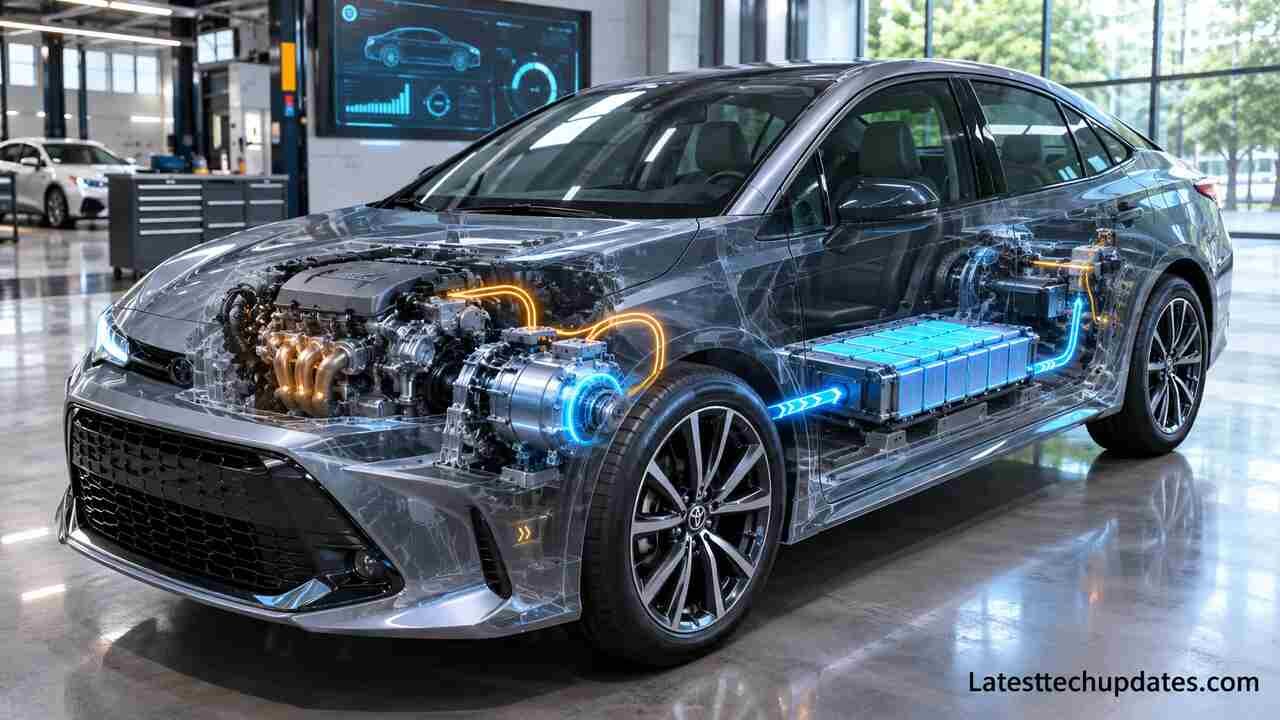
Hybrid cars combine an internal combustion engine with electric motors, rechargeable batteries and intelligent power management systems to improve fuel efficiency and reduce fuel consumption. Technologies such as regenerative braking, automatic start-stop systems and electric motor assistance help vehicles use energy more efficiently.
However, not all hybrid vehicles operate the same way. The CUPRA Formentor e-Hybrid and Ford Puma EcoBoost Hybrid demonstrate how different hybrid technologies meet different driving requirements.
Understanding the Technology Behind Hybrid Cars
Hybrid vehicles use electrical energy alongside conventional fuel to reduce the workload placed on the combustion engine. Depending on the powertrain design, the electric motor can assist acceleration or independently power the vehicle.
Modern hybrids represent an important development in advanced technology, particularly in automotive engineering, energy recovery and vehicle automation.
The effectiveness of hybrid technology depends on battery capacity, motor output, driving conditions and how efficiently the vehicle distributes power between its components.
Key Technologies Used in Hybrid Cars
1. Hybrid Powertrain Systems
A hybrid powertrain combines a combustion engine, an electric motor, a battery pack and electronic control systems.
During acceleration, the electric motor can provide additional torque, reducing the demand on the engine. Certain full hybrids and plug-in hybrids can also operate independently on electrical power under suitable conditions.
These developments form part of the wider evolution of modern automotive technologies, where manufacturers integrate electronics and software with traditional mechanical systems.
2. Regenerative Braking
Regenerative braking recovers some of the energy that would otherwise be lost as heat when a vehicle slows down.
The electric motor functions as a generator during deceleration, converting movement into electrical energy that can be stored in the battery.
This technology is particularly useful in urban environments, where frequent braking creates more opportunities for energy recovery. It can also reduce wear on conventional brake components, although traditional friction brakes remain necessary.
3. Advanced Battery Technology
Hybrid vehicles commonly use lithium-ion or nickel-metal hydride batteries to store electrical energy.
Conventional hybrid batteries receive energy from regenerative braking and the combustion engine. Plug-in hybrids have larger battery packs that can also be charged using an external electricity supply.
Battery management systems monitor temperature, voltage and charging conditions to maintain reliable performance and protect battery health.
4. Intelligent Energy Management Systems
Hybrid vehicles use electronic control units to determine how power should be distributed between the combustion engine, electric motor and battery.
These systems assess accelerator input, vehicle speed, battery charge and driving conditions. Their objective is to deliver the required performance while minimizing unnecessary energy consumption.
Drivers generally do not need to manage these transitions manually.
5. Automatic Start-Stop Technology
Start-stop technology reduces unnecessary fuel consumption by temporarily switching off the combustion engine when operating conditions permit.
When the driver prepares to move again, the system restarts the engine automatically. This feature is particularly beneficial in congested traffic and situations involving frequent stops.
Unlike electric-only driving, start-stop technology does not necessarily mean that a vehicle can move using electricity alone.
Different Types of Hybrid Car Technology
Hybrid vehicles are generally divided into three main categories: mild hybrids, full hybrids and plug-in hybrids.
According to the U.S. Department of Energy, these systems differ in their electrical capabilities, battery configurations and methods of delivering power.
| Feature | Mild Hybrid (MHEV) | Full Hybrid (HEV) | Plug-In Hybrid (PHEV) |
|---|---|---|---|
| Combustion engine | Yes | Yes | Yes |
| Electric motor assistance | Yes | Yes | Yes |
| Electric-only driving | No | Limited | Yes |
| External charging | No | No | Yes |
| Relative battery size | Small | Medium | Large |
| Regenerative braking | Yes | Yes | Yes |
| Example | Ford Puma EcoBoost | Toyota Prius HEV | CUPRA Formentor e-Hybrid |
Drivers comparing different powertrain options can also explore the differences between traditional, hybrid and electric vehicles before choosing a vehicle.
The CUPRA Formentor: Plug-In Hybrid Technology
The CUPRA Formentor e-Hybrid combines a turbocharged petrol engine with an electric motor and rechargeable battery. Its plug-in hybrid design allows drivers to use electrical power for shorter journeys while retaining a combustion engine for extended travel.
People considering this crossover SUV can explore CUPRA Formentor leasing on AutoTrader to compare available options.
1. Plug-In Hybrid Powertrain
The Formentor e-Hybrid features a battery that can be charged using compatible home or public charging equipment.
When sufficient battery charge is available, the vehicle can operate electrically under suitable driving conditions. The petrol engine provides additional power or takes over when necessary.
Regular charging helps drivers achieve greater fuel savings from the plug-in hybrid system.
2. Advanced Driver Assistance Systems
Depending on the model year and trim, the CUPRA Formentor offers driver assistance technologies such as adaptive cruise control, lane assistance and parking sensors.
These systems use cameras, sensors and electronic controls to support the driver. However, they do not eliminate the need for driver attention or responsibility.
3. Infotainment and Connectivity
The Formentor integrates digital displays, smartphone connectivity, navigation and vehicle management functions.
Depending on the equipment available, drivers can access charging information, driving modes and energy consumption data through the vehicle’s digital interface.
4. Performance and Energy Efficiency
The combination of petrol and electric power allows the Formentor e-Hybrid to deliver responsive acceleration while reducing fuel consumption under suitable conditions.
According to the official CUPRA Formentor specifications, electric driving capabilities and performance vary by powertrain configuration.
Actual efficiency depends on battery charge, driving habits, temperature and journey length.
The Ford Puma: Mild Hybrid Technology
The Ford Puma EcoBoost Hybrid takes a different approach to vehicle electrification. Its mild hybrid system supports the petrol engine rather than independently driving the vehicle using battery power.
Unlike the CUPRA Formentor e-Hybrid, the Puma EcoBoost Hybrid does not require external charging.
1. 48-Volt Mild Hybrid System
The Ford Puma EcoBoost Hybrid uses a 48-volt electrical system and an integrated starter-generator to provide additional assistance to its petrol engine.
The system recovers energy during deceleration and uses stored electrical energy to support engine performance when required.
Ford confirms that the Puma EcoBoost mild hybrid cannot operate solely on electricity.
2. Start-Stop and Energy Recovery
The Puma’s mild hybrid technology supports automatic engine shutdown and restart under suitable conditions.
Energy recovered during braking helps power the electrical assistance system, reducing unnecessary demand on the combustion engine.
These features can improve efficiency during everyday driving, particularly in stop-and-go traffic.
3. Efficient Power Management
The Ford Puma’s electronic control systems coordinate the petrol engine and electrical assistance based on driving requirements.
Rather than switching to independent electric propulsion, the mild hybrid system provides additional support to the engine and manages recovered energy.
4. Practicality for Everyday Driving
The Puma combines hybrid assistance with the convenience of conventional petrol refueling.
This makes it a practical option for drivers who want improved fuel efficiency but lack access to home charging facilities or prefer not to plug in their vehicles regularly.
CUPRA Formentor vs. Ford Puma Hybrid Technology
Although both vehicles incorporate electric power, their hybrid systems serve different purposes.
| Feature | CUPRA Formentor e-Hybrid | Ford Puma EcoBoost Hybrid |
|---|---|---|
| Hybrid type | Plug-in hybrid | Mild hybrid |
| External charging | Supported | Not required |
| Electric-only driving | Supported | Not supported |
| Battery capacity | Larger | Smaller |
| Electric motor function | Propulsion and assistance | Engine assistance |
| Ideal driving conditions | Regularly charged daily journeys | Everyday driving without charging |
| Primary benefit | Greater electric driving capability | Convenient fuel efficiency improvements |
The Formentor e-Hybrid is more suitable for drivers who regularly charge their vehicle and want electric driving capabilities. The Puma offers a simpler alternative for motorists who prefer conventional refueling.
Benefits and Limitations of Hybrid Car Technology
Hybrid technology offers several advantages, but its benefits depend on vehicle design and driving habits.
| Advantages | Limitations |
|---|---|
| Improved fuel efficiency | Potentially higher purchase price |
| Energy recovery during braking | Battery degradation over time |
| Reduced engine idling | More complex powertrain components |
| Lower fuel consumption in suitable conditions | Fuel savings vary by driving pattern |
| Electric-only driving in compatible models | Plug-in hybrids benefit from regular charging |
Hybrid vehicles still require conventional engine maintenance, including oil changes and other manufacturer-recommended services.
When selecting reliable auto repair services, hybrid vehicle owners should prioritize technicians with appropriate electrical system training and diagnostic equipment.
The Future of Hybrid Car Technology
The future of hybrid vehicles is likely to involve improvements in battery energy density, power electronics, thermal management and intelligent energy distribution.
Automotive manufacturers continue to investigate ways to reduce vehicle weight, improve battery durability and increase the efficiency of electric motors.
Hybrid powertrains also form part of a broader transition toward alternative automotive energy sources, alongside battery-electric vehicles and other emerging propulsion technologies.
However, hybrid vehicles will continue to differ in their environmental benefits. Battery manufacturing, electricity generation, vehicle size and fuel consumption all influence their overall environmental impact.
Conclusion
The technology behind hybrid cars combines conventional engine power with electric assistance, energy recovery and intelligent power management to improve vehicle efficiency.
The CUPRA Formentor e-Hybrid and Ford Puma EcoBoost Hybrid illustrate two distinct approaches to electrification. While the Formentor supports electric-only journeys and external charging, the Puma focuses on improving petrol engine efficiency without changing traditional refueling habits.
Choosing the right hybrid vehicle depends on your daily driving distance, charging access, budget and performance requirements. Understanding these differences helps you select a powertrain that delivers practical benefits rather than relying solely on the hybrid label.
FAQ’s
What technology is used in hybrid cars?
Hybrid cars use combustion engines, electric motors, rechargeable batteries, regenerative braking, power electronics and electronic energy management systems to improve driving efficiency.
Do all hybrid cars need charging?
No. Mild hybrids and conventional full hybrids do not require external charging. Plug-in hybrids can be connected to external charging equipment.
Can hybrid cars run without petrol?
Some full hybrids and plug-in hybrids can travel on electric power under suitable conditions. Mild hybrids cannot independently propel the vehicle using electricity alone.
What happens when a hybrid battery runs low?
The vehicle’s control system generally adjusts power delivery and uses the combustion engine to continue operating and replenish or maintain the necessary battery charge.
Are hybrid cars good for long-distance driving?
Yes. Hybrid cars retain conventional refueling capabilities, making them suitable for longer journeys. However, their fuel efficiency varies depending on speed, vehicle design and road conditions.
Which is better, mild hybrid or plug-in hybrid?
A mild hybrid is suitable for drivers who want electrical assistance without external charging. A plug-in hybrid is more suitable for drivers who can charge regularly and want to complete shorter journeys using electricity.
