

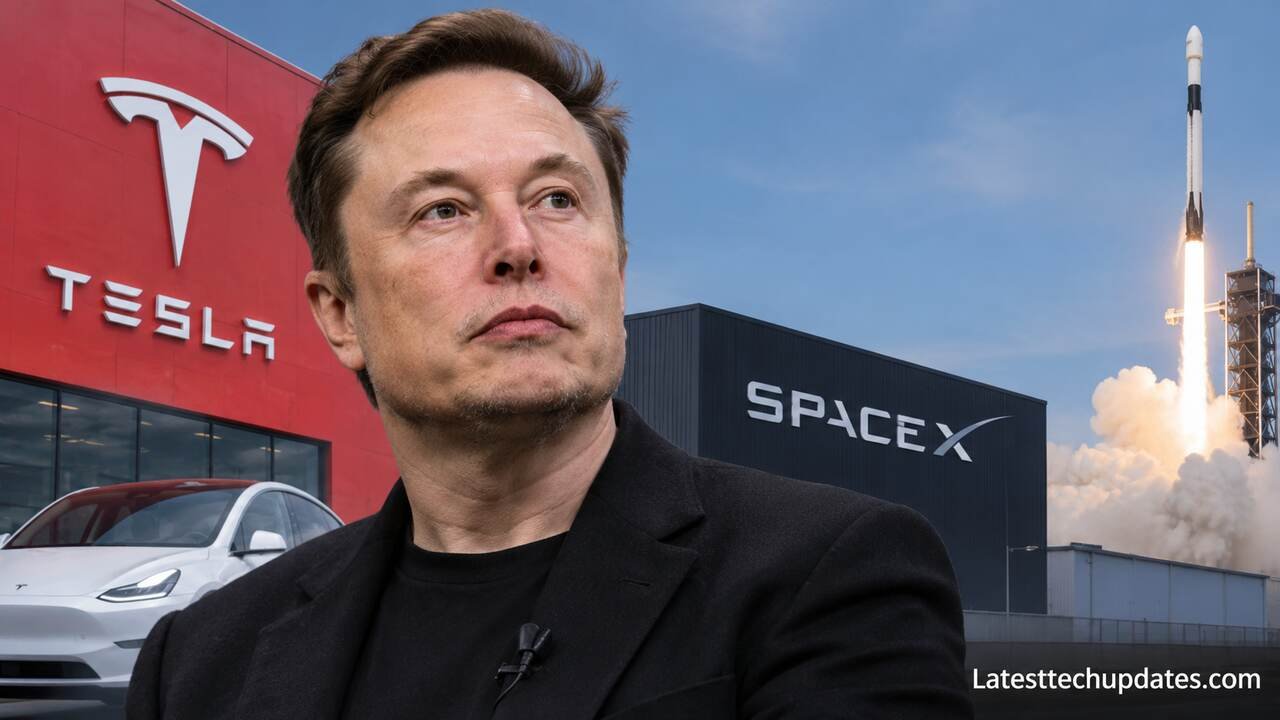
Elon Musk’s biographer Walter Isaacson believes a merger between Tesla and SpaceX is increasingly likely as the companies deepen their collaboration in artificial intelligence and semiconductor manufacturing. Speaking on CNBC’s Squawk Box on November 13, Isaacson suggested that investors could learn more during Tesla’s annual shareholder meeting on December 3, 2026. Neither company has announced a formal merger agreement.
Walter Isaacson Sees a Strong Case for a Tesla-SpaceX Merger
Isaacson described the prospect of keeping Tesla and SpaceX separate as “almost inconceivable,” citing their increasingly interconnected technological ambitions.
According to Benzinga’s coverage of the interview, Isaacson believes their joint semiconductor manufacturing operations strengthen the case for combining the businesses.
A merger could consolidate Musk’s interests in electric vehicles, autonomous driving, humanoid robotics, satellite communications, aerospace engineering and AI infrastructure under one corporate structure.
Terafab Chip Manufacturing Project Fuels Merger Talks
Central to Isaacson’s argument is Terafab, a joint semiconductor manufacturing initiative involving Tesla and SpaceX.
Tesla needs specialized processors for its Full Self-Driving technology and Optimus humanoid robots, while SpaceX requires substantial computing capacity for its AI infrastructure.
The project also comes amid growing concerns about AI infrastructure expenses, an issue previously highlighted by Elon Musk’s explanation of high AI costs behind Grok Bot usage limits.
According to Reuters, Musk expects Terafab to produce its first test chip around May or June 2027, with volume production targeted for the third quarter of 2028.
Could Tesla and SpaceX Reduce Their Dependence on Nvidia?
Developing custom AI processors could give Musk’s companies greater control over chip design and hardware availability.
Isaacson expects Nvidia chip deliveries to continue. However, developing specialized processors internally could provide an alternative supply channel for autonomous vehicles, robotics and other computing applications.
Securing reliable semiconductor supplies remains an industry-wide concern, particularly amid regulatory uncertainty surrounding Nvidia’s AI chip exports to China.
Why Tesla’s December 3 Shareholder Meeting Matters
Tesla’s official SEC proxy statement confirms that its annual shareholder meeting will take place on December 3, 2026, at 3 p.m. Central Time, at Gigafactory Texas in Austin and online.
Isaacson expects further clarity about the potential merger during the meeting. However, Tesla’s published agenda does not include a merger approval vote.
The meeting could offer insight into Musk’s corporate strategy, but investors should not interpret it as a confirmed merger announcement.
What a Tesla-SpaceX Merger Could Mean for Investors
Reuters reported on November 12, citing Bloomberg News, that merger negotiations were progressing, with a potential announcement in December or early 2027.
Musk previously confirmed that both companies had formed independent director committees to examine a possible combination. Regulatory scrutiny could complicate the transaction because of SpaceX’s U.S. defense contracts and Tesla’s reliance on China.
While the companies’ expanding technological collaboration strengthens the strategic argument for a merger, its financial terms, structure and approval timeline remain uncertain.
