


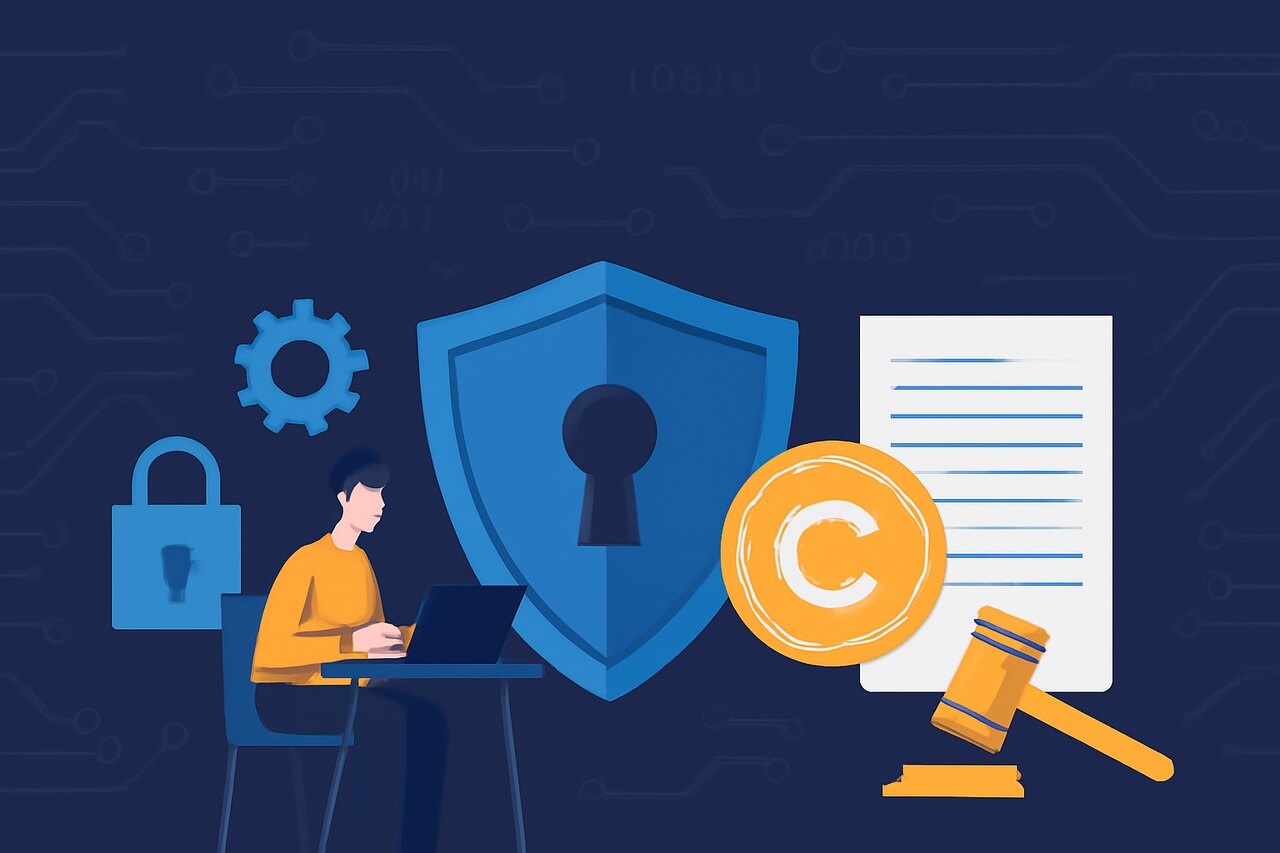
The way businesses share and use technology is more important than ever in today’s digital world. The development, distribution, and maintenance of software, systems, and even security frameworks are based on licensing, which is more than just legalese to the open-source and cybersecurity communities.
When security experts discuss licensing, they are referring to the regulations that determine who is permitted to use a tool, how they may use it, and under what circumstances. It is the contract between the end user and the creator (or rights holder), and it has a direct bearing on a business’s capacity to remain safe, legal, and competitive.
What Licensing Means in the Framework of Cybersecurity
A license is essentially a permission slip. This “permission slip” in software and cybersecurity permits people or organizations to use, alter, and occasionally share technology or code that has been created by others.
Consider it as a formal handshake between:
- The licensor is the individual who created or possesses intellectual property (IP).
- The licensee is the person or organization that has been granted authorization to use that intellectual property.
In security environments, licensing governs:
- Whether a tool can be adapted for in-house defense systems.
- If threat detection code can be integrated into commercial offerings.
- How shared open-source libraries can be modified to close vulnerabilities.
Why Licensing Matters for Security Teams
A strategic security consideration, licensing is much more than just a legal necessity.
- Access to Innovation
Many cutting-edge cybersecurity tools are only available under specific licenses, especially in the open-source ecosystem. You can integrate them without running any legal risks if you are aware of the license terms.
- Observance and Risk Control
A license agreement violation could lead to fines, legal action, or the seizure of essential security equipment. The reputation of an industry may suffer and audits may result from noncompliance with regulations.
- Faster Threat Response
Security teams can quickly patch vulnerabilities or modify tools to counter new attack methods thanks to some licenses that permit code modification and redistribution.
Cybersecurity Licensing Model Types
Though the precise language varies, most licenses fall into one of two main categories: proprietary or open-source. Your security posture will be affected differently by each.
Exclusive Licensing
With proprietary licenses, the licensor maintains firm control. These agreements:
- Limit who has access to the source code.
- Limit modifications.
- Frequently call for subscriptions or ongoing fees.
Proprietary licensing for enterprise security can result in guaranteed updates and consistent vendor support, which are essential for mission-critical defenses.
Licensing for Open Source
More permissive, open-source licenses such as the GPL, MIT, or Apache frequently provide the following freedoms:
- See the source code and make changes.
- Distribute modified versions.
- Integrate into custom solutions.
However, open-source doesn’t mean “no rules.” It can be a double-edged sword for companies managing sensitive configurations because some licenses require you to share changes publicly.
Key Licensing Considerations for Security Leaders
Leaders should take into account the following when assessing security tools, whether they are community-built or commercial:
- Use Scope – Does the license allow for integration into commercial products, internal use, or resale?
- Modification Rights – Can your team adapt the software for unique threat environments?
- Redistribution Rules – Are you allowed to share modified versions within partner networks?
- Security Requirements – Does the license require informing the community about vulnerabilities?
- Expiration and Renewal – Are there any deadlines that might affect continued protection?
Licensing Explained in Real-World Security Deployments
In practice, licensing can determine how quickly your organization responds to cyber threats. For instance:
- New Indicators of Compromise (IOCs) can be quickly incorporated into open-source threat intelligence platforms licensed under permissive terms.
- In order to ensure evolving protection, email security gateways offered under a proprietary license may incorporate AI-powered threat detection and continuous signature updates.
Understanding the subtleties of licensing is just as crucial for IT decision-makers as selecting the best firewall or endpoint detection system. The incorrect license may require costly legal renegotiations, restrict feature integration, or slow down response times.
For a deeper dive into software agreements in broader business technology contexts, you can explore this comprehensive resource on licensing explained.
Open Source and Licensing: The Security Trade-Off
From intrusion detection systems to cryptographic libraries, the open-source community has long been a driving force in cybersecurity innovation. However, transparency also entails accountability:
- When there is transparency, both attackers and defenders can see the vulnerabilities.
- Although it’s not always guaranteed, community-driven patching can be quick.
Knowing the license terms makes it easier to assess whether, in your particular setting, the advantages of agility and teamwork outweigh the risks.
How Licensing Impacts Email Security Solutions
Email continues to be the most popular attack vector for ransomware, phishing, and business email compromise (BEC). Licensing affects:
- Integration – Can you plug a licensed spam filter into your cloud email system?
- Customization – Are you allowed to tweak machine learning rules to better detect targeted attacks?
- Interoperability – Is it prohibited by the license to combine the solution with additional security layers?
For instance, Guardian Digital creates secure email solutions that incorporate open-source technologies while carefully managing licensing, guaranteeing legal compliance and optimizing security efficacy.
Conclusion: The Importance of Licensing
Although licensing may not make as much news as a zero-day exploit, it is the foundation for everything from your incident response time to the security tools you choose.
Knowing how licenses operate enables organizations to:
- Accelerate secure technology adoption.
- Steer clear of legal pitfalls.
- Create robust, flexible defenses against changing online threats.
The best tool in the world won’t help if you can’t use it legally, so licensing knowledge is just as important in the rapidly evolving field of cybersecurity as technical expertise.
