


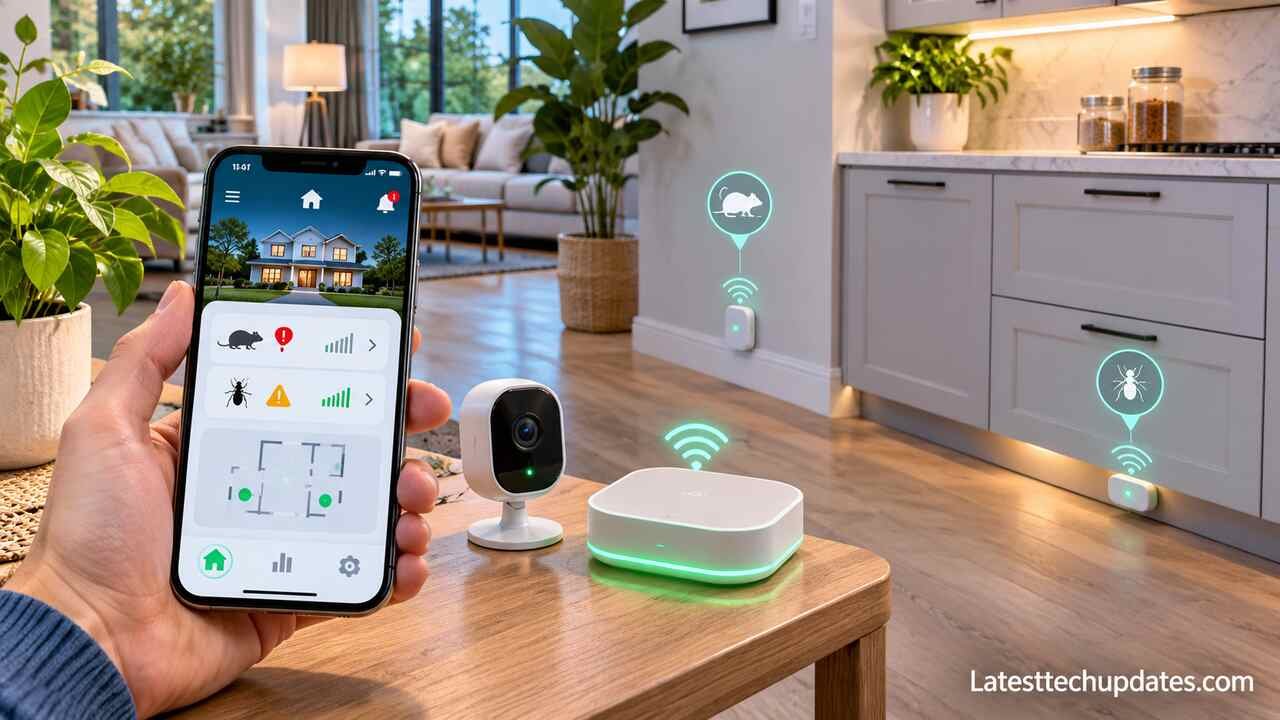
Smart home pest control devices help homeowners detect possible pest activity, monitor vulnerable areas, and respond before problems become more difficult to manage. Connected traps, motion sensors, security cameras, and humidity monitors provide useful information about areas that might otherwise go unchecked.
Although technology cannot replace professional pest control, it can improve early detection, support preventive maintenance, and help homeowners make more informed decisions about protecting their properties.
Why Use Smart Home Pest Control?
Smart home pest control helps homeowners identify potential infestations without constantly inspecting every room, garage, basement, or crawl space. Many household pests remain hidden until their populations increase or visible damage appears.
Mice may travel behind appliances or through garages without being noticed. Cockroaches can remain concealed inside dark cabinets and behind kitchen equipment, making early detection valuable for effective cockroach control.
Connected monitoring devices provide additional visibility into these areas. Instead of relying entirely on visible droppings, unusual sounds, or damaged materials, homeowners can receive notifications when a trap activates or a sensor detects unusual activity.
Smart monitoring is particularly useful for older properties, seasonal homes, rental properties, and houses with recurring moisture or pest problems. It helps homeowners focus inspections and preventive measures on areas that need attention.
How Do Smart Pest Control Devices Work?
Smart pest control devices use connected technology to detect movement, trap activation, environmental changes, or other indicators associated with potential pest activity.
Depending on the device, monitoring systems may use:
- Infrared motion sensors
- Electronic trap activation sensors
- Temperature and humidity sensors
- Acoustic and vibration detection
- Night vision cameras
- Connected insect monitoring stations
- Mobile application notifications
When a compatible device detects an event, it may transmit a notification to a smartphone through Wi-Fi, Bluetooth, or a connected smart home hub.
However, the information provided depends on the equipment. An electronic rodent trap may report a capture, while a humidity sensor only identifies environmental conditions that could attract certain pests.
Homeowners should understand this distinction before purchasing monitoring equipment. A notification indicates that an event occurred, but it does not always confirm an infestation.
Best Smart Pest Monitoring Devices for Homes
The most effective combination of pest monitoring devices depends on the type of pest, the home’s layout, and the environmental conditions that contribute to pest activity.
Smart Rodent Traps
Electronic rodent traps equipped with notification systems can alert homeowners when a device activates or records a capture.
These devices are particularly useful in garages, basements, utility rooms, and other locations where rodents may travel without being noticed.
Remote notifications reduce unnecessary inspections, although traps still require regular physical checks, cleaning, battery replacement, and maintenance.
Connected Insect Monitoring Stations
Specialized insect monitoring stations can help identify activity involving cockroaches, ants, and other crawling insects.
Depending on their design, these devices may use adhesive surfaces, optical sensors, cameras, or electronic detection systems.
Monitoring devices specifically designed for sleeping areas and furniture can also support early bed bug control, especially when combined with physical inspections.
Smart Moisture and Humidity Sensors
Humidity and water leak sensors help homeowners identify damp conditions that may attract certain insects or contribute to property damage.
Useful installation locations include bathrooms, kitchens, laundry rooms, crawl spaces, and areas around water heaters.
Monitoring outdoor water accumulation can also support mosquito control by helping homeowners identify conditions that require attention.
These sensors do not directly detect insects. Their value comes from identifying environmental risks before moisture-related problems become extensive.
Motion-Activated Security Cameras
Smart cameras with motion detection and night vision can help homeowners observe possible rodent or wildlife activity around garages, exterior doors, garden areas, and roof access points.
Recorded footage may reveal when animals are active and where they approach the property.
However, ordinary security cameras may struggle to detect small insects or rodents moving outside their field of view. Camera positioning and motion sensitivity significantly affect their usefulness.
Termite Monitoring Stations
Professional termite monitoring systems help identify termite activity around vulnerable properties. Some specialized systems incorporate electronic monitoring capabilities.
Homeowners living in termite-prone regions may benefit from these devices when they are used alongside professional inspections.
Ordinary motion cameras and moisture sensors cannot reliably confirm hidden termite infestations.
Comparison of Smart Home Pest Control Devices
| Device | Primary purpose | Suitable location | Main limitation |
|---|---|---|---|
| Smart rodent trap | Detect rodent captures | Garage or basement | Requires maintenance |
| Motion sensor | Detect movement | Attic or utility room | Possible false alerts |
| Smart camera | Record visible animal activity | Exterior entrances | Limited detection area |
| Humidity sensor | Identify damp conditions | Bathroom or crawl space | Cannot confirm pests |
| Water leak detector | Detect plumbing leaks | Beneath sinks | Limited to moisture detection |
| Connected insect monitor | Track targeted insect activity | Kitchen or pantry | Detection varies by device |
| Termite monitoring station | Identify targeted termite activity | Property perimeter | May require professional servicing |
A small collection of appropriately positioned devices is often more practical than installing multiple gadgets without identifying the actual pest risks.
How Smart Pest Monitoring Tracks Pest Activity
Smart pest monitoring systems create activity records by collecting information from connected devices installed throughout a property.
Depending on the equipment, homeowners may receive notifications, timestamps, photographs, video recordings, or environmental readings through a mobile application.
These records can reveal recurring patterns that individual inspections might miss.
For example, repeated nighttime movement near a garage door may justify inspecting nearby gaps. Frequent humidity alerts beneath a kitchen sink may indicate a plumbing leak that needs repair.
Reliable wireless connectivity is important for remote monitoring. Some devices use Wi-Fi, while others depend on Bluetooth, Thread, or dedicated hubs. Homeowners can learn more about these wireless technologies in this guide to Wi-Fi, Bluetooth and connected-device compatibility.
Monitoring records can also help assess whether activity decreases after repairs or professional treatment. However, an absence of notifications does not guarantee that all pests have been eliminated.
Which Pests Can Smart Pest Control Devices Detect?
Different monitoring technologies are suitable for different household pests. No single device can reliably identify every type of infestation.
| Household pest | Suitable monitoring method |
|---|---|
| Mice | Electronic traps and suitable motion cameras |
| Rats | Smart rodent traps and cameras |
| Cockroaches | Specialized insect monitoring stations |
| Ants | Visual inspections and insect monitors |
| Bed bugs | Dedicated bed bug monitoring devices |
| Termites | Professional termite monitoring stations |
| Mosquitoes | Specialized insect traps and environmental monitoring |
| Squirrels | Outdoor motion cameras |
| Raccoons | Night vision security cameras |
| Silverfish | Insect monitors and humidity sensors |
General-purpose sensors may indicate movement or favorable environmental conditions without identifying the exact species.
Correct pest identification remains necessary before selecting a treatment method.
How Do Smart Pest Control Traps Work?
Smart pest control traps use electronic components to register activity when a pest enters or activates a monitoring device.
Depending on the model, a trap may capture a pest, record an activation event, take a photograph, or send a notification to a connected application.
Electronic rodent traps can be useful in locations that homeowners do not inspect regularly. Receiving an alert may help reduce the time between trap activation and servicing.
Where Should You Place Smart Pest Traps?
Placement should reflect the suspected pest’s behavior and likely travel routes.
For rodents, suitable locations may include protected areas alongside walls, behind appliances, or near visible signs of activity.
For crawling insects, appropriate monitoring locations may include lower cabinets, areas beneath sinks, food storage spaces, and sheltered corners.
The CDC’s rodent trapping guidelines recommend positioning rodent traps near signs of activity and keeping traps and bait away from children and pets.
Always follow the manufacturer’s placement instructions and avoid using devices in conditions for which they were not designed.
Benefits of Smart Pest Control Sensors
Earlier Pest Detection
Connected sensors can reveal possible pest activity in locations that homeowners rarely inspect. Earlier awareness provides an opportunity to investigate before the problem becomes more extensive.
Remote Property Monitoring
Homeowners who travel frequently or manage seasonal properties can receive updates while away, provided the monitoring equipment maintains its power and network connection.
More Targeted Inspections
Activity records help homeowners identify specific rooms, entry points, or environmental conditions that require closer inspection.
Improved Preventive Maintenance
Water leak detectors and humidity sensors can identify maintenance problems that may contribute to pest activity.
Repairing plumbing leaks, improving ventilation, and addressing damp areas can reduce conditions that attract certain pests.
Better Post-Treatment Monitoring
After professional pest treatment, connected devices can help identify recurring activity. Monitoring records can also provide pest control technicians with additional information during follow-up visits.
How to Choose Smart Pest Control Devices
Before purchasing connected pest monitoring equipment, homeowners should consider the following factors:
- Target pest: Choose equipment designed for the pest you suspect.
- Connectivity: Check whether the device requires Wi-Fi, Bluetooth, or a separate hub.
- Battery life: Consider how frequently batteries require charging or replacement.
- Detection sensitivity: Determine whether the device can detect the intended pest reliably.
- Weather resistance: Select appropriately rated equipment for outdoor or damp locations.
- Application compatibility: Confirm that the monitoring application supports your smartphone.
- Subscription costs: Check whether notifications, cloud storage, or advanced features require ongoing payments.
- Safety: Ensure traps cannot be accessed by children or pets.
- Maintenance requirements: Consider how often the equipment needs inspection and cleaning.
A device that matches a specific pest problem will generally be more useful than one selected simply because it offers numerous smart features.
Limitations of Smart Home Pest Monitoring
Connected pest control equipment has practical limitations that homeowners should understand.
Motion sensors may respond to pets or ordinary household activity. Cameras can miss animals moving outside their viewing area. Wireless devices may stop transmitting notifications during internet outages, while battery-powered monitors can become inactive when their batteries run down.
Specialized insect monitoring systems may also struggle to distinguish between different species.
Another consideration is cybersecurity. Connected cameras and monitoring devices should use secure account passwords, updated firmware, encrypted wireless networks, and multi-factor authentication where available.
The Federal Trade Commission’s guide to securing internet-connected devices provides practical recommendations for protecting connected household equipment.
Smart monitoring should therefore supplement physical inspections rather than completely replace them.
Can Smart Pest Monitoring Prevent Infestations?
Smart pest monitoring can support infestation prevention, but detection devices cannot eliminate every underlying cause of a pest problem.
Effective prevention requires addressing the conditions that allow pests to enter, survive, and reproduce.
According to the Environmental Protection Agency’s household pest control guidance, removing access to food, water, and shelter is an important part of reducing pest problems.
Homeowners should:
- Repair gaps around doors, windows, and utility openings.
- Fix plumbing leaks and persistent moisture problems.
- Store food and pet supplies in sealed containers.
- Keep garbage securely covered.
- Reduce unnecessary clutter.
- Remove standing water.
- Maintain screens and ventilation systems.
- Arrange professional inspections when necessary.
This combination of monitoring, prevention, and targeted intervention supports an integrated pest management approach.
When Smart Home Pest Control Is Not Enough
Professional pest control becomes necessary when monitoring devices indicate recurring activity, suspected structural damage, or an infestation that homeowners cannot confidently identify or manage.
Warning signs include repeated trap activations, fresh droppings, damaged food packaging, unusual scratching sounds, nesting materials, and persistent insect sightings.
If rodent waste is discovered, avoid sweeping or vacuuming it before following appropriate disinfection procedures. The CDC’s safe rodent cleanup guidelines explain how to reduce exposure during cleanup.
Professional assistance is especially valuable for termites, bed bugs, persistent rodent infestations, and pests that pose health or structural risks.
Understanding the role of service areas in effective pest control solutions can also help homeowners select providers familiar with regional pest conditions.
Smart devices can identify when something requires attention, but lasting solutions may require species identification, exclusion work, sanitation, targeted treatment, and continued monitoring.
Conclusion
Smart home pest control devices give homeowners additional visibility into potential pest problems through connected traps, motion cameras, insect monitors, and environmental sensors.
Their greatest value is helping homeowners investigate problems sooner and identify areas that need preventive maintenance. Combining suitable monitoring technology with regular inspections, property maintenance, and professional pest management provides a more practical approach to long-term home protection.
FAQ’s
Is smart home pest control effective?
Smart home pest control can be effective for monitoring targeted pest activity and identifying environmental risks. Its effectiveness depends on device selection, placement, maintenance, and the actions taken after receiving alerts.
Can smart home cameras detect mice?
Some smart cameras can capture mice moving within their detection and recording areas. Detection performance depends on camera sensitivity, positioning, lighting, and the size of the animal.
Do smart pest control devices require Wi-Fi?
Not all devices require Wi-Fi. Some use Bluetooth, dedicated wireless hubs, cellular connectivity, or local monitoring systems. Check the manufacturer’s specifications before purchasing.
Can ultrasonic pest repellers replace pest monitoring devices?
Ultrasonic repellers should not be relied upon as a substitute for proven monitoring, exclusion, and pest management methods. They generally do not provide reliable information about infestation size or location.
Can moisture sensors detect termites?
Standard moisture sensors cannot directly detect termites. They can identify damp conditions that may increase vulnerability to certain pests, but termite detection requires appropriate monitoring and inspection.
Are smart pest monitoring devices safe around children and pets?
Safety depends on the equipment and its installation. Electronic traps, traditional traps, bait stations, and other potentially hazardous devices should remain inaccessible to children and pets.
