
Highlights
- AI art delivers fast, visually polished results through data-driven algorithms, while human art delivers emotionally rich and meaningful expression through lived experiences and intentional creativity.
- AI creativity depends on pattern recognition and recombination, while human creativity depends on imagination, originality, and the ability to break existing rules.
- Emotional depth separates both forms clearly, where AI simulates emotional visuals and human creators express genuine feelings shaped by personal stories.
- Technical effort differs significantly because AI automates complex processes, while human artists invest time in mastering skills like drawing, composition, and storytelling.
- Ethical concerns arise mainly in AI art due to data usage and copyright ambiguity, while human-created work maintains clear ownership and authenticity.
- Future creative landscapes will likely combine AI efficiency with human emotional intelligence, creating a collaborative rather than competitive environment.
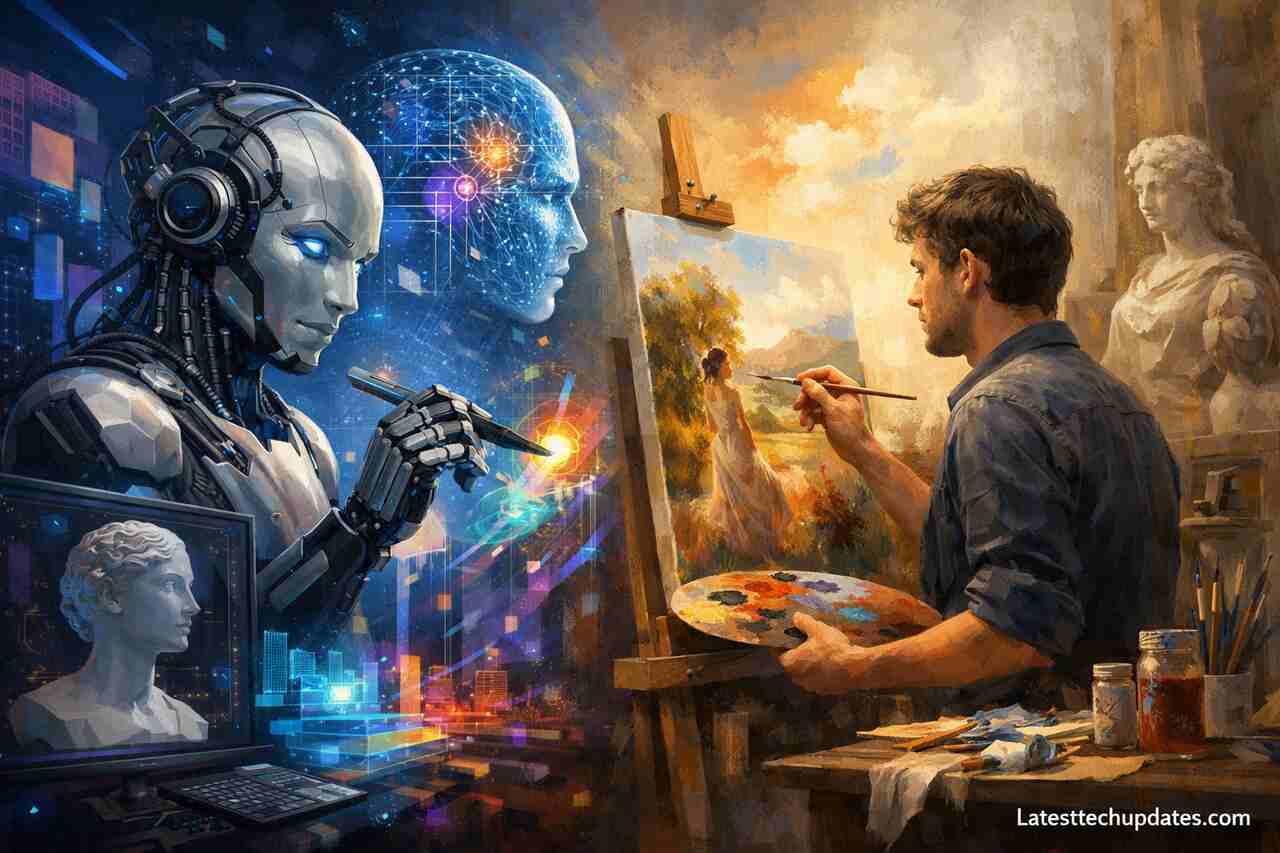
AI-generated art and human-created art differ in origin, intention, emotional depth, and creative process, where artificial intelligence relies on data patterns and algorithms while human creators rely on lived experience, perception, and conscious intent.
Artificial intelligence has rapidly transformed the creative landscape, introducing new ways to produce images, music, and designs with minimal human effort. Human creativity, however, continues to evolve through emotional depth, cultural influence, and personal storytelling. The comparison between AI art and human art reflects more than just tools or techniques; the comparison reveals how creativity itself is defined and valued in a digital age. I often find myself reflecting on how quickly AI can generate visually stunning results, yet I still return to human-made works when I want meaning, context, and emotional resonance. That contrast makes the discussion highly relevant for artists, designers, and everyday viewers who interact with art daily.
What Defines AI Art and Human Art in the Modern Creative Landscape?
AI art represents visual or conceptual outputs generated through machine learning models trained on massive datasets, while human art reflects intentional expression shaped by emotion, memory, and cultural context. Both forms exist within the same creative ecosystem, yet their foundations create a clear conceptual divide.
AI systems analyze patterns from existing works and generate outputs based on probability and learned structures. Human creators, on the other hand, build ideas from internal experiences, imagination, and personal interpretation. That difference shapes how each type of art communicates meaning and originality.
I have personally noticed that when I look at AI-generated pieces, I admire technical perfection, but when I engage with human art, I feel a story behind every brushstroke or design choice. That emotional connection often feels deeper and more relatable.
How AI Art is Generated
AI art emerges through neural networks trained on datasets that include millions of images, styles, and compositions. Algorithms process these datasets to identify patterns, textures, and stylistic elements, allowing machines to produce new visuals that mimic learned aesthetics.
How Human Art is Created
Human art originates from conscious intention, emotional experiences, and creative decision-making. Artists combine memory, imagination, and cultural influence to produce work that carries personal meaning and often reflects unique perspectives.
How Does Creativity Differ Between AI Systems and Human Artists?
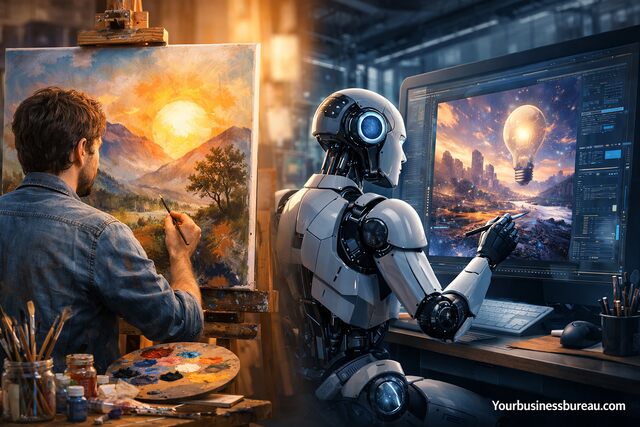
Creativity in AI systems is computational, while creativity in humans is experiential and interpretive. Machines generate outputs based on recombination of existing data, while humans generate ideas based on original thought processes.
AI creativity operates within predefined frameworks, meaning that even the most innovative outputs are rooted in previously learned material. Human creativity extends beyond existing patterns because individuals can imagine concepts that have never been seen before.
From my experience, AI can surprise me with unexpected combinations, but human creativity feels intentional. When a human creates something unusual, I sense purpose behind it, whereas AI feels like an intelligent remix rather than true invention.
Pattern-based Creativity in AI
AI creativity relies on identifying correlations between styles, shapes, and compositions. Machine learning models generate outputs by predicting what visually or conceptually fits within learned patterns.
Imagination-driven Creativity in Humans
Human creativity involves abstract thinking, emotional influence, and spontaneous ideation. Artists can intentionally break rules, challenge norms, and invent entirely new styles without relying on prior data constraints.
What Role Does Emotion Play in AI Art Versus Human Art?
Emotion acts as a defining boundary between AI art and human art. Human-created work carries emotional intention, while AI-generated work simulates emotional expression without actually experiencing feelings.
AI systems can replicate visual cues associated with emotions, such as color choices or facial expressions, but those outputs lack genuine emotional origin. Human art, however, often serves as an emotional outlet, reflecting real experiences and inner states.
When I observe human art, I often feel connected to the creator’s emotions. AI art may look emotionally expressive, but I rarely feel the same depth because I know there is no real emotional experience behind it.
Simulated Emotion in AI Outputs
AI uses data patterns to replicate emotional aesthetics, such as warm tones for comfort or dark tones for sadness. These outputs appear emotional but are based on statistical associations rather than real feelings.
Genuine Emotion in Human Expression
Human artists channel personal experiences, struggles, and joys into their work. Emotional authenticity creates deeper engagement and allows viewers to connect with the creator’s inner world.
How Does Originality Differ Between Ai-generated and Human-created Art?
Originality in AI art depends on recombination, while originality in human art depends on invention. AI creates new works by blending existing styles, while humans generate ideas from internal thought processes.
AI outputs may appear unique, but they are fundamentally derived from existing datasets. Human originality, however, often emerges from personal insights, cultural influences, and individual perspectives that cannot be replicated exactly.
In my own experience, AI-generated images can feel fresh at first glance, but after repeated exposure, patterns become noticeable. Human art continues to feel unique because each artist brings a distinct voice.
Data-driven Originality in AI
AI originality is based on mixing and transforming previously learned content. Algorithms generate variations that appear new but remain rooted in existing visual language.
Conceptual Originality in Humans
Human originality stems from independent thinking and personal interpretation. Artists can create ideas that are not directly influenced by existing works, resulting in true novelty.
How Do Technical Skills Compare Between AI Tools and Human Artists?
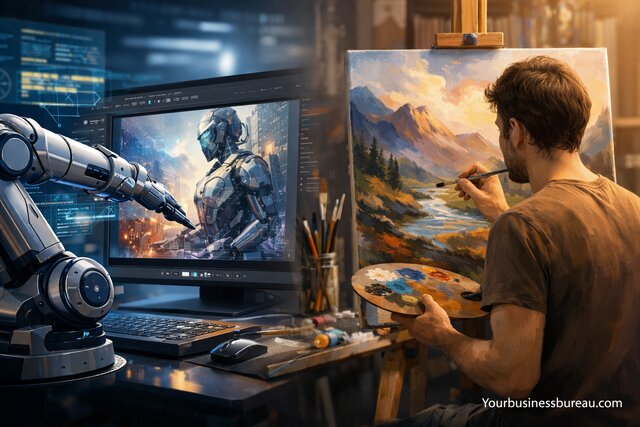
Technical execution differs significantly between AI tools and human artists. AI systems automate complex processes, while human artists develop skills through practice, learning, and experience.
AI can produce highly detailed visuals instantly, eliminating the need for manual skill development. Human artists invest years in mastering techniques such as drawing, painting, or digital design, which adds depth to their work.
I have tried using AI tools myself, and the ease of generating polished visuals feels impressive. However, when I create something manually, the process feels more rewarding because effort and growth become part of the outcome.
Automation in AI Tools
AI tools streamline the creation process by handling composition, shading, and styling automatically. Users can generate high-quality visuals with minimal technical expertise.
Skill Development in Human Artists
Human artists build technical abilities through consistent practice. Skills such as perspective, anatomy, and color theory require time and dedication, contributing to artistic depth.
What Ethical Considerations Arise From AI Art Compared to Human Art?
Ethical concerns play a major role in distinguishing AI art from human art. Issues such as data usage, copyright, and authorship create debates around AI-generated content.
AI models often train on existing artworks without explicit permission, raising concerns about intellectual property rights. Human artists, in contrast, typically create original work or consciously reference influences.
From my perspective, ethical concerns make me more cautious when using AI-generated content. Supporting human artists feels more aligned with fairness and respect for creative effort.
Copyright and Data Usage in AI
AI training datasets often include copyrighted material, leading to questions about ownership and fair use. Artists may feel their work has been used without consent.
Ownership and Authenticity in Human Art
Human-created art has clear ownership tied to the creator. Authenticity and authorship remain transparent, which strengthens trust and value.
What is the Future of AI Art and Human Art Coexistence?
The future of AI art and human art involves collaboration rather than competition. Both forms will likely coexist, influencing each other in evolving creative landscapes.
AI tools can enhance human creativity by providing inspiration and efficiency, while human artists can guide AI toward meaningful outputs. This synergy may redefine how art is created and consumed.
I believe the future will not replace human artists but will expand creative possibilities. Personally, I see AI as a tool rather than a replacement, helping me explore ideas faster while still valuing human expression.
Collaborative Potential Between AI and Humans
AI can assist artists in brainstorming, prototyping, and refining ideas. Collaboration allows creators to combine efficiency with emotional depth.
Long-term Impact on the Creative Industry
AI will reshape industries such as design, marketing, and entertainment. Human creativity will remain essential for storytelling, emotional connection, and cultural relevance.
Conclusion
AI art and human art differ fundamentally in origin, creativity, emotion, originality, and ethical considerations. AI relies on data-driven processes, while human creators rely on experience and intention. Both forms offer unique value, and their coexistence will shape the future of creativity. Personal experience suggests that while AI provides convenience and innovation, human art continues to deliver emotional depth and authentic connection.
FAQ’s
What is the main difference between AI art and human art?
AI art is generated through algorithms and data patterns, while human art is created through personal experience and emotional expression.
Can AI replace human artists?
AI cannot fully replace human artists because emotional depth, originality, and intention remain uniquely human qualities.
Is AI art considered real art?
AI art is considered art by many, but debates continue regarding authenticity, authorship, and creative ownership.
Why does human art feel more emotional?
Human art carries real emotions from the creator, while AI art only simulates emotional cues based on data patterns.
How can artists use AI tools effectively?
Artists can use AI for inspiration, concept generation, and efficiency while maintaining creative control and personal expression.
