
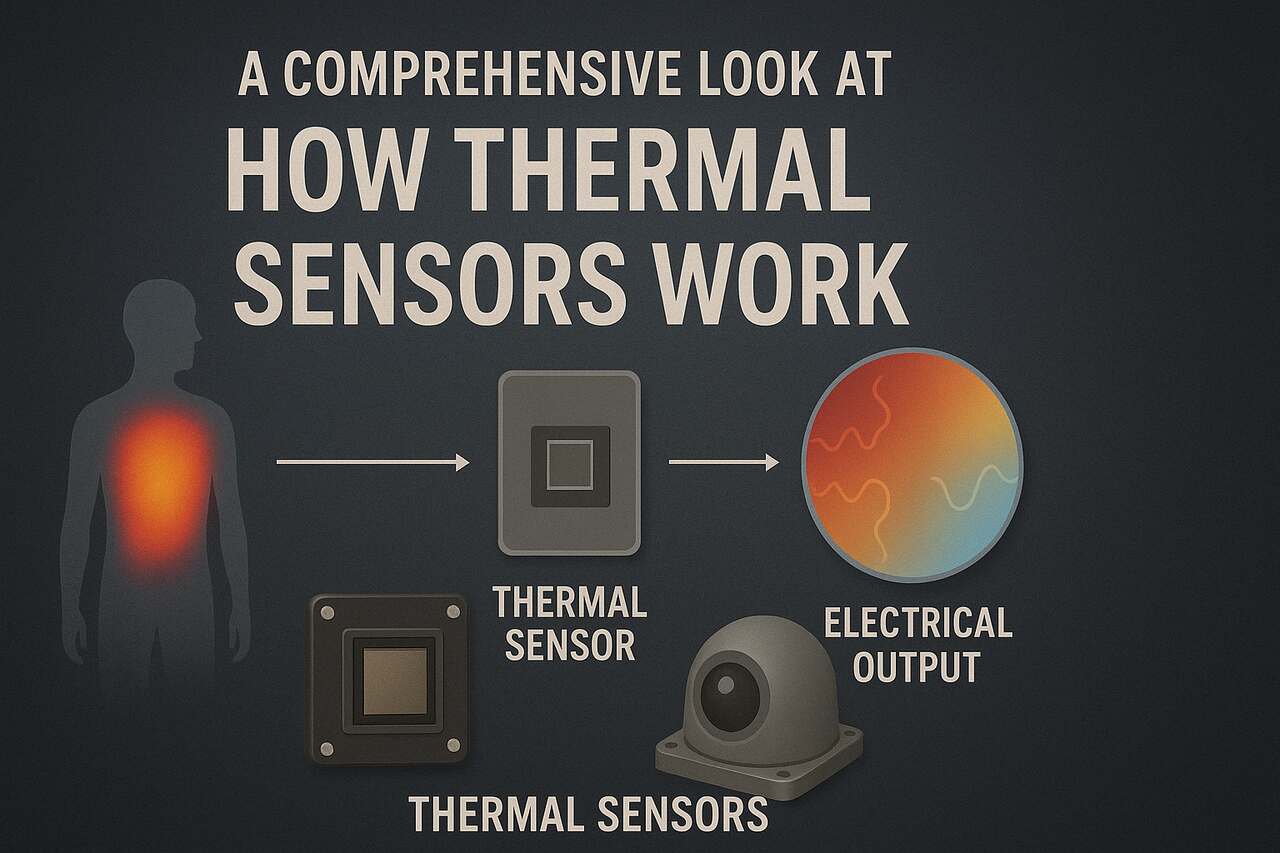
From smartphones and smart homes to industrial plants and medical devices, temperature plays a crucial role in how systems operate and stay safe. At the heart of modern temperature monitoring are thermal sensors, the small but powerful components that convert heat into data we can track, analyze, and act on.
Let’s find out what thermal sensors are, how they work, where they are used, and what trends are shaping their future.
What Are Thermal Sensors and How Do They Work?
The Science Behind Temperature Measurement
To understand thermal sensors, it helps to first understand what temperature actually is. In scientific terms, temperature reflects the average kinetic energy of particles in a substance. When particles move faster, the temperature increases; when they slow down, the temperature drops.
Early temperature measurement relied on simple tools like glass thermometers that used expansion of liquids. Today, thermal sensors translate changes in temperature into electrical signals. These signals can be read and processed by electronic systems, which makes them ideal for automation and digital control.
Most thermal sensors operate by exploiting one of the following principles:
- Changes in electrical resistance with temperature
- Generation of voltage when two different metals are joined and heated
- Measurement of infrared radiation emitted by an object
The sensor detects a change in temperature, converts that change into an electrical output, and sends it to a controller or monitoring system. Calibration and careful design ensure that this output accurately reflects the real temperature.
Types of Thermal Sensors: Contact and Non Contact
Thermal sensors come in several forms, each with strengths suited to particular environments and tasks. The two broad categories are contact and non-contact sensors.
Contact thermal sensors need physical contact with the surface or medium they are measuring. Common examples include:
- Thermocouples
These are made from two different metals joined at one end. When the junction is heated, a small voltage is created. The voltage corresponds to temperature. Thermocouples are rugged, inexpensive, and can measure very high temperatures. - Resistance Temperature Detectors (RTDs)
RTDs work by measuring the change in electrical resistance of a metal (often platinum) as the temperature changes. They provide accurate and stable readings, which makes them ideal for precision applications. - Thermistors
These are resistive devices made from ceramic or polymer materials. Their resistance changes significantly with temperature, which makes them very sensitive. They are often used where small temperature changes need to be detected quickly.
Non-contact thermal sensors, on the other hand, do not need direct contact. They measure the infrared radiation emitted by objects.
- Infrared sensors and infrared thermometers
These detect heat from a distance and estimate temperature based on the intensity of infrared radiation. They are useful when the object is moving, very hot, electrically live, or physically inaccessible, such as rotating machinery, busy production lines, or high voltage components.
Each sensor type has trade-offs. Choosing the right one depends on required accuracy, temperature range, response time, and the physical environment.
Calibration and Accuracy: Why They Matter
Even the best designed thermal sensor needs calibration to provide trustworthy readings. Calibration means comparing the sensor’s output with a known temperature reference and adjusting its response if necessary.
Several factors influence accuracy:
- Sensor design and materials
- Temperature range
- Measurement location and mounting method
- Environmental conditions, such as humidity or electromagnetic noise
For example, thermocouples and RTDs are widely used in precision fields such as aerospace, power generation, and medical equipment, but they still require periodic calibration to compensate for aging and drift.
In real world environments, factors such as:
- Mechanical stress
- Contamination
- Corrosion
- Electrical interference
can affect sensor performance over time. This is why organizations often implement regular calibration schedules and quality control procedures to keep measurements reliable.
Where Thermal Sensors Are Used: From Factories to Everyday Life
Industrial Applications: Process Control and Safety
In industrial settings, thermal sensors are essential for both efficiency and safety. They are used to:
- Control temperatures in manufacturing processes such as plastic molding, metal treatment, and chemical reactions
- Maintain proper temperatures in food processing to ensure safety and quality
- Monitor furnaces, boilers, and engines for overheating
- Enable predictive maintenance by detecting unusual temperature rises in motors, bearings, and electrical panels
In these environments, a slight deviation from the optimal temperature can affect product quality, energy consumption, or equipment lifespan. Thermal sensors help operators respond quickly to changes instead of relying on guesswork.
Everyday Devices: Hidden Helpers in Consumer Technology
Many people interact with thermal sensors every day without realizing it. In the consumer world, they are found in:
- Smart thermostats that adjust heating and cooling based on room temperature and user habits
- Laptops and smartphones that monitor internal temperatures to control fan speeds and prevent overheating
- Ovens and microwaves that regulate cooking temperatures
- Wearable devices that track skin temperature as part of fitness or health monitoring
By converting heat into data, thermal sensors help consumer products become smarter, safer, and more efficient.
Smart Homes: Comfort, Efficiency, and Security
Thermal sensors are a core component of modern smart home systems. They enable:
- Dynamic control of heating, ventilation, and air conditioning (HVAC) systems based on occupancy and comfort preferences
- Room by room temperature monitoring to reduce energy waste
- Early fire detection through abnormal heat patterns
- Enhanced security by identifying unexpected heat signatures that might indicate an intruder or malfunctioning equipment
When combined with automation platforms and smart algorithms, thermal sensors help create homes that are more responsive and energy conscious.
Medical and Health Applications
In healthcare, accurate temperature measurement is critical. Thermal sensors are found in:
- Digital thermometers for oral, ear, or forehead temperature readings
- Thermal imaging systems used for fever screening in high traffic areas
- Incubators and laboratory equipment that require strict temperature control
- Wearable health devices that track body temperature trends over time
The COVID era brought extra attention to non-contact temperature screening, where infrared thermal sensors were widely used in airports, offices, and clinics to identify potential fever cases.
As wearable technology advances, continuous temperature monitoring may become a standard feature in health tracking, giving clinicians and individuals valuable data about illness, recovery, and overall well-being.
The Future of Thermal Sensors: Trends and Emerging Technologies
New Materials Driving Performance Improvements
Rapid progress in materials science is reshaping what thermal sensors can do. Researchers are exploring:
- Nanomaterials with high sensitivity and fast response
- Graphene and carbon nanotubes that offer excellent thermal and electrical properties
- Flexible and stretchable substrates that can conform to irregular surfaces
These innovations are opening the door to sensors that are smaller, more accurate, and better suited for integration into wearables, flexible electronics, and medical patches.
As production methods improve and costs fall, advanced thermal sensors are likely to appear in more everyday products, not just specialized equipment.
Integration with the Internet of Things (IoT)
Connecting thermal sensors to networks creates powerful new possibilities. In an IoT context, sensors can:
- Send real time temperature data to cloud platforms
- Trigger automatic responses, such as adjusting HVAC, shutting down equipment, or sending alerts
- Provide historical data for analysis, optimization, and predictive maintenance
Examples include:
- Smart agriculture systems that monitor soil and air temperature to protect crops
- Logistics systems that track temperature sensitive shipments such as vaccines or food
- Building management systems that adjust temperature zones to save energy and improve comfort
By turning temperature readings into actionable information, IoT connected thermal sensors help make environments smarter and more sustainable.
AI and Machine Learning: From Raw Data to Insight
Artificial intelligence and machine learning are taking thermal sensor data to the next level. Instead of simply reading temperatures, AI powered systems can:
- Identify patterns and trends over time
- Detect anomalies that may indicate faults or safety risks
- Predict future temperatures or failures based on historical data
Machine learning algorithms can also refine calibration and improve sensor interpretation, tailoring responses to specific installations or devices.
In practice, this might look like:
- An industrial system that learns what “normal” temperature behavior looks like and flags early warning signs
- A smart home system that adjusts heating and cooling schedules based on observed habits and weather patterns
- A healthcare platform that analyzes subtle shifts in body temperature to detect early signs of illness
The combination of thermal sensors, connectivity, and AI is transforming simple measurements into sophisticated decision-making tools.
Common Challenges and How to Overcome Them
Recognizing the Limitations of Thermal Sensors
Despite their usefulness, thermal sensors are not perfect. Some common challenges include:
- Environmental interference, such as electromagnetic noise, dust, or moisture
- Incorrect placement, which can cause measurements that reflect local hot spots instead of true ambient temperature
- Sensor drift over time, where readings gradually become less accurate
Being aware of these limitations is the first step in designing systems that compensate for them.
Maintenance and Troubleshooting
To keep thermal sensors working reliably, organizations should establish maintenance routines that include:
- Periodic calibration against known standards
- Visual inspection for damage, corrosion, or contamination
- Verification of electrical connections and power supplies
- Review of data for sudden changes or unusual patterns
When things go wrong, troubleshooting often involves checking:
- Whether the sensor is properly installed and positioned
- If the environment has changed in ways that could affect readings
- Whether there are software or configuration issues that skew the output
Careful documentation of maintenance and performance can help predict when a sensor is nearing the end of its useful life.
Accounting for Environmental Factors
Environmental conditions can strongly influence thermal sensor performance. Important factors include:
- Humidity, which can cause condensation and short circuits
- Extreme temperatures that exceed the sensor’s rated range
- Corrosive gases or chemicals that degrade materials over time
To deal with these challenges, engineers may:
- Choose sensors built for harsh conditions
- Use protective housings or enclosures
- Install additional sensors such as humidity or pressure sensors to provide context for temperature readings
By designing with the environment in mind, systems can achieve more accurate and reliable temperature monitoring.
Conclusion
Thermal sensors may be small, but their impact is enormous. They help keep factories safe, homes comfortable, medical devices accurate, and systems efficient. As new materials, IoT connectivity, and AI-driven analytics continue to evolve, these sensors will become even more capable and integrated into our daily lives.
Understanding how thermal sensors work, where they are used, and what affects their performance is the first step toward making better use of this technology in any field, from engineering and automation to healthcare and smart home design.
