
Highlights
- OpenAI, the maker of ChatGPT, has signed a memorandum of understanding with Australian data‑centre operator NEXTDC to build a major AI infrastructure campus in western Sydney.
- The planned campus investment is AU$7 billion (about US$4.6 billion) and includes a “GPU supercluster” to power advanced artificial‑intelligence workloads.
- The facility is expected to generate thousands of jobs direct and indirect across construction, engineering, manufacturing and technical operations.
- The project will rely on new renewable energy agreements and modern cooling technology that doesn’t use drinking water.
- Shares of NEXTDC surged after the announcement, reflecting investor optimism about the deal’s scale and potential returns.
What is the agreement between OpenAI and NEXTDC?
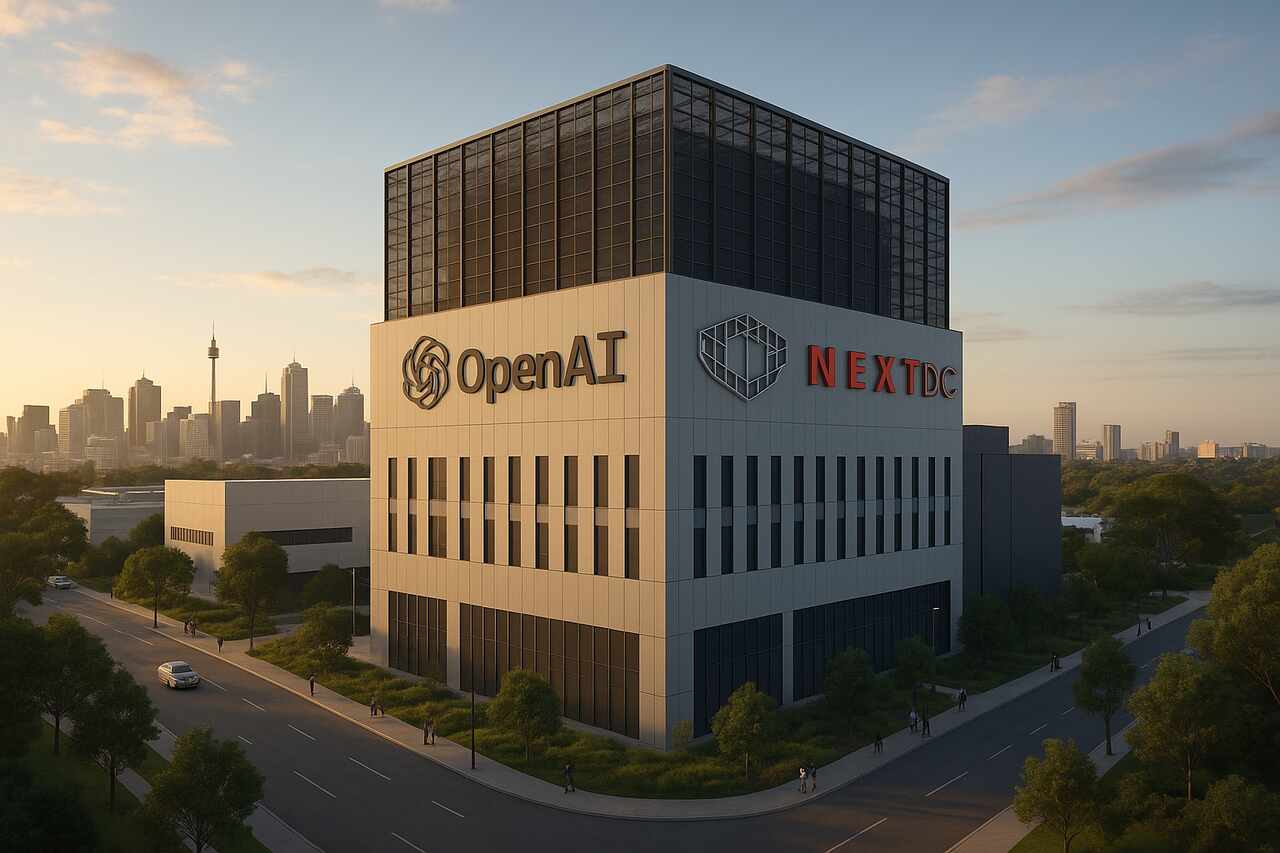
OpenAI and NEXTDC have signed a formal memorandum of understanding to jointly plan, build, and operate a large‑scale AI infrastructure campus in western Sydney. The partnership covers development of a “GPU supercluster” , a high‑capacity collection of graphics processing units tailored for training and running AI models as well as associated data‑centre facilities.
The campus is slated for NEXTDC’s “S7” site at Eastern Creek, originally acquired by NEXTDC for roughly A$353 million. The agreement reflects OpenAI’s strategic push to expand its global AI infrastructure footprint.
Why is the investment significant and how big is it?
The project carries a budget of AU$7 billion, equivalent to approximately US$4.6 billion. That investment size marks one of the largest single‑party commitments to AI infrastructure in Australia to date, underlining the seriousness of OpenAI’s long‑term plans in the region.
By anchoring such a heavy investment, OpenAI signals confidence not only in its own AI development trajectory, but also in Australia’s capacity to support large‑scale, advanced computing projects.
What economic and employment impacts are anticipated?
The Australian government projected “thousands” of new jobs as a result of the construction and ongoing operation of the facility spanning technical roles, manufacturing, engineering, and operational support.
Beyond direct employment, the facility could catalyze growth in downstream industries: local AI companies, infrastructure services, renewable energy suppliers, and technical support providers are likely to benefit enhancing overall AI adoption across sectors in Australia.
How will the project meet environmental and infrastructure challenges?
The design includes long-term power purchase agreements for renewable energy, reflecting a commitment to sustainable operations. Cooling systems will use “next generation” technology that avoids use of drinking water an important consideration in regions where water conservation is critical.
By combining clean‑energy sourcing with advanced cooling, the project aims to minimize environmental footprint while delivering high-performance AI infrastructure aligning with broader global trends for sustainable data centres.
What has been the market reaction and what are the potential risks?
After the announcement, NEXTDC’s shares surged up as much as 10.9% on the ASX, registering strongest gains among major listed companies. Investors welcomed the deal as evidence of accelerating demand for AI infrastructure, and as a foundation for NEXTDC’s expanded capital‑expenditure plans.
Potential risks include concerns over power costs, long‑term energy supply reliability, and emerging regulatory or copyright challenges around AI training data, especially if demand for GPU-driven AI scales unpredictably.
What does this deal mean for global AI expansion and Australia’s tech future?

Partnership between OpenAI and NEXTDC positions Australia as a major hub for AI infrastructure, likely to attract further investment from international AI firms. The scale of commitment signals that Australia could become a key node in global AI model training and deployment.
The project may accelerate technology adoption across the Australian economy: by providing local infrastructure, companies from startups to established enterprises could leverage low‑latency, high-performance AI services without relying on overseas data centres.
Workforce development and job creation tied to this project could also enhance local technical capacity and expertise, helping Australia build a domestic AI‑skilled labour force.
Finally, the sustainable energy and water‑efficient design may set a precedent for future large‑scale AI infrastructures worldwide balancing technological ambition with environmental responsibility.
