
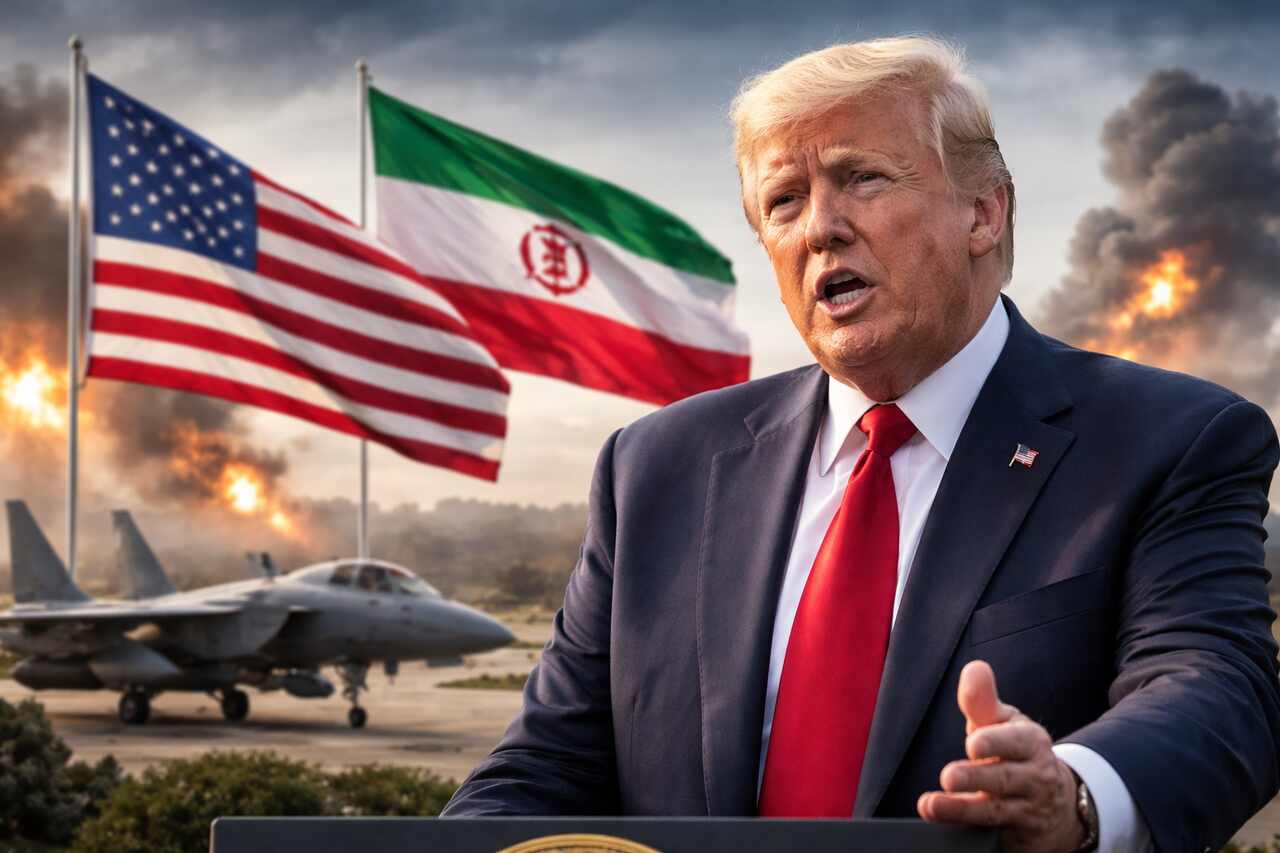
Highlights
- Trump claims Iran halted executions and killings after receiving direct communication from top Iranian sources.
- U.S. President pulls back from immediate military strike, citing signs of de-escalation from Tehran.
- Iran denies immediate plans for hangings, attempting to defuse international concern about protest crackdowns.
- Protests in Iran continue, with thousands reportedly killed and detained amid the regime’s use of force.
- U.S. troops repositioned in the Gulf region as a precaution while remaining on high alert.
- Iran threatens retaliation if U.S. military action occurs, targeting American bases across the region.
- Diplomatic channels open, with the UN and EU pushing for restraint and international monitoring.
- Global energy markets react, reflecting heightened geopolitical risk and regional instability.
What Did Donald Trump Say About Iran’s Internal Violence?
Donald Trump stated he received assurances from senior figures in Tehran that the killing of Iranian protesters has ceased and no executions are currently planned. He emphasized that these communications came from highly credible channels within the Iranian government. Trump positioned this update as a positive signal and cited it as one reason for holding back immediate U.S. military strikes.
No verifiable evidence was provided to support the claim. U.S. intelligence agencies have not publicly confirmed a cessation of violence. Despite the de-escalatory tone, Trump indicated that military options remain available, depending on further developments.
How Has Iran Responded to Accusations of Executions and Protest Suppression?
Iranian officials denied allegations of imminent executions related to protest crackdowns. The Iranian foreign ministry communicated that no executions were scheduled in the immediate days, seeking to discredit reports from human rights groups suggesting otherwise.
Tehran used this position to project an image of internal legal process and restraint. However, Iran also simultaneously issued stern warnings to the United States, stating that any American military aggression would result in reciprocal attacks on regional U.S. assets. Iran’s dual-track messaging reveals both a desire to avoid external intervention and a readiness for escalation if provoked.
What Is the Current Situation of Protests and Civil Unrest in Iran?
Iran has experienced weeks of sustained civil unrest triggered by economic decline, systemic political grievances, and reported governmental repression. Demonstrations have been widespread, with activists demanding fundamental changes. Human rights organizations have reported thousands of protest-related deaths, although exact figures vary due to restrictions on reporting from inside Iran.
The Iranian regime continues to detain protest leaders and participants, while state-controlled media downplays the scale of dissent. The government has also restricted internet access and mobilized the Islamic Revolutionary Guard Corps to suppress mass gatherings. The protests represent the most serious challenge to Iran’s political authority since the Islamic Revolution of 1979.
What Adjustments Has the U.S. Made to Its Military Posture?
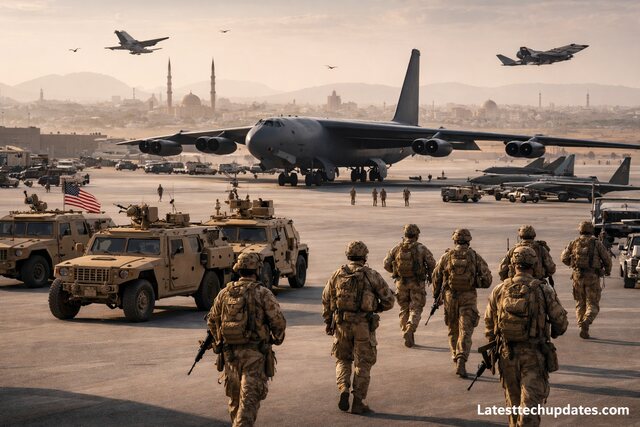
In response to heightened tensions, the U.S. military has strategically repositioned some personnel in the Middle East. Troops have been temporarily withdrawn from high-risk bases in Qatar and other Gulf states as a precautionary measure. Defense analysts interpret these moves as a signal of readiness without overt escalation.
Military assets remain on alert, and strategic bombers have been deployed to regional hubs in case of conflict. U.S. Central Command continues to monitor Iranian troop movements and communications, while coordinating with NATO allies and regional partners.
What Are the International Implications of the U.S.–Iran Tensions?
Global diplomatic circles are closely watching the standoff between Washington and Tehran. European Union leaders have urged restraint and called for renewed diplomatic channels. The United Nations Security Council is preparing to hold emergency consultations concerning the internal situation in Iran and the risks of regional conflict.
Middle Eastern states have expressed concern that any U.S.–Iran military confrontation could destabilize broader geopolitical balances, especially in countries like Iraq, Lebanon, and Syria. Oil markets have also responded to the uncertainty, with energy prices fluctuating in anticipation of potential supply disruptions.
Summary
- Donald Trump announced that Iranian officials communicated a halt to killings and executions.
- Iran denied any immediate plans for executions, but warned against U.S. intervention.
- Protests continue inside Iran, with a heavy government crackdown underway.
- The U.S. military remains flexible, having adjusted its regional presence in anticipation of potential conflict.
- International actors are pushing for diplomatic solutions to avoid escalation.
