
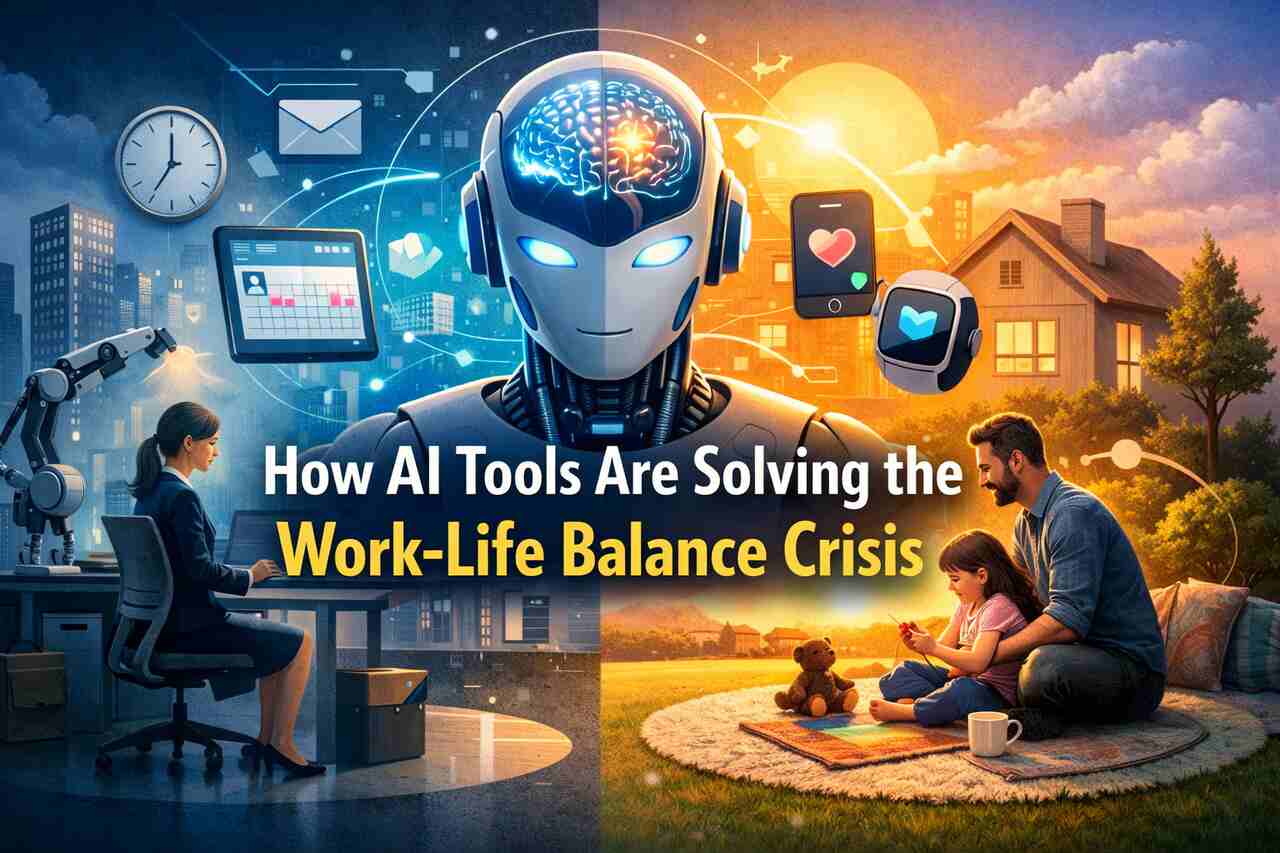
You finish dinner and glance at your phone. A new email just arrived from a colleague who “quickly needs something” before tomorrow morning. What should have been the end of your workday quietly turns into another 30 minutes of reading messages and checking documents.
This pattern has become familiar for millions of workers. The same technology that made work faster also made it follow people everywhere. Yet a new generation of AI tools is starting to reverse that trend by helping workers complete routine tasks faster, organize workloads, and finally reclaim time away from their screens.
The Work-Life Balance Crisis Reaches a Breaking Point
Productivity software promised to simplify work, but it often had the opposite effect. Email, Slack, and project management platforms made collaboration easier while also creating constant streams of notifications and requests. Instead of reducing workloads, they extended them across the entire day.
This always-on environment forced workers to constantly switch between tasks. One moment you respond to messages, then jump into a meeting, then return to unfinished work. That constant switching drains focus and increases decision fatigue.
The result has been rising burnout and declining satisfaction with work-life balance. Workers spend large portions of their day on administrative tasks rather than meaningful work. Organizations began looking for new solutions that could remove routine friction instead of adding more tools to manage it.
What the Data Reveals About AI’s Impact on Worker Well-Being
Recent research from the University of Phoenix Career Institute shows a notable shift in how employees view AI at work. Their Career Optimism Index reports that 81% of workers say AI helps improve work-life balance, highlighting how these tools are becoming practical support systems rather than job threats.
That sentiment contrasts sharply with the early headlines that framed AI as a source of widespread job loss. Workers who use AI daily often discover it removes the most frustrating parts of their jobs, such as drafting routine messages or organizing large amounts of information.
As adoption spreads, workplace expectations are starting to evolve. Productivity is becoming less about staying online late into the evening and more about finishing meaningful work efficiently during the hours you choose to dedicate to it.
Five Ways Workers Are Using AI to Reclaim Their Time
Workers across industries have started identifying specific areas where AI tools create immediate relief during the workday.
Automating Repetitive Administrative Work
Administrative tasks consume far more time than most people realize. Drafting emails, organizing meeting notes, and updating schedules can quietly take up several hours each week. AI tools now handle many of these tasks automatically.
Instead of manually writing summaries or organizing follow-up items, employees can generate them in seconds. This shift reduces the hours spent on routine work and allows employees to focus on more strategic or creative responsibilities.
Intelligent Task Prioritization
Another major source of stress comes from deciding what to tackle first. Workers often juggle dozens of requests across email, project platforms, and chat tools. Without a clear system, every message feels urgent.
AI tools now analyze workloads, deadlines, and communication patterns to recommend priorities. These recommendations help workers focus on what matters most instead of reacting to every notification.
Clear prioritization reduces anxiety during the day and makes it easier to leave work at a reasonable time. When tasks are organized and tracked automatically, there is less uncertainty about what still needs attention.
Communication Assistance That Saves Mental Energy
Writing professional messages requires more mental energy than most people expect. Employees often spend extra time refining tone, clarifying information, or translating technical ideas for different audiences.
AI communication tools simplify that process. They help draft responses, summarize conversations, and clarify complex information quickly. The result is less mental fatigue and fewer delays in responding to colleagues.
Here are the most common communication tasks where workers report that AI saves them significant time:
- Writing and editing professional emails with an appropriate tone
- Summarizing long email threads or documents for quick review
- Generating meeting agendas and follow-up action items
- Translating technical information for non-technical stakeholders
Each of these tasks may appear minor on its own, yet together they represent several hours of effort during a typical workweek. Automating them gives workers valuable time back.
The Boundary-Setting Benefits You Might Not Expect
AI tools also support a healthier separation between work and personal time. Employees can quickly organize tasks, draft tomorrow’s notes, or prepare meeting outlines during short breaks rather than staying late to finish everything. That preparation creates a sense of closure at the end of the workday. Workers leave knowing their priorities are already structured for the next morning.
Faster completion of routine tasks during normal hours also reduces the need for evening catch-up sessions. Instead of responding to messages late at night, employees handle more communication during focused blocks of time.
Industry Differences: Where AI Makes the Biggest Balance Impact
Knowledge-based roles often experience the most noticeable improvements. Fields such as healthcare administration, technology, consulting, and customer support rely heavily on documentation and communication. AI tools streamline those activities, reducing hours spent on paperwork and repetitive messaging.
Not every role benefits in the same way. Physical occupations rely less on digital tasks, while leadership roles still require human judgment and strategic thinking. Even in those cases, AI assists with scheduling, information gathering, and documentation that once consumed large portions of the day.
What This Means for Your Career and Your Calendar
The first step toward better balance with AI is identifying the tasks that quietly consume your time. Email management, meeting preparation, and document summaries often appear small individually but accumulate quickly throughout the week.
At the same time, workers must establish boundaries around how they use these tools. The goal is to reclaim time and reduce stress, not increase expectations that every task must now be completed faster.
To get started with AI tools for a better work-life balance, focus on these high-impact areas:
- Email and message management for faster communication
- Meeting preparation and summary generation
- Research and information synthesis tasks
- Schedule optimization and task prioritization
Choose one area where you feel the most daily pressure and begin experimenting with AI support there. Once that workflow improves, expanding into other areas becomes much easier.
Reclaiming Time Without Sacrificing Quality
Work-life balance has felt out of reach for many professionals over the past decade as digital tools expanded the workday. AI is beginning to change that dynamic by removing the small tasks that quietly consume hours each week. When technology handles routine work, you can focus on meaningful tasks during work hours and step away with confidence once the day is done.
