
Highlights
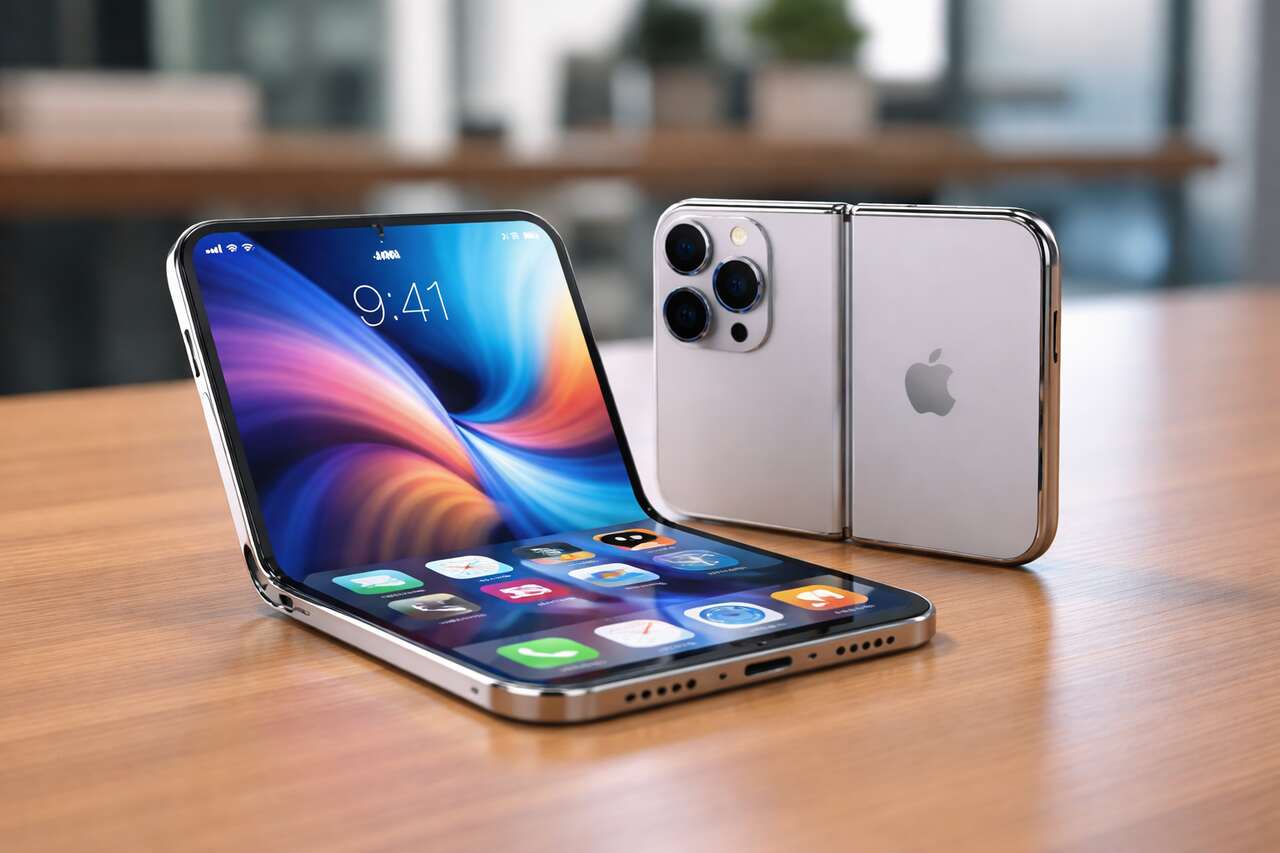
- Foldable iPhone confirmed for a 2026 launch, marking Apple’s official entry into the flexible smartphone market.
- Features a flexible OLED display and teardrop-style hinge, enabling smooth 180-degree unfolding without visible creases.
- Clamshell form factor designed with ultra-thin glass (UTG) for enhanced durability and screen clarity under repeated folds.
- iOS interface optimized for fold-state transitions, with dynamic layout shifts, hinge-aware gestures, and adaptive UI behavior.
- Apple positions the foldable iPhone as a new premium tier, bridging the gap between iPhone Pro and Ultra models.
- Exclusive SDK for developers to build foldable-specific apps leveraging spatial input and multi-display UX.
- Targeted markets include the U.S., China, South Korea, and Japan, with expected availability in Q4 2026.
- Foldable iPhone prototypes already in internal testing, with production trials underway at Foxconn and Luxshare.
What Are the Key Features of the Foldable iPhone Prototype?
Apple’s foldable iPhone integrates a flexible OLED display with multi-layered substrate technology to enhance both durability and visual fluidity. The screen panel, sourced from Samsung Display and LG Display, supports ultra-thin glass (UTG) to reduce fold fatigue while preserving clarity across repeated bending cycles.
The hinge mechanism utilizes a dual-axis rotational spine with carbon fiber reinforcements, allowing the device to fold without central creasing. Unlike existing Z-fold or inward-fold designs used by competitors like Samsung and Huawei, Apple’s version emphasizes a clamshell orientation with a full 180-degree flat-unfolding capacity.
Taptic feedback is embedded directly under the foldable screen area using micro-engineered actuators to enhance touch interactivity. The embedded sensors calibrate for adaptive haptic intensity across different hinge angles, delivering a refined user experience.
iOS optimization for foldable mode includes dynamic screen continuity that allows seamless transition from outer display to internal flexible panel. UI elements adjust layout density, gesture recognition zones, and app behavior based on hinge angle and screen orientation.
Battery design adopts a split-cell lithium polymer format that distributes energy units across both halves of the foldable chassis. This layout minimizes swelling pressure and supports Apple’s thermodynamic energy management for higher foldable endurance cycles.
How Will Apple Position the Foldable iPhone in Its Product Ecosystem?
Apple plans to position the foldable iPhone between the Pro and Ultra models by introducing a new category possibly titled “iPhone Fold” or “iPhone Flex.” This aligns with Apple’s naming conventions and creates semantic separation from traditional slab-form iPhones.
The foldable model is expected to replace or supplement the iPhone Mini form factor, which has seen declining demand since 2022. Foldable versatility addresses compact-device enthusiasts by offering portability with expandability.
Pricing strategy will follow a premium tier segmentation, likely starting above $1,799. This pricing matches the strategic anchor of Samsung’s Z Fold line and reflects the manufacturing cost of foldable OLED and hinge components.
Integration with Apple’s cross-device ecosystem leverages Universal Control, AirDrop, and Continuity Camera all recalibrated for fold-state detection. The foldable interface will allow users to transition tasks between Mac, iPad, and Apple Vision Pro more fluidly via a dual-state display context.
Apple is expected to introduce exclusive apps and APIs for foldable interactions under its SDK for developers, focusing on dual-screen media creation, spatial UI components, and adaptive input rendering for fold-state transitions.
Why Is Apple Entering the Foldable Smartphone Market in 2026?
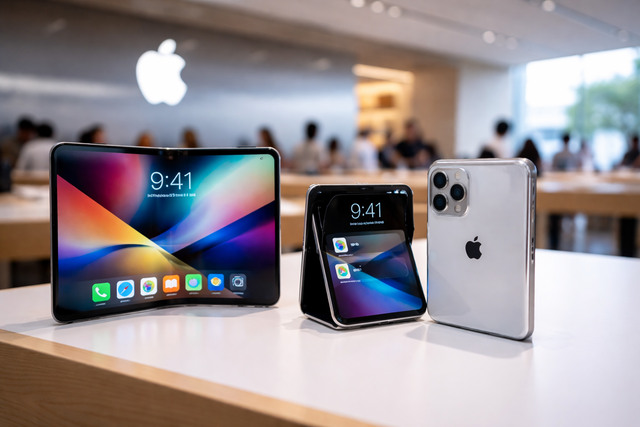
Market maturity in flexible display technology reached a threshold for Apple’s durability standards by 2024. Apple’s delay compared to Samsung’s early foldables is rooted in its historical quality control approach and late-mover advantage strategy.
Consumer demand for hybrid productivity and entertainment experiences on smartphones has significantly increased, especially in East Asian markets where foldables now command over 12% of flagship device sales.
Component supply chain stability for foldable parts including UTG, flexible OLED, and micro-hinges improved globally, lowering cost per unit and increasing fabrication yields to match Apple’s scale and efficiency benchmarks.
Apple’s 2026 release synchronizes with its shift toward hardware modularity and spatial computing convergence, which began with Apple Vision Pro and will continue with extended-reality-ready iPhones.
Competitive pressure from Android OEMs such as Samsung, Huawei, Xiaomi, and Honor who already occupy the foldable market incentivized Apple to close the feature gap and retain innovation leadership across hardware form factors.
What Technical Challenges Did Apple Overcome in Foldable iPhone Development?
Apple solved the screen crease issue using a teardrop hinge design that reduces inner screen tension during closure, minimizing visible deformation over time. Mechanical simulations exceeded 200,000 folds under controlled stress environments.
Waterproofing the foldable hinge required a new IPX7-sealed housing system using micro-gaskets and nanopolymer barriers, enhancing durability in submersion conditions without impacting mechanical movement.
The challenge of thermal dissipation across a folding architecture was resolved with a dual-vapor chamber system, installed in both halves of the device, synchronized via heat-sensitive graphene interconnects.
Apple’s Foldable UI relies on a machine-learning-based hinge-angle detection module trained to anticipate gesture zones, facial orientation, and viewing intent, thereby maintaining UI consistency across folds.
Battery swelling and chemical breakdown mitigation was achieved with flexible electrodes co-developed with TDK, enhancing long-term energy retention and ensuring the battery complies with over 500,000 bend operations without expansion risks.
When Will the Foldable iPhone Be Available for Consumers?
The foldable iPhone is expected to launch globally in Q4 of 2026, with announcements likely during Apple’s September keynote event. Production trials have reportedly begun in Apple’s Chinese and Vietnamese assembly lines under Foxconn and Luxshare collaboration.
Prototype evaluations with iOS 19 developer builds have already been distributed to internal testers, suggesting final-stage hardware-software integration by late 2025. This timeline aligns with Apple’s typical 12–18 month product finalization cycle.
Initial production volume is estimated at 3–5 million units, reflecting a cautious market entry and a strategy to generate controlled scarcity while evaluating real-world usage feedback.
Markets prioritized for launch include the United States, China, South Korea, and Japan, where foldable adoption rates are higher and supply logistics are more refined.
Pre-orders are anticipated to open within 10 days of announcement, similar to past iPhone flagship launches, with Apple Stores and carriers supporting the rollout alongside AppleCare+ plans optimized for foldable components.
