

Cash flow forecasting is one of the most important financial planning tools a business can use. While profit tells part of the story, cash flow reveals whether a business can actually meet its obligations, fund operations, and make confident decisions in real time. Finmo’s offers cash flow forecasting solutions that enable businesses to gain clearer visibility into their financial position and plan ahead with greater confidence. For finance teams, business owners, and leadership groups, understanding future cash movement is essential for staying in control.
A strong cash flow forecast helps businesses look ahead with more clarity. It provides a structured view of expected inflows and outflows, making it easier to manage short-term liquidity, prepare for upcoming obligations, and support long-term planning. In a business environment where uncertainty can shift quickly, forecasting cash with confidence has become increasingly valuable.
What Cash Flow Forecasting Means
Cash flow forecasting is the process of estimating how much cash will move into and out of a business over a future period. This could be over the next week, month, quarter, or even longer, depending on the purpose of the forecast.
The goal is not just to estimate revenue or expenses in general terms. It is to understand the timing of actual cash movement. A business may have strong sales on paper, but if customer payments arrive later than expected or supplier obligations fall due earlier, the timing gap can create pressure.
Forecasting helps make that timing visible so businesses can plan around it rather than react to it after the fact.
Why Forecasting Matters for Business Stability
One of the biggest reasons cash flow forecasting matters is that it supports stability. Businesses need cash to pay suppliers, meet payroll, manage debt, buy stock, and continue operating smoothly. Even growing businesses can run into difficulty if cash flow is not managed properly.
A forecast allows teams to anticipate when cash may become tight and when there may be surplus available. This helps businesses make better decisions around spending, borrowing, collections, and investment.
Without a clear forecast, financial decisions often become reactive. That usually leads to more stress, less flexibility, and a higher chance of avoidable cash pressure.
The Difference Between Profit and Cash Flow
One reason forecasting is so important is that profit and cash are not the same thing. A business can be profitable and still experience cash flow problems if money is tied up in unpaid invoices, inventory, delayed settlements, or large upcoming payments.
Cash flow forecasting helps bridge that gap by focusing on when money actually enters and leaves the business. It gives a more practical picture of liquidity than a profit and loss statement alone.
That distinction is especially important for businesses managing growth, seasonality, or supplier-heavy operations where timing has a major impact on financial control.
What a Good Forecast Typically Includes
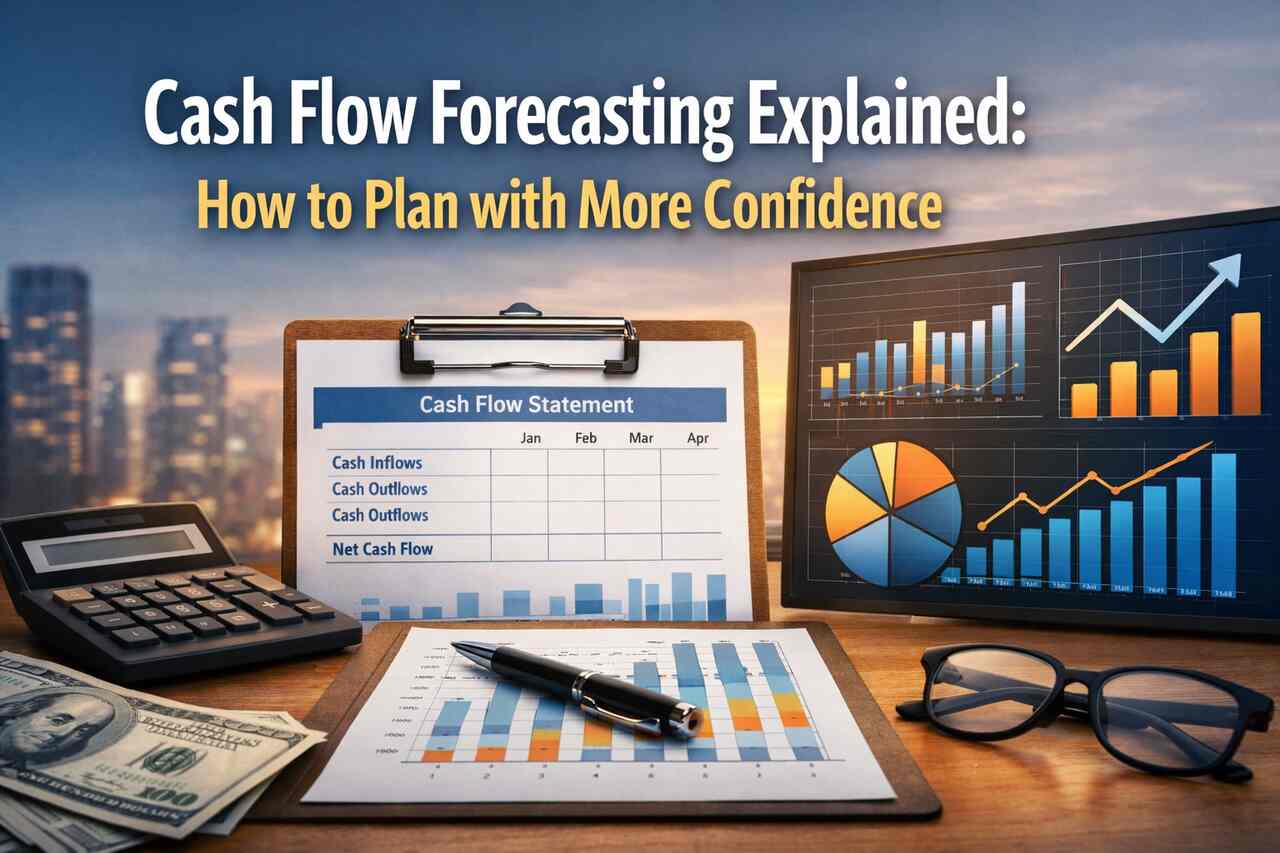
A useful cash flow forecast usually includes expected customer receipts, supplier payments, payroll, tax obligations, rent, loan repayments, recurring expenses, and any major one-off cash events. The stronger the visibility over these items, the more reliable the forecast becomes.
Forecasts are often built using historical trends, current commitments, payment terms, pipeline expectations, and operational plans. The best forecasts are not static documents. They are updated regularly as conditions change, and actual results come in.
That ongoing review is what turns forecasting into a practical management tool rather than just a reporting exercise.
How Forecasting Improves Decision-Making
Cash flow forecasting supports better decisions because it gives businesses more time to act. If a forecast shows a potential shortfall in the coming weeks, leadership can adjust spending, accelerate collections, delay non-essential purchases, or arrange funding before the issue becomes urgent.
Likewise, if the forecast shows a healthy surplus, the business may be in a better position to invest, hire, purchase inventory, or reduce debt more strategically.
The value of forecasting is not only in predicting the future perfectly. It is in helping businesses respond earlier and more confidently to what is likely ahead.
Common Challenges in Forecasting
Although forecasting is highly valuable, many businesses still find it difficult to do well. One of the biggest challenges is data quality. If inputs are incomplete, outdated, or disconnected across systems, the forecast will naturally be less reliable.
Another common issue is overreliance on assumptions without enough real transaction visibility. If expected collections, supplier timings, or operational costs are not grounded in current data, forecasts can become too optimistic or too vague to be useful.
This is why many finance teams are now focusing on improving visibility and automation as part of better forecasting practices.
Why Forecasting Confidence Matters
Confidence in a cash flow forecast matters just as much as the forecast itself. If leadership does not trust the numbers, the forecast becomes less useful as a decision-making tool.
Confidence comes from accuracy, regular updates, and strong alignment between finance data and real business activity. The more consistently a business compares forecasted cash movement against actual results, the better its forecasting capability tends to become over time.
This is especially important when businesses are making decisions around hiring, growth, financing, or major commitments.
The Role of Technology and Automation
Many businesses are now improving cash flow forecasting by moving away from spreadsheet-only processes and using more connected financial tools. Integrated systems can help pull in bank data, receivables, payables, and planning inputs more efficiently, making forecasts more timely and easier to update.
Automation also reduces manual effort, which allows finance teams to focus more on interpreting the forecast rather than just building it. This improves both speed and quality.
As forecasting becomes more central to business planning, better tools are helping make it more practical and scalable.
Conclusion
Cash flow forecasting gives businesses a clearer way to plan, manage liquidity, and make decisions with more confidence. It turns future cash movement into something visible and actionable rather than uncertain and reactive. For businesses of all sizes, that level of visibility can make a significant difference in both stability and growth.
In a fast-moving environment where timing matters as much as totals, forecasting is no longer just a finance task. It is a core part of running a more resilient and informed business. The more reliable the forecast, the more confident the decisions behind it can become.
FAQs
What is cash flow forecasting?
Cash flow forecasting is the process of estimating future cash coming into and leaving a business over a set period.
Why is cash flow forecasting important?
It helps businesses plan, manage liquidity, prepare for obligations, and make more confident financial decisions.
What should be included in a cash flow forecast?
It typically includes customer receipts, supplier payments, payroll, tax, loan repayments, and other expected cash movements.
How often should a cash flow forecast be updated?
It should be reviewed regularly, often weekly or monthly, depending on the size and pace of the business.
