
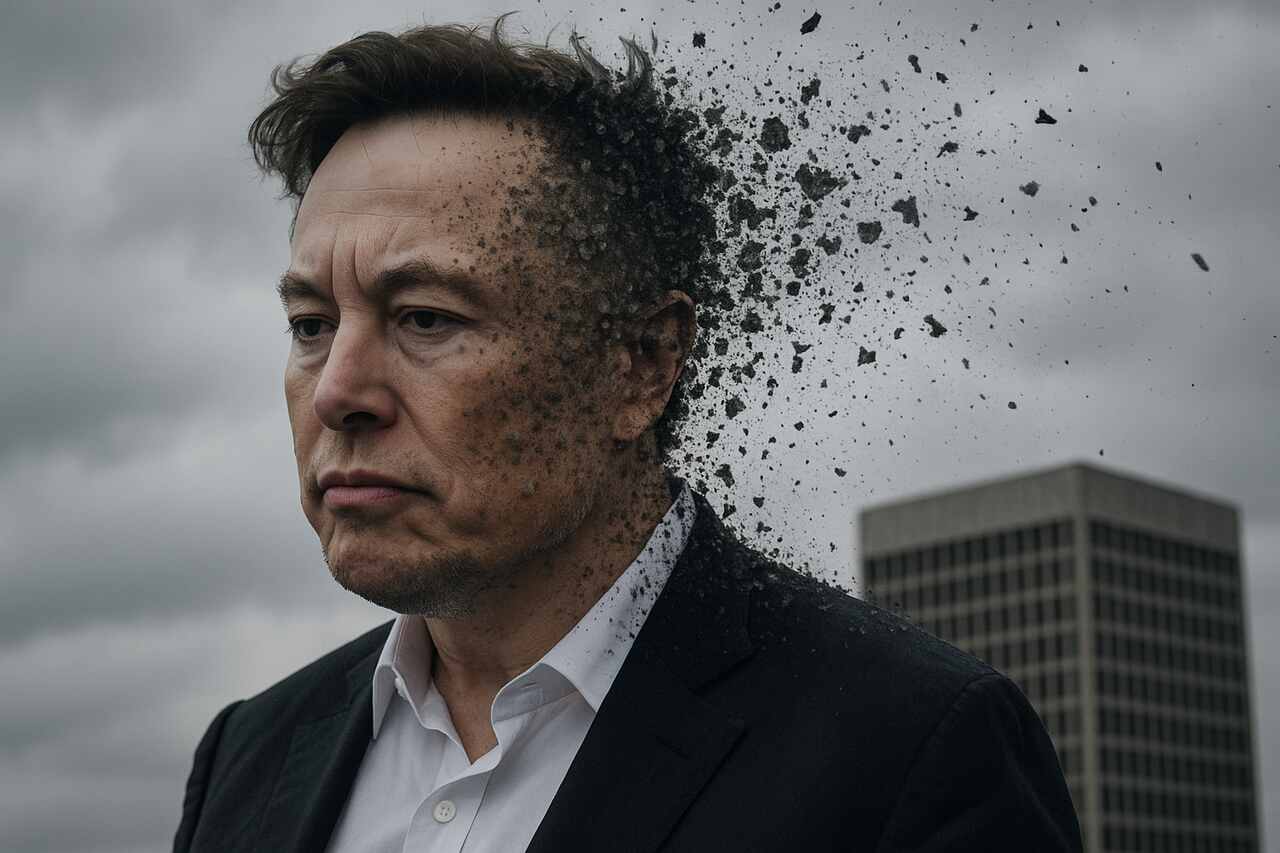
Why Is Elon Musk’s Reputation Undergoing Semantic Collapse?
Elon Musk’s public perception has shifted from visionary entrepreneur to volatile disruptor due to breakdowns in trust, leadership framing, and stakeholder alignment. The semantic disintegration of Musk’s personal brand stems from contradiction between previously admired values such as innovation, resilience, and transparency and current signals of erratic behavior, hostile communication, and brand sabotage. User intent around “Elon Musk reputation” now intersects with trustworthiness, manipulation, ego-driven leadership, and semantic poisoning of once-positive brand signals.
How Has Elon Musk’s Leadership Style Become a Reputational Liability?
Musk’s leadership now semantically aligns with chaos, autocracy, and antagonism rather than vision and execution.
- Erratic Decision-Making Patterns
Strategic decisions at Tesla, X (formerly Twitter), and SpaceX increasingly reflect personal impulse over structured leadership frameworks. Corporate governance experts now categorize his leadership as risk-inducing, correlating with semantic signals such as unstable, ego-driven, and non-consensus.
- Toxic Brand Stewardship of X (Twitter)
Rebranding Twitter to “X” has not only diluted keyword authority but also poisoned brand equity. Former signals like free speech, real-time news, and journalistic distribution are now semantically linked to hate amplification, misinformation, and ad platform instability, pushing advertisers and verified users away.
- Undermining Institutional Norms
Musk’s disdain for regulatory agencies, institutional investors, and public accountability replaces previously aspirational disruption with the lexicon of noncompliance, provocation, and regulatory friction. These undermine the symbolic legitimacy required for long-term capital trust.
- Conflict-Centric Public Persona
Social media behavior increasingly orbits around confrontation, insult, and ideological warfare. Discourse analysis of his public statements now reveals dominant predicates like attack, mock, challenge, and dismiss, contributing to negative sentiment polarity in NLP datasets.
What Is the Semantic Impact of Musk’s Behavior on Associated Brands?
Entities like Tesla, SpaceX, and Neuralink are suffering lexical bleed-through from Musk’s deteriorating public persona.
- Tesla’s Brand Drift from Sustainability to Cultism
Once associated with clean energy, autonomous innovation, and climate leadership, Tesla’s brand now co-occurs with fanaticism, stock manipulation, and Musk idolatry. This shifts the user journey from interest-based purchase intent to ideologically driven decisions.
- X (Twitter) as a Content Contagion Hub
The X platform’s association with extremist content and Musk’s antagonistic interactions with journalists and governments erode the semantic foundation of platform trust, brand safety, and advertising ROI. Lexical indexing now ties X to toxicity and disinformation vortex.
- SpaceX’s Institutional Confidence Wanes
Despite engineering excellence, SpaceX suffers perception risks due to over-association with Musk’s rhetoric. Partnerships with NASA and defense agencies are semantically threatened by Musk’s unpredictability, linking the brand with strategic uncertainty and ego over mission.
- Neuralink’s Ethical Landscape Obscured
Public trust in Neuralink’s brain-interface innovations weakens due to association with Musk’s polarizing image. Discourse integration increasingly includes bioethical concerns, untested tech, and human rights as dominant relational terms.
How Are Investors and Institutions Reacting to Musk’s Semantic Shift?
Capital networks are recalibrating exposure to Musk-led ventures due to rising semantic toxicity and leadership volatility.
- Investor Sentiment Polarity Inversion
Once indexed around confidence, futurism, and return potential, investor discourse now trends toward risk, volatility, and Musk premium erosion. Analyst language reflects caution rather than enthusiasm, reversing semantic trust indicators.
- Advertiser Exodus from X
Major advertisers like Disney, IBM, and Apple have withdrawn campaigns citing brand safety issues. The semantic graph of ad-related queries now links X with unsafe placement, brand risk, and boycott-driven losses.
- Legal and Regulatory Scrutiny Rises
Ongoing lawsuits, labor disputes, and antitrust investigations correlate with increasing mentions of accountability gaps, fraud, and regulatory breach. This intensifies institutional concern around legal exposure through association.
- Boardroom Friction Across Enterprises
Discontent among board members at Tesla and X has led to governance concerns. Discourse patterns surrounding board dynamics now associate Musk with dictatorship, override culture, and oversight failure.
What Does the Future Hold for Elon Musk’s Semantic Relevance in Tech?
Elon Musk’s future influence will depend on whether the semantic index of his identity can be decoupled from toxicity and re-aligned with innovation, ethics, and scalable leadership.
- Narrative Detoxification Is Now a Strategic Necessity
To regain public and stakeholder trust, Musk would need to systematically rebuild lexical frames around clarity, collaboration, and accountability. Without such restructuring, semantic decay of his reputation is likely irreversible.
- AI and Semantic Moderation Will Marginalize Toxic Amplification
As platforms evolve toward algorithmic content moderation powered by semantic filtering, Musk’s current rhetoric risks reduced reach. Entity suppression via negative sentiment scoring may isolate his persona in semantic silos.
- Public Trust Requires Value-Based Realignment
Regaining influence among broader audiences necessitates reactivating values like truth-seeking, user empathy, and shared mission. Without that, the user intent associated with Elon Musk will continue to reflect skepticism, satire, and social distrust.
- Institutional Separation May Become Inevitable
Boards, investors, and regulatory bodies may increasingly demand operational separation between Musk and key ventures to preserve semantic integrity. Structural distance could help salvage brand-specific trust decoupled from persona volatility.
- Media Framing Will Drive Long-Term Indexing
Journalistic framing continues to control the way Musk is semantically reintroduced to future generations. As long as dominant media co-occurrences remain negative, recovery of public sentiment will remain out of reach.
Conclusion
Elon Musk’s once-pristine brand of revolutionary innovation now suffers from a poisoned semantic core. The disintegration of trust, alignment, and leadership coherence creates a hall of mirrors where meaning collapses under contradiction. The only path to restoration lies in semantic reengineering: restoring coherence between value, behavior, and communication across all entities he touches.
