
When you decide to sell your motorcycle, mileage usually gets most of the attention. You check the odometer, note the low numbers, and assume that alone will bring strong offers. Yet many owners discover that even a lightly ridden bike can sit unsold or sell for far less than expected, while another with noticeably higher miles moves quickly at a solid price. The real difference often lies in a set of digital factors that shape how buyers perceive and value your motorcycle today.
The Internet’s Role in Used Motorcycle Sales

The used motorcycle market has shifted dramatically in recent years. Buyers no longer rely solely on in-person inspections or word-of-mouth recommendations. They begin their search online, often spending hours comparing listings, reading reviews, and gathering data before ever contacting a seller. Understanding and actively managing these digital elements can add hundreds or even thousands of dollars to your final sale price, as they help you to calculate the resale value of your motorcycle accurately.
Valuation Tools Are Essential When Determining a Fair Price
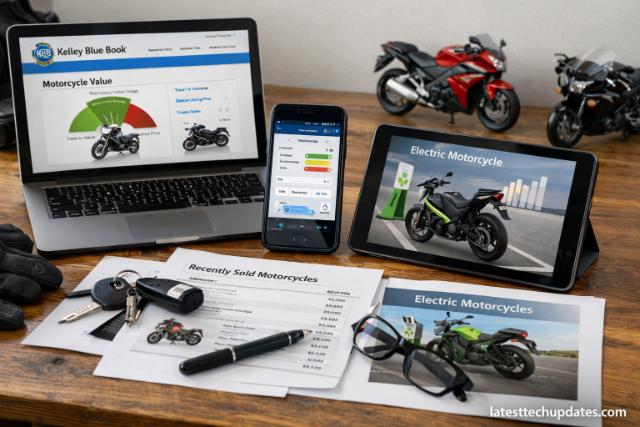
Start with accurate, real-time online valuation tools. Modern platforms such as Kelley Blue Book and specialized apps pull data from recent sales nationwide. These tools go well beyond mileage. They account for regional demand, current fuel prices, seasonal buying patterns, and whether certain features such as cornering ABS, ride modes, cruise control, or smartphone integration are standard or optional on your model year. A bike equipped with the latest electronics frequently holds its value better than an otherwise identical older model without those upgrades. At the same time, the growing popularity of electric motorcycles is quietly pressuring resale values of some traditional gas-powered bikes as more riders consider making the switch. Checking these resources before you list helps you set a realistic asking price that attracts serious buyers instead of turning them away.
Provide a Clean VIN History Report
Build immediate trust with a clean VIN history report. Nothing erodes buyer confidence faster than uncertainty about a motorcycle’s past. When you include a fresh, clean report in your listing or offer to share it right away you remove a significant source of hesitation. Buyers feel secure knowing they are not inheriting hidden problems, and many are willing to pay a premium for that peace of mind. A questionable or missing history, on the other hand, can significantly cut your offers, even if the bike looks and rides perfectly.
Create an Effective Listing
Create listings that stand out in a crowded digital marketplace. Where you list matters, but how you present the bike matters even more. High-traffic platforms expose your motorcycle to thousands of potential buyers. The most successful listings feature bright, well-composed photographs taken in natural daylight from multiple angles front, rear, both sides, engine, seat, controls, and any custom or aftermarket parts. Short videos showing the bike starting easily, idling smoothly, and being ridden give buyers a much clearer sense of condition than still photos alone. A thoughtful, detailed description that highlights maintenance records, recent service work, and reasons for selling helps build an emotional connection and answers questions before they are asked.
By taking control of these digital factors using current valuation data, providing transparent history, crafting professional listings, and building a little online buzz you position your motorcycle as a desirable, low-risk purchase. In today’s market, the riders who invest a few extra hours in the digital side of selling almost always achieve better results. However, if you want a fair price without doing this work, visit a used motorcycle dealer and sell the bike to them or trade it in. Doing so saves time and lets you get a reasonable offer without the work of selling the bike on your own. You may find this option better suits your needs.
