
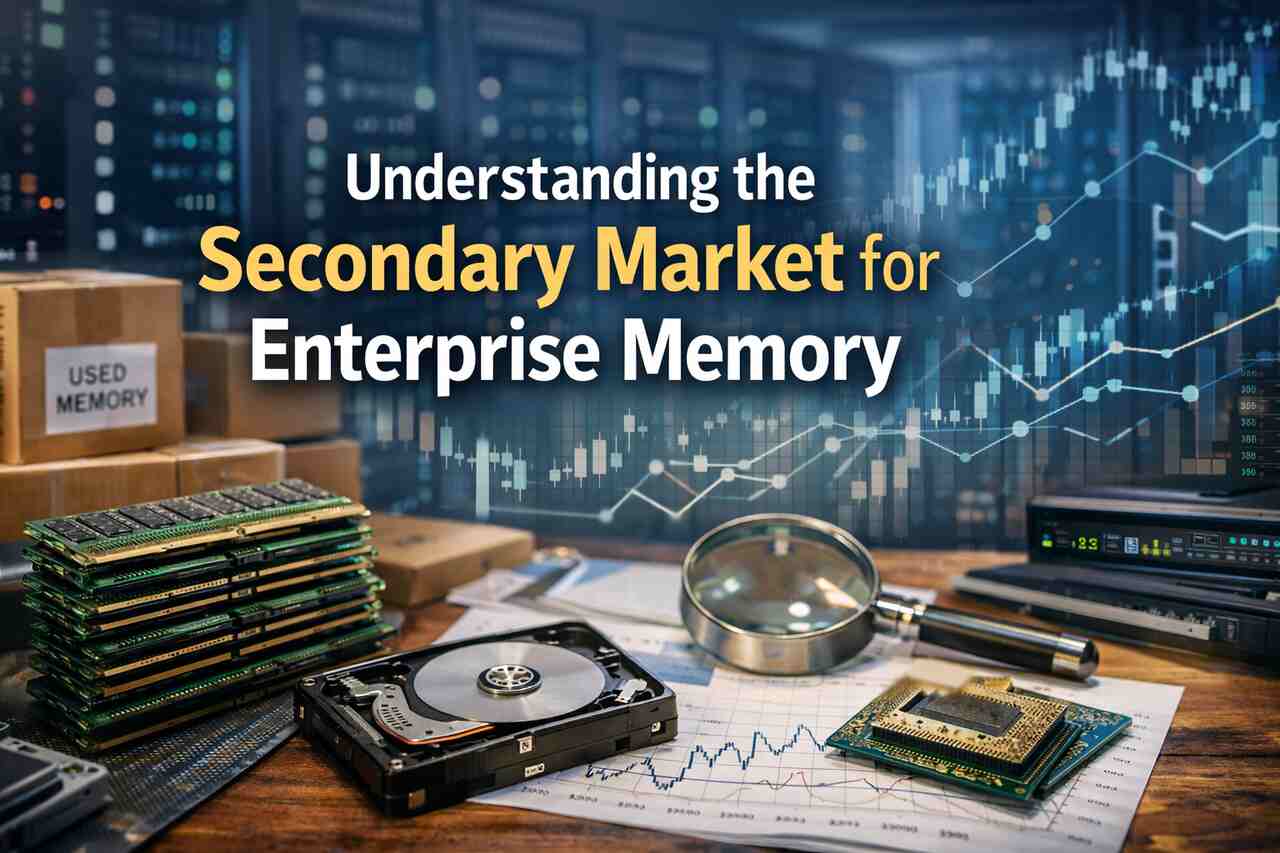
Every data-driven organization depends on efficient, high-performance memory infrastructure. From data centers to cloud servers, enterprise memory forms the foundation of daily operations. However, as technology evolves rapidly, businesses frequently upgrade their hardware, leaving a surplus of functional memory modules behind. This cycle has created a thriving secondary market where enterprise memory continues to hold considerable value.
The secondary market provides opportunities for organizations to recoup investment and contribute to sustainability through responsible asset disposition. Many companies turn to specialized platforms to sell memory and recover value while ensuring proper data security and compliance.
What Defines the Secondary Market for Enterprise Memory
The secondary market refers to the network of buyers, resellers, refurbishes, and brokers dealing in pre-owned, decommissioned, or surplus enterprise hardware components. Unlike consumer electronics resale, this market caters specifically to data center-grade parts, including DRAM, DIMMs, and other high-end memory solutions used in servers and storage arrays.
Enterprises benefit from this market because it provides a structured channel to offload components that remain valuable even after decommissioning. These components can then be tested, re-certified, and sold to other businesses that seek reliable hardware at lower costs.
Factors That Influence Market Demand
Several key elements shape the demand for enterprise memory on the secondary market.
- Data Center Expansion
Cloud service providers and enterprises expanding their infrastructure often prefer refurbished memory to reduce procurement costs. - Economic Shifts
Budget constraints or global supply chain disruptions can increase reliance on secondary markets for essential components. - Hardware Compatibility
Certain legacy systems require specific types of memory that are no longer in production. The secondary market becomes the main source for compatible components. - Sustainability Initiatives
Many organizations have set environmental goals, and reusing or recycling hardware supports those commitments while reducing electronic waste.
How the Secondary Market Operates
The process of trading enterprise memory typically follows a transparent structure involving multiple steps:
- Evaluation: Memory modules are inspected for performance and authenticity.
- Data Sanitization: Secure erasure or destruction of residual data ensures compliance.
- Testing and Certification: Modules undergo diagnostic tests to verify speed, latency, and stability.
- Resale or Redistribution: Certified parts are listed for sale to other enterprises or IT asset managers.
This ecosystem supports both sellers and buyers by offering reliable, cost-efficient, and traceable hardware solutions.
Key Benefits of Participating in the Secondary Market
Engaging in this market provides distinct advantages to enterprises:
Cost Efficiency
Organizations purchasing re-certified memory modules can achieve substantial savings compared to buying new hardware.
Resource Optimization
Instead of letting decommissioned hardware sit unused, businesses can convert it into liquid capital and allocate those funds elsewhere.
Environmental Responsibility
Extending the lifecycle of enterprise memory reduces the demand for new production, cutting down on resource extraction and waste generation.
Supply Continuity
For systems dependent on older platforms, the secondary market ensures the continued availability of compatible memory components.
What Buyers Look for in Enterprise Memory
Buyers in the secondary market prioritize several factors when selecting components:
- Proven performance history
- Compatibility with existing infrastructure
- Vendor credibility and testing certifications
- Detailed specifications and traceability reports
Quality assurance, transparency, and post-sale support significantly influence purchasing decisions.
The secondary market for enterprise memory serves as a bridge between efficiency, sustainability, and profitability. Organizations that understand its structure can recover significant value from decommissioned assets, reduce waste, and support global resource conservation. When organizations decide to sell memory, choosing the right partners and maintaining compliance ensures the process remains secure and beneficial for all participants. Exploring this market strategically helps businesses continue leveraging technology’s value long after the first deployment.
