
What is Samsung’s Triple-Folding Phone and Why is it a Breakthrough in Foldable Technology?
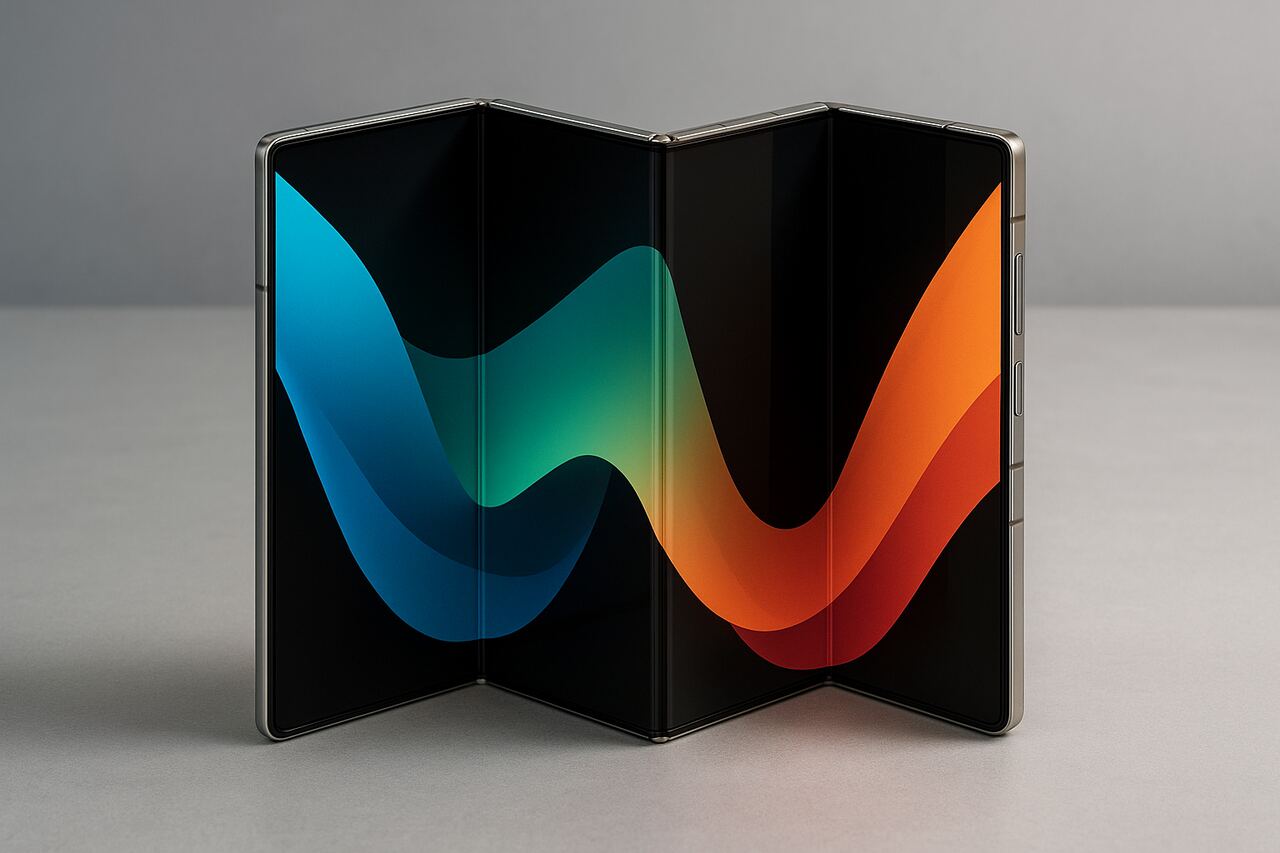
Samsung has unveiled its first triple-folding smartphone, a special edition foldable device that redefines mobile form factor engineering. The model integrates a tri-fold display mechanism with hybrid hinge infrastructure, allowing the device to fold in a Z-shaped configuration. Unlike bi-fold devices such as the Galaxy Z Fold series, this innovation extends display usability while preserving portability.
The triple-folding phone functions as a hybrid between a tablet and smartphone, using advanced polymer materials and a next-generation AMOLED display that bends across two hinges. This hardware evolution aligns with Samsung’s long-term foldables roadmap revealed at SID Display Week 2025.
How Does the Triple-Folding Mechanism Function?
Hinge Architecture
The tri-fold design uses a dual-axis mechanical hinge system engineered for over 200,000 folds. Each hinge integrates micro-gears and torque balancers, enabling synchronous folding across both sections of the device. Samsung utilizes multi-point stress distribution to prevent display fatigue and structural deformation.
Display Material and Flexibility
The triple-folding device employs Ultra Thin Glass (UTG) layered with flexible OLED, offering resilience against repeated folding. The middle segment of the display hosts the central processing unit to maintain performance stability even under thermal expansion caused by continuous fold usage.
Form Factor Optimization
The device measures around 7.9 inches unfolded and folds down into a compact, pocketable size comparable to a standard smartphone. The triple-segment architecture supports seamless multi-screen transitions without display interruption, leveraging dynamic frame-rate adaptation for each folded section.
Thermal and Battery Management
Each fold section contains isolated heat dissipation channels using graphene-based thermal pads. The battery uses split-cell architecture, placing independent power units on each segment, coordinated by a power optimization engine to extend screen-on time and prevent uneven discharge.
Durability Certification
Samsung has secured MIL-STD-810H durability certification for the new model, covering pressure resistance, shock tolerance, and water-resistance (IPX8). The triple-fold structure underwent high-cycle mechanical stress tests to meet enterprise-grade reliability standards.
What Are the Key Features of the Special Edition Model?
Limited Edition Industrial Design
Samsung positions the launch as a special edition prototype, featuring a brushed titanium frame and premium matte finish. A limited production run includes serialized units, making the device a collectible among early adopters and tech enthusiasts.
Embedded AI Display Intelligence
The device includes Samsung’s proprietary Vision AI Engine that adjusts display layout and app behavior based on fold position. For example, when partially folded, the device enters Flex Mode to allow dual-screen multitasking or video conferencing in split-screen format.
High-End Hardware Integration
Samsung equipped the model with the Snapdragon 8 Gen 4 processor, 16GB of LPDDR5X RAM, and up to 1TB UFS 4.0 storage. The primary display supports QHD+ resolution and 120Hz refresh rate with HDR10+ certification for cinema-grade color reproduction.
Stylus Compatibility
The triple-folding device includes S Pen Fold Edition support, integrating advanced pressure sensitivity and palm rejection across the full span of the unfolded screen. The stylus docks magnetically on the device’s spine for on-the-go usage.
Camera System and Optics
The triple-fold phone includes a quad-camera array with a 200MP main sensor, ultra-wide 50MP lens, 10x periscope telephoto lens, and a dedicated depth scanner. Samsung’s computational photography engine uses AI-driven scene optimization for enhanced dynamic range in folding or flat modes.
What Are the Implications for the Foldable Smartphone Market?
Strategic Positioning Against Competitors
Samsung’s triple-folding phone directly competes with emerging multi-fold prototypes from Huawei and Xiaomi. By achieving commercial viability first, Samsung reinforces its leadership in the flexible electronics vertical and strengthens its innovation moat in premium foldables.
Expansion of the Foldables Ecosystem
The new model signals Samsung’s intent to create a broader ecosystem of fold-centric apps, including optimizations from Microsoft Office Suite, Google Workspace, and Adobe Creative Cloud. Developers gain access to new APIs for tri-fold user interface logic.
Influence on Mobile UX Design
User interface and experience design will shift toward segment-aware rendering, where UI components respond dynamically to folded states. Samsung is also testing haptic spatial feedback to enhance gesture responsiveness on different fold angles.
Retail and Price Strategy
The special edition model is expected to retail above $2,400 USD, placing it in the ultra-premium category. Distribution will be region-limited initially, targeting innovation-centric markets such as South Korea, Japan, UAE, and the United States.
Future Model Roadmap
Samsung plans to introduce mass-market variants by Q3 2026, with improved fold-cycle efficiency, lower thickness, and ecosystem-integrated accessories such as wearable sync docks and desktop projection modules.
How Does This Innovation Affect Samsung’s Brand Perception?

Innovation Leadership Reinforcement
By debuting the world’s first commercially viable triple-folding smartphone, Samsung reasserts its dominance as a hardware innovator. The move aligns with the brand’s historic positioning around early adoption of display-first engineering from curved OLEDs to under-display cameras.
Enterprise Market Opportunities
The form factor enables enterprise use cases such as portable workstation deployments, on-site construction schematics, and large-format content previews for creative professionals. Samsung is developing Knox Security modules specifically for multi-screen workflows.
User-Centered Design Philosophy
The triple-folding concept addresses the increasing consumer demand for converged mobility combining the functionality of tablets, laptops, and phones into one high-performance device. Consumer perception surveys indicate strong interest in foldable versatility tied to professional and entertainment use.
Sustainability Considerations
Samsung emphasizes the use of recycled aluminum, rare-earth recovery techniques, and packaging with zero plastic. Lifecycle carbon impact is offset through Samsung’s Green Innovation Fund, reinforcing the brand’s eco-conscious identity.
Brand Differentiation through Industrial Innovation
Samsung distances itself from competitors by showcasing a product that combines mechanical innovation, computational power, and visual excellence. The triple-folding phone becomes a halo device in Samsung’s product lineup demonstrating what is technologically possible at the intersection of material science and consumer electronics.
