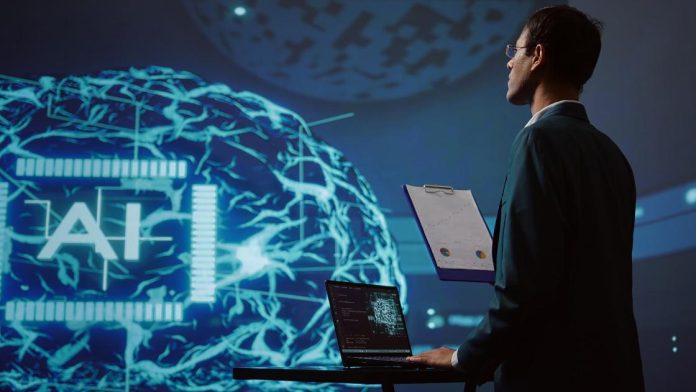


The artificial intelligence revolution has fundamentally transformed the employment landscape, creating unprecedented shifts in how we work, what skills employers value, and which careers hold promise for the future. As we navigate through 2025, the impact of AI on the job market has moved beyond speculation into concrete reality, reshaping industries and redefining the very nature of work itself.
The Displacement and Creation Paradox
The fears surrounding AI-driven job displacement have materialized in certain sectors, yet the story is far more nuanced than simple automation replacing human workers. Recent data suggests that while approximately 85 million jobs may be displaced by AI by 2025, the technology is simultaneously expected to create 97 million new roles. This net positive outcome, however, masks significant transitional challenges for workers caught between disappearing opportunities and emerging ones.
Manufacturing, data entry, and routine administrative positions have experienced the most dramatic declines. Customer service representatives face particular pressure as conversational AI systems handle increasingly complex inquiries with remarkable accuracy.
Financial analysts performing routine number-crunching tasks find themselves competing with algorithms that process information exponentially faster. Yet this displacement has catalyzed a broader conversation about human adaptability and the importance of continuous learning in an AI-augmented economy.
The Rise of Hybrid Roles
Perhaps the most significant shift in 2025’s job market is the emergence of hybrid positions that blend traditional expertise with AI proficiency. These roles don’t simply require workers to use AI tools they demand a sophisticated understanding of how to collaborate with artificial intelligence systems to amplify human capabilities. Marketing professionals now orchestrate AI-driven campaigns while providing the creative direction algorithms cannot generate. Healthcare workers interpret AI diagnostic suggestions within the broader context of patient care that requires empathy and nuanced judgment.
The most sought-after employees are those who can bridge the gap between technical AI capabilities and domain-specific knowledge. Companies increasingly prize workers who understand their industry deeply while possessing the technical literacy to leverage AI tools effectively. This has created opportunities for professionals willing to expand their skill sets, and many are choosing to take an AI certification course to demonstrate their commitment to staying relevant in this evolving landscape.
Skills That Command Premium Value
The skills hierarchy has undergone a dramatic inversion. Where technical prowess once guaranteed career security, employers now place premium value on distinctly human capabilities that AI struggles to replicate. Critical thinking, emotional intelligence, complex problem-solving, and creative innovation top the list of sought-after competencies. The ability to ask the right questions has become more valuable than providing rote answers.
Communication skills have taken on new significance as workers must effectively collaborate with both human colleagues and AI systems. The capacity to interpret AI-generated insights and translate them into actionable strategies distinguishes successful professionals from those merely operating the technology. Ethical reasoning has emerged as a crucial skill, particularly in industries where AI-driven decisions carry significant consequences for individuals and communities.
Industry-Specific Transformations
Different sectors have experienced AI’s impact in vastly different ways. The technology industry itself has seen explosive growth, with AI engineers, machine learning specialists, and prompt engineers commanding salaries that reflect surging demand. Healthcare has witnessed the creation of entirely new roles such as AI medical coordinators who ensure seamless integration between diagnostic algorithms and clinical practice.
The creative industries, once considered immune to automation, face their own reckoning. While AI-generated content floods digital spaces, human creatives who can direct, refine, and imbue work with authentic emotional resonance find themselves more valuable than ever. The legal profession has transformed as AI handles document review and legal research, freeing attorneys to focus on strategy, negotiation, and courtroom advocacy that require human judgment.
The Education and Training Response
Educational institutions have scrambled to adapt their curricula to prepare students for this AI-integrated workforce. Universities now emphasize interdisciplinary programs that combine technical AI knowledge with liberal arts training in critical thinking and communication. Vocational programs have expanded rapidly to offer shorter-term credentials that help displaced workers transition into emerging roles.
Corporate training initiatives have become essential as companies recognize that their existing workforce needs continuous upskilling. Organizations that invest in employee development report higher retention rates and better adaptation to technological changes.
The concept of lifelong learning has shifted from aspirational to essential, with workers at all career stages recognizing the necessity of evolving alongside advancing technology.
Looking Forward
The job market of 2025 reveals that AI’s impact isn’t simply about replacement but transformation. Success belongs to individuals and organizations that embrace adaptability, invest in human-centric skills, and view AI as a collaborative tool rather than a threatening competitor. As we continue deeper into this technological revolution, the winners will be those who recognize that the future of work isn’t human versus machine it’s human and machine, working in concert to achieve what neither could accomplish alone.