
Highlights
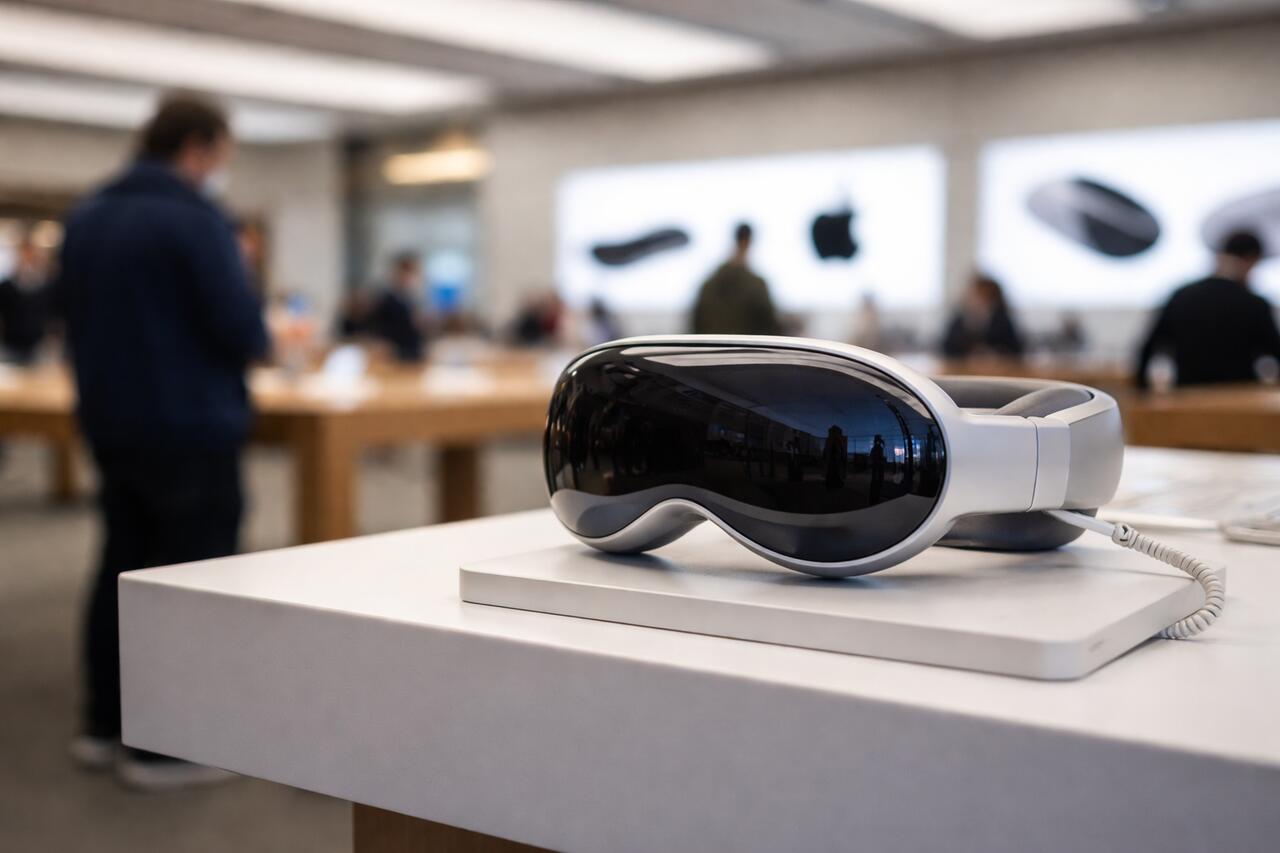
- Apple reportedly slashed Vision Pro headset production due to weak consumer demand and complex manufacturing challenges.
- High price point ($3,499) and limited everyday use cases contributed to poor sales performance across early adopters.
- Vision Pro’s mixed reality features failed to generate mainstream appeal, with users questioning real-world utility and ecosystem support.
- Developers remain hesitant to build for VisionOS, citing a lack of monetization clarity and user base traction.
- Production complexity especially in micro-OLED displays and sensor integration created supply chain bottlenecks, limiting scalability.
- Enterprise and prosumer adoption rates remain low, with industries taking a wait-and-see approach before deploying at scale.
- Competing XR platforms like Meta’s Quest benefit from price-performance advantage, intensifying competitive pressure in the spatial computing market.
- Apple may redirect XR strategy toward lighter, more affordable Vision variants, focusing on ecosystem integration and selective feature sets.
- Market analysts interpret the move as a recalibration of XR growth timelines, not a withdrawal from the extended reality category.
- Apple’s spatial computing vision remains intact, but execution pace is being revised to match hardware-readiness and user demand cycles.
Why Did Apple Reduce Vision Pro Production Volume?
Apple reportedly reduced production output for the Vision Pro due to underwhelming consumer demand and logistical inefficiencies in the extended reality (XR) hardware supply chain. The decision reflects the misalignment between anticipated adoption rates and actual market readiness for mixed reality technology in premium segments.
What Caused Weak Consumer Demand for Vision Pro?
Consumers displayed low conversion interest due to the high retail price point ($3,499), a lack of compelling daily-use applications, and limited ecosystem integration beyond Apple-first environments. Early adopters expected a transformative spatial computing experience; however, current software utility failed to justify the investment. The demand signal for prosumer AR/VR content remains fragmented, with insufficient anchor applications in productivity, entertainment, or remote collaboration.
How Did Market Competition and Consumer Psychology Influence the Outcome?
Meta’s Quest series and Sony’s PlayStation VR2 offered more accessible price-performance ratios, reshaping expectations for immersive technology. Cognitive friction emerged among users comparing Vision Pro to lower-cost alternatives, especially when evaluating features like hand tracking, field of view (FOV), and motion latency. The perception of the Vision Pro as a luxury-first device instead of a productivity enabler reduced mass appeal. Additionally, purchase hesitation rose due to skepticism over long-term content support and hardware iterations.
What Role Did Supply Chain Constraints and Manufacturing Complexity Play?
The Vision Pro features dual micro-OLED displays, advanced LIDAR-based spatial sensors, and a customized Apple M2 chip each adding to manufacturing constraints. Supply chain inefficiencies emerged due to the limited availability of high-resolution micro-displays and the need for precision assembly in small quantities. Apple’s historically tight quality control further slowed unit throughput. The production cutback reflects not just demand softness but also operational friction in scaling complex hardware.
How Does Developer Ecosystem Immaturity Affect Product Viability?
The Vision Pro App Store remains in early stages, lacking third-party spatial apps with high daily retention metrics. Developers face hurdles in designing immersive, persistent AR/VR experiences that align with user context-switching behavior. Without a thriving application layer, hardware fails to retain relevance. Apple’s SDKs for VisionOS still require maturation, and few developers are incentivized to invest in niche-use platforms with unclear monetization.
What Are the Implications for Apple’s Extended Reality Strategy?
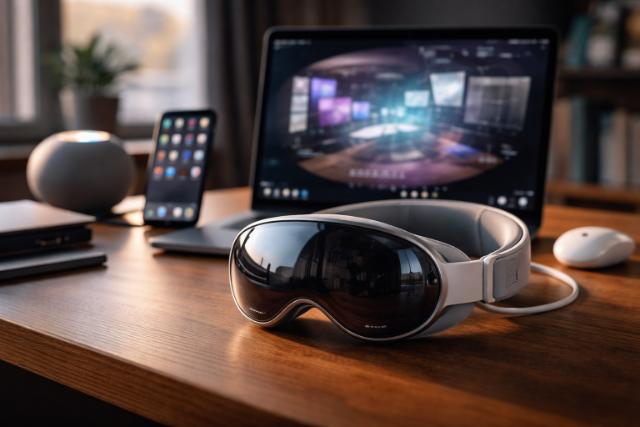
Apple’s Vision Pro setback highlights the broader challenge of establishing spatial computing as a mainstream interaction paradigm. The current market feedback loop underscores misaligned timing between hardware sophistication and software readiness.
How Will Apple Reposition Vision Pro in Future Iterations?
Apple may pivot toward lighter, more affordable variants possibly under the “Vision” brand targeting hybrid users in education, enterprise, and creative industries. Strategic downscaling of feature sets like passthrough fidelity and spatial audio may help improve unit economics. Future product-market fit could be refined through demand-responsive iteration based on regional user behavior data.
How Does This Impact Apple’s Broader Wearable and Services Ecosystem?
Vision Pro’s lukewarm adoption rate creates friction in Apple’s goal of creating a unified XR experience within its Health, Fitness+, and Apple TV ecosystems. Cross-device integration strategies such as Continuity and Handoff remain underutilized in Vision Pro, reducing the device’s utility as a secondary interface. Failure to cement Vision Pro as a productivity companion weakens its positioning in Apple’s value chain.
How Are Enterprise Buyers and Industry Verticals Responding?
Enterprise clients in fields like architecture, healthcare, and industrial design exhibit cautious optimism. However, procurement cycles are slowed by unclear ROI on immersive training modules and collaboration tools. Current use cases remain pilot-level, with full deployment hindered by device ergonomics, content availability, and support costs. Competitive offerings from Microsoft’s HoloLens 2 or Magic Leap maintain presence in B2B verticals due to better domain-specific integration.
What Signals Does the Market Read into Apple’s Decision?
Investors and analysts view the production cut as a signal that XR growth curves remain shallow in premium tiers. While Apple’s long-term R&D investment in spatial interfaces remains robust, short-term revenue expectations from Vision Pro must be recalibrated. Market sentiment interprets the move as a correction in XR roadmap pacing rather than an abandonment of mixed reality ambitions.
What Is the Broader Impact on the XR Industry?
Apple’s decision influences broader market expectations for immersive computing adoption and indirectly shapes developer interest, investor confidence, and hardware roadmaps across the XR ecosystem.
How Does Vision Pro’s Setback Influence Competitor Strategies?
Competitors like Meta may double down on affordability and entertainment-focused experiences to capture the demand elasticity exposed by Vision Pro’s performance. Samsung, Qualcomm, and Google’s joint XR platform could benefit from Apple’s delay in achieving market saturation, giving Android-aligned ecosystems space to refine interoperable mixed reality offerings.
How Will Developer Sentiment Shift Post-Apple Adjustment?
Developers will recalibrate expectations around spatial app monetization. Investment in WebXR, Unity, and Unreal Engine-based pipelines may slow unless cross-platform potential justifies the cost. Apple’s VisionOS may face reduced developer engagement unless significant incentives or performance upgrades are announced.
What Trends Are Emerging in Consumer AR/VR Preferences?
Users increasingly prefer lightweight, social-first XR experiences. Headsets with better comfort, lower heat output, and longer battery life dominate preference indexes. Demand is shifting toward augmented overlays rather than fully immersive environments indicating stronger future demand for see-through AR glasses rather than opaque head-mounted displays.
How Does This Affect Spatial Computing’s Place in Consumer Tech?
Spatial computing remains conceptually strong, but its consumer embodiment through headsets is still maturing. Apple’s production reduction suggests the transition from mobile-first to spatial-first computing will require a phased, multi-device ecosystem rollout blending glasses, wearables, and AI assistants before immersive headsets become primary interfaces.
