
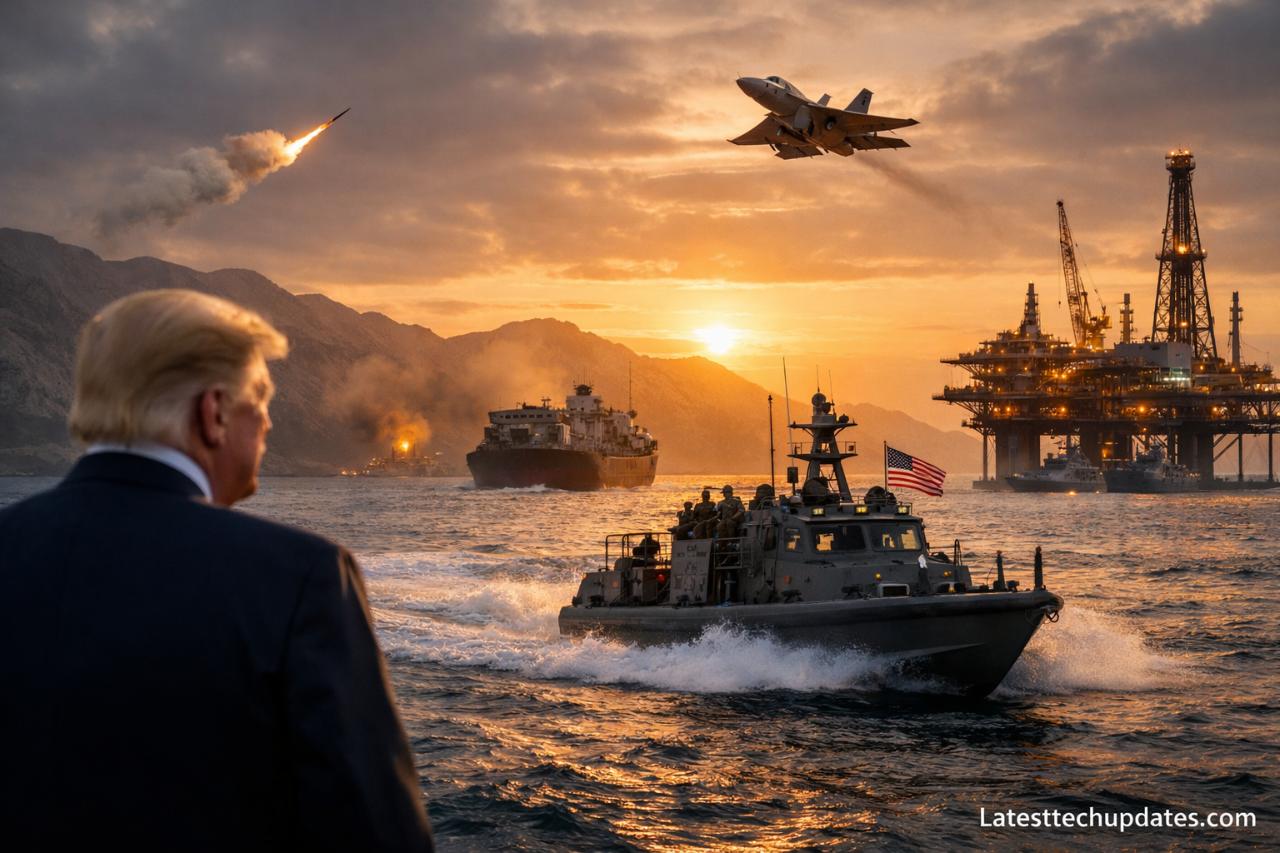
Highlights
- Donald Trump escalates rhetoric around the Strait of Hormuz, signaling pressure on Iran while keeping military ambiguity intact.
- The Strait of Hormuz remains a global النفط lifeline, handling over one-fifth of the world’s oil shipments, making every threat economically significant.
- Iran responds within a pattern of strategic signaling, leveraging regional influence and maritime capabilities without direct escalation.
- The United States Navy presence in the Gulf ensures rapid deployment, reinforcing deterrence while avoiding immediate confrontation.
- Global markets react instantly, with oil prices and shipping risks fluctuating based on geopolitical tension signals rather than actual conflict.
What Does Strait of Hormuz Represent in Global Energy Geopolitics?
The Strait of Hormuz functions as the most critical maritime chokepoint for global oil transit, connecting the Persian Gulf with the Arabian Sea. Daily oil shipments through this narrow passage exceed 20% of global consumption, positioning the strait as a strategic artery for energy-dependent economies such as China, India, and Japan.
Energy flow stability through this corridor directly impacts global oil prices, shipping insurance premiums, and naval security operations. Regional actors including Iran and Oman share geographic control, creating a layered geopolitical dependency. Strategic vulnerability emerges because even minor disruptions whether military or rhetorical can trigger immediate volatility in the global oil market.
Why Did Donald Trump Issue a Strait of Hormuz Ultimatum?
Donald Trump framed the ultimatum as a deterrence mechanism aimed at countering perceived threats from Iran, particularly regarding nuclear development and regional proxy influence. The ultimatum aligns with a broader doctrine of “maximum pressure,” integrating economic sanctions, military signaling, and diplomatic isolation.
Policy signaling through strong rhetoric creates psychological leverage, influencing both adversaries and allies. Strategic messaging targets multiple audiences simultaneously: Tehran’s leadership, Gulf allies like Saudi Arabia, and global markets sensitive to geopolitical instability. Communication style under Trump often blends unpredictability with calculated escalation, making interpretation complex within traditional diplomatic frameworks.
How Does the Ultimatum Affect US-Iran Strategic Dynamics?
US-Iran relations operate within a cycle of escalation and deterrence, where each statement contributes to a broader signaling game. The ultimatum increases tension by reinforcing the possibility of military confrontation while simultaneously leaving room for negotiation.
Iran historically uses asymmetric strategies such as naval harassment and proxy networks to counter superior US military capabilities. The Islamic Revolutionary Guard Corps plays a central role in controlling maritime responses within the strait. Escalatory rhetoric from Washington often triggers reciprocal signaling from Tehran, creating a feedback loop of threats without immediate kinetic conflict.
Strategic ambiguity allows both sides to maintain domestic political narratives while avoiding direct war. Diplomatic backchannels and third-party mediators such as Qatar and Switzerland often intervene to stabilize communication.
Is the Ultimatum a Genuine Military Threat or Negotiation Tactic?
The ultimatum functions simultaneously as a coercive threat and a negotiation instrument, reflecting hybrid strategic intent. Military feasibility exists due to the presence of the United States Navy Fifth Fleet stationed in Bahrain, ensuring rapid response capability in the Gulf region.
However, economic and geopolitical costs of direct conflict such as disrupted oil flows and global recession risks reduce the likelihood of immediate military execution. Strategic coercion aims to shift bargaining positions without triggering irreversible escalation.
Negotiation tactics embedded in such ultimatums rely on signaling resolve while maintaining deniability. Historical precedent from earlier US-Iran confrontations suggests that strong rhetoric often precedes diplomatic recalibration rather than full-scale conflict.
What Are the Global Economic and Security Implications?
Global markets react instantly to instability signals in the Strait of Hormuz due to supply chain sensitivity. Oil price spikes, increased shipping costs, and insurance surcharges represent immediate economic consequences. Financial markets interpret such ultimatums as risk indicators, influencing investor behavior across sectors including energy, logistics, and defense.
Security implications extend beyond the Middle East. NATO allies, Asian importers, and multinational corporations depend on uninterrupted energy flows. Military alliances may strengthen naval patrols, while energy-importing countries accelerate diversification strategies such as renewable investments and alternative pipeline routes.
Geopolitical ripple effects reshape alliances, reinforce regional rivalries, and elevate the strategic importance of maritime security doctrines. The ultimatum therefore acts not only as a bilateral signal but also as a global systemic disruptor.
Conclusion
Donald Trump uses the Strait of Hormuz ultimatum as a layered strategic tool combining deterrence, negotiation leverage, and domestic political messaging. The ultimatum does not operate purely as a war signal; instead, the ultimatum functions within a controlled escalation framework designed to influence behavior without triggering immediate conflict.
Global interpretation depends on context: markets perceive risk, allies seek reassurance, and adversaries calculate response thresholds. Strategic ambiguity remains the defining characteristic, ensuring that the ultimatum continues to shape geopolitical discourse without conclusively defining its outcome.
