

Highlights
- AI tools like ChatGPT, Notion AI, and HubSpot help startups automate communication, organization, and customer management, which directly reduces workload and increases efficiency.
- Productivity improves when tools such as Grammarly and Otter.ai handle writing and documentation, allowing founders to focus on strategic thinking instead of routine tasks.
- Marketing becomes faster and smarter with Jasper AI and Canva, enabling quick content creation, branding, and campaign testing without large teams.
- Customer support scales efficiently through Zendesk and Intercom, providing instant responses and improving customer satisfaction.
- Business operations become structured with ClickUp and QuickBooks, offering better tracking, reporting, and financial management.
- Product development accelerates using GitHub Copilot, which helps developers write code faster and bring ideas to life more quickly.
Artificial intelligence has moved from a futuristic concept into a daily business necessity, especially for startups and entrepreneurs who need speed, efficiency, and scalability. Every founder faces limited resources, tight budgets, and intense competition, and AI tools solve these challenges by automating repetitive tasks, improving decision-making, and accelerating growth. I have personally explored many of these tools while working on projects and helping others launch ventures, and I can confidently say that choosing the right AI stack can completely change how a business operates. The right tools allow you to focus on strategy instead of manual work, which is exactly what early-stage businesses need.
What are the best AI tools for startups and entrepreneurs?
AI tools for startups include platforms that automate content creation, customer support, data analysis, marketing, and product development. Entrepreneurs benefit from solutions like ChatGPT for communication, Notion AI for organization, and HubSpot for customer management. Each tool addresses a core business function while reducing operational workload.
Startups require flexibility, and flexibility comes from tools that integrate easily and scale quickly. Many AI platforms now offer APIs and automation workflows that connect different business systems. These integrations allow founders to create efficient pipelines without needing large technical teams.
From my experience, the biggest advantage comes from combining multiple tools rather than relying on just one. A well-structured stack creates synergy, where each tool complements another and removes friction from daily operations.
How do AI tools reduce startup workload?
AI tools automate repetitive processes like data entry, email responses, and reporting. Automation reduces manual errors and saves time, allowing founders to focus on strategic growth rather than operational tasks.
Why should entrepreneurs adopt AI early?
Early adoption creates a competitive advantage by improving efficiency and enabling faster decision-making. Businesses that integrate AI early often scale faster than competitors relying on traditional workflows.
How can AI tools improve productivity for entrepreneurs?
Productivity improves when AI handles time-consuming tasks such as scheduling, note-taking, and documentation. Tools like Grammarly and Otter.ai streamline communication and documentation processes.
Entrepreneurs often struggle with multitasking, and AI reduces cognitive overload by organizing information and suggesting actions. Smart assistants can summarize meetings, generate reports, and even draft business plans.
I have noticed that using AI for productivity creates mental clarity. Instead of juggling multiple responsibilities, I rely on AI to manage details while I focus on decision-making and creativity.
What productivity tasks can AI automate?
AI automates scheduling, document creation, meeting summaries, and task management. Automation ensures consistency and reduces time spent on routine activities.
How does AI improve focus for founders?
AI eliminates distractions by handling low-value tasks. Founders can dedicate more time to strategy, innovation, and growth planning.
Which AI tools are best for marketing and growth?
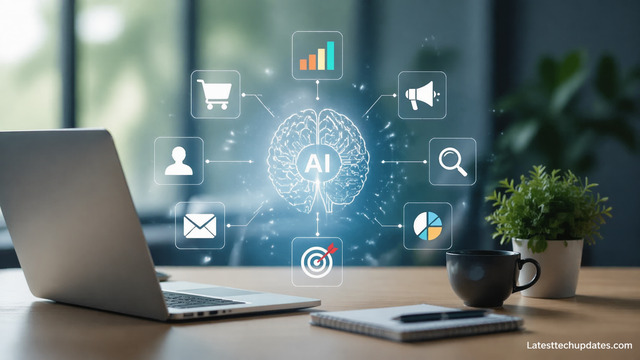
Marketing AI tools help startups reach audiences, optimize campaigns, and generate content. Platforms like Jasper AI and Canva simplify content creation and branding.
Growth depends on data-driven strategies, and AI tools analyze customer behavior to optimize campaigns. Predictive analytics helps entrepreneurs understand what works and what does not.
From my perspective, marketing AI tools are game-changers. I have used them to generate ideas, design visuals, and test campaigns quickly, which would otherwise take days or weeks.
How does AI improve marketing ROI?
AI analyzes campaign performance and optimizes targeting. Better targeting leads to higher conversion rates and reduced advertising costs.
What content can AI generate?
AI generates blog posts, social media captions, ad copy, and email campaigns. Content generation reduces workload and ensures consistent branding.
How do AI tools support customer service and engagement?
Customer service improves when AI chatbots and support systems provide instant responses. Tools like Zendesk and Intercom enable automated interactions.
Startups benefit from 24/7 availability without hiring large support teams. AI chatbots handle common queries while escalating complex issues to human agents.
In my experience, customers appreciate quick responses more than perfect responses. AI tools ensure speed, which directly improves satisfaction and retention.
What role do chatbots play in startups?
Chatbots provide instant answers, guide users, and reduce response time. Fast responses improve customer satisfaction and engagement.
Can AI personalize customer interactions?
AI analyzes user behavior and preferences to deliver personalized responses. Personalization increases trust and strengthens relationships.
What AI tools help in business operations and management?
Operational efficiency improves with AI tools that manage workflows, finances, and project tracking. Platforms like ClickUp and QuickBooks streamline internal processes.
Startups need visibility into operations, and AI provides insights through dashboards and reports. These insights help founders make informed decisions quickly.
I have found that operational AI tools reduce chaos in early-stage businesses. Clear workflows and automated tracking create structure and accountability.
How does AI improve project management?
AI tracks progress, assigns tasks, and predicts delays. Predictive insights help teams stay on schedule and avoid bottlenecks.
What financial tasks can AI handle?
AI manages invoicing, expense tracking, and financial forecasting. Automation ensures accuracy and saves time.
How can AI tools assist in product development?
Product development benefits from AI tools that assist in coding, design, and testing. Platforms like GitHub Copilot accelerate software development.
Entrepreneurs can prototype ideas quickly using AI-powered design tools. Rapid prototyping reduces time-to-market and allows faster iteration.
I have seen how AI speeds up development cycles. Tasks that once required hours of coding now take minutes, allowing faster experimentation and innovation.
How does AI help developers?
AI suggests code, identifies errors, and improves efficiency. Faster coding leads to quicker product launches.
Can AI improve product design?
AI generates design ideas and prototypes. Visual tools help founders create user-friendly products without advanced design skills.
What are the future benefits of AI for startups?

Future growth depends heavily on AI adoption. Startups that integrate AI early position themselves for scalability and innovation. Technologies like machine learning and automation continue to evolve rapidly.
Entrepreneurs who understand AI gain a strategic advantage. Data-driven decision-making becomes the foundation for growth and sustainability.
From my experience, AI is not just a tool but a long-term investment. Businesses that embrace AI today will lead tomorrow’s markets.
How will AI shape startup ecosystems?
AI will enable faster innovation, lower costs, and global scalability. Startups will compete on intelligence rather than resources.
Is AI a long-term investment for entrepreneurs?
AI provides continuous value through automation and insights. Long-term adoption leads to sustained growth and efficiency.
Conclusion
AI tools have become essential for startups and entrepreneurs aiming to scale efficiently and compete in modern markets. Each category of tools addresses a specific business need, from productivity and marketing to operations and development. Personal experience shows that combining multiple AI solutions creates a powerful ecosystem that simplifies workflows and enhances decision-making. Entrepreneurs who adopt AI early gain a significant advantage, allowing them to focus on innovation, strategy, and growth. The future of startups will depend on how effectively founders integrate AI into their daily operations.
FAQ’s
What is the most important AI tool for startups?
The most important AI tool depends on business needs, but communication and productivity tools often provide the fastest impact.
Are AI tools expensive for startups?
Many AI tools offer affordable plans or free tiers, making them accessible for early-stage businesses.
Can AI replace human employees?
AI supports employees by automating tasks but does not replace human creativity and decision-making.
How quickly can startups see results from AI?
Startups can see improvements in efficiency and productivity within weeks of implementation.
Do non-technical founders need AI knowledge?
Non-technical founders can use AI tools easily, as most platforms are designed with user-friendly interfaces.
