
Highlights
- BYD Outpaces Tesla in Q4 2025 EV Sales:
BYD delivered 526,409 fully electric vehicles, exceeding Tesla’s 484,507 units in the same quarter.
- Vertical Integration Gives BYD Competitive Edge:
BYD manufactures batteries, semiconductors, and powertrains in-house, reducing costs and production delays.
- China’s Market and Government Drive BYD’s Growth:
Domestic EV incentives, infrastructure support, and centralized industrial policy fueled rapid scaling in China.
- Diverse Model Range Broadens BYD’s Market Reach:
BYD’s product line includes affordable and premium EVs, plus PHEVs, targeting multiple consumer segments.
- Global Expansion into Emerging Markets:
BYD aggressively enters Europe, Southeast Asia, and Latin America with localized strategies and pricing.
- BYD Controls Battery Supply Chains:
Secure access to lithium and cobalt via African and Latin American mining operations supports BYD’s Blade Battery production.
- Tesla Focuses on Autonomy and Premium Innovation:
Tesla’s investment in AI, Full Self-Driving, and next-gen batteries contrasts with BYD’s mass-market focus.
- Tesla Faces Cost and Supply Chain Challenges:
Delays in battery scaling and lack of a low-cost model hinder Tesla’s ability to compete in price-sensitive markets.
- Tesla Eyes Comeback via New Markets and Models:
Plans for a $25,000 EV, Gigafactories in India and Mexico, and AI-driven features aim to recapture momentum.
Why Did BYD Overtake Tesla in Global EV Sales?
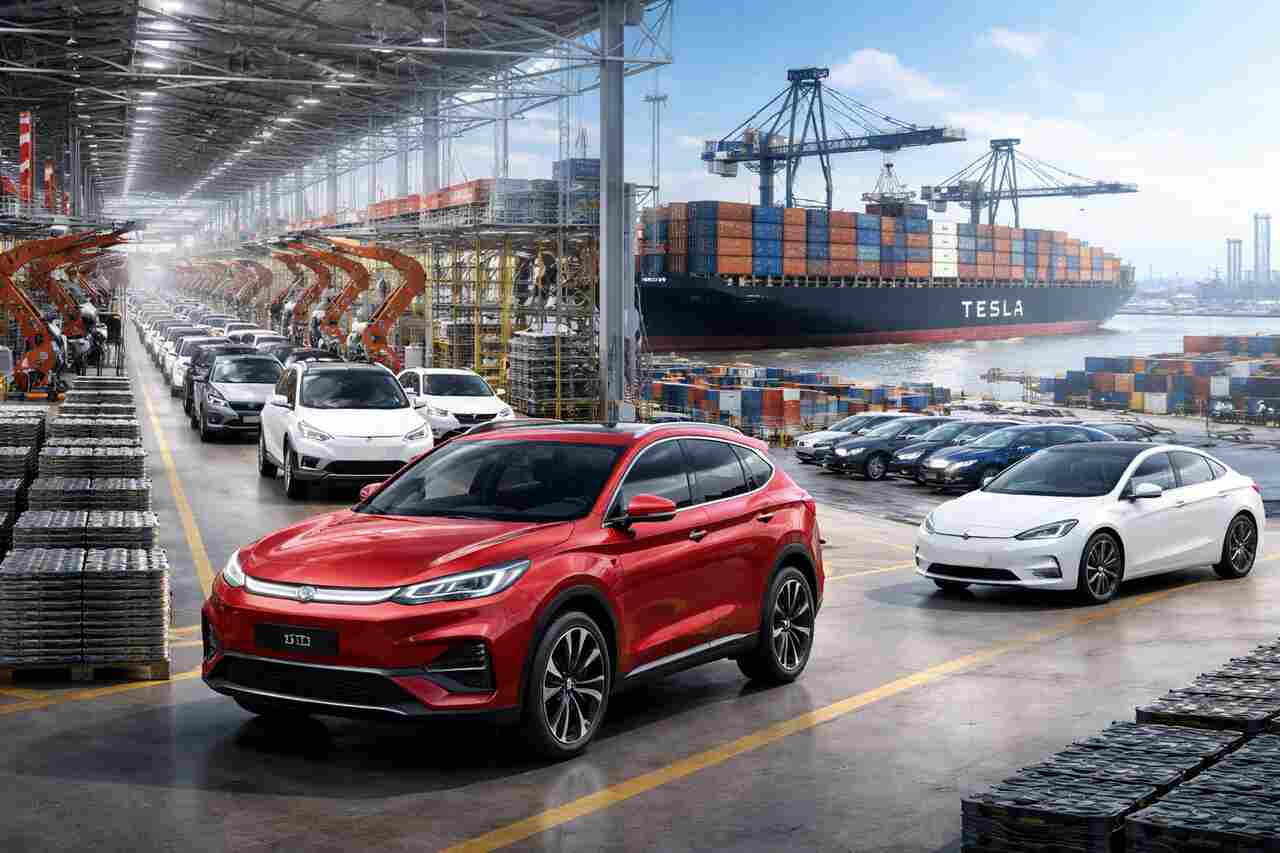
BYD’s sales volume exceeded Tesla’s in Q4 2025, marking a historic leadership shift in the global electric vehicle market. Tesla delivered 484,507 EVs during the quarter, while BYD shipped 526,409 fully electric units, as confirmed by both companies’ reports. BYD’s dominance reflects a combination of production efficiency, diversified model offerings, and deep integration across its battery and semiconductor supply chain.
What Role Did Production Efficiency Play in BYD’s Growth?
BYD manufactures key EV components in-house, optimizing cost structures and reducing supply chain friction. Unlike Tesla, which relies on partners like Panasonic and CATL for battery cells, BYD produces its Blade Battery, powertrains, and inverters internally. This vertical integration enhances manufacturing speed and cost control, allowing the company to scale faster in domestic and global markets.
How Did BYD’s Domestic Market Advantage Drive Growth?
China’s EV policy incentives, charging infrastructure, and consumer demand directly fueled BYD’s domestic expansion. BYD benefits from strong governmental support under the “Made in China 2025” plan and EV subsidies aimed at reducing urban emissions. Cities like Shenzhen and Shanghai contributed heavily to BYD’s sales surge, supported by lower retail prices and high brand trust among Chinese consumers.
What Product Strategies Helped BYD Outpace Tesla?
BYD’s diverse lineup from affordable models like the Dolphin to premium sedans like the Han targeted multiple consumer segments. Tesla maintains a relatively narrower product range with the Model 3, Y, S, and X. BYD’s product strategy includes plug-in hybrid electric vehicles (PHEVs) as well as fully battery-electric vehicles (BEVs), expanding its market footprint across both urban and rural demographics.
How Did Global Expansion Contribute to BYD’s Market Share?
BYD aggressively entered new international markets in Europe, Southeast Asia, and Latin America with localized partnerships. Countries such as Thailand, Brazil, and Germany witnessed new assembly plants and dealership agreements. BYD’s ability to tailor pricing and specifications to regional demands accelerated international adoption, directly competing with Tesla’s global presence.
What Does BYD’s Rise Indicate About China’s EV Industry?
China now dominates the global EV ecosystem through upstream battery material access, scalable production, and government-aligned innovation. With support from lithium-rich supply chains in Africa and South America, Chinese automakers like BYD and NIO benefit from secure raw material pipelines. The Chinese Communist Party’s industrial policy aligns regulatory, financial, and technological frameworks to ensure national leadership in clean energy vehicles.
How Do China’s Battery Supply Chains Benefit BYD?
Access to lithium, cobalt, and nickel reserves ensures BYD’s Blade Battery production remains stable and low-cost. Strategic acquisitions in African mining sectors and domestic refining capacity grant BYD significant control over key raw materials. This advantage underpins their ability to scale production regardless of global resource volatility, unlike Tesla, which faces more fragmented sourcing.
How Is the Chinese Government Supporting EV Leaders Like BYD?
State subsidies, low-interest manufacturing loans, and prioritized R&D grants reinforce BYD’s leadership. Central and local governments provide charging infrastructure rollouts, tax exemptions, and consumer purchase incentives. This ecosystem accelerates adoption while reducing capital expenditure risks for BYD, giving it a competitive edge over non-Chinese rivals.
What Are the Strategic Differences Between Tesla and BYD?
Tesla emphasizes software innovation, autonomy, and global branding; BYD focuses on affordability, localization, and scale. While Tesla continues investing in AI-driven autonomous features and energy storage systems, BYD concentrates on mass production, component self-reliance, and strategic regional penetrations. These divergent strategies define their long-term competitive trajectories.
What Are the Broader Implications for Global EV Competition?
BYD’s rise challenges U.S. and European automakers to re-evaluate EV cost structures, supply chains, and manufacturing models. Companies like Ford, Volkswagen, and Hyundai must now compete not just with Tesla, but also with an aggressively expanding Chinese EV powerhouse. Trade policies, battery alliances, and localized EV manufacturing will likely intensify across continents.
Can Tesla Reclaim Its Leadership in the EV Market?
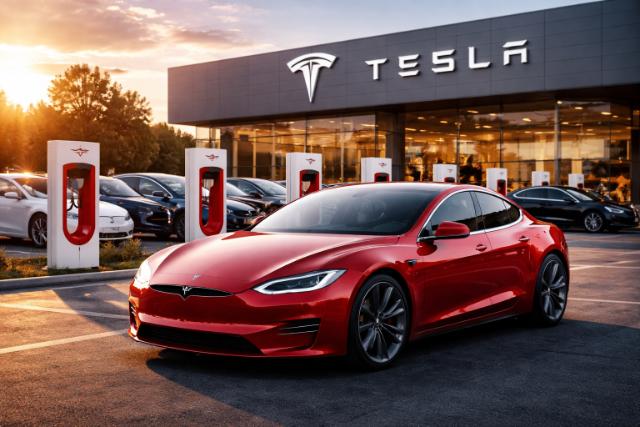
Tesla’s path to regain leadership hinges on next-generation battery technology, cost reduction, and aggressive global scaling. The 4680 cell rollout, expansion in Gigafactories in Mexico and India, and a rumored $25,000 entry-level EV could redefine Tesla’s competitiveness. Elon Musk’s strategy emphasizes software differentiation through Full Self-Driving (FSD), which may reshape the value proposition in markets prioritizing intelligent mobility.
What Technological Innovations Could Fuel Tesla’s Comeback?
Advances in AI, FSD, Dojo supercomputing, and Tesla’s Optimus humanoid robot project position the company at the intersection of mobility and machine learning. These innovations, if commercialized effectively, could shift Tesla’s value proposition from a vehicle manufacturer to a mobility platform provider. However, execution speed and regulatory approval remain key variables.
How Important Is Price Accessibility for Tesla’s Comeback?
Launching an affordable EV in the sub-$30,000 segment is critical to expanding Tesla’s global addressable market. With BYD dominating in the under-$25,000 bracket, Tesla’s future growth in Asia, South America, and Eastern Europe depends on breaking cost barriers. A localized supply chain and simplified vehicle architecture could enable this transition.
What Global Markets Are Strategic for Tesla’s Recovery?
India, Southeast Asia, and Latin America offer untapped growth potential if Tesla overcomes trade barriers and builds region-specific models. Tesla’s planned Gigafactory in India and partnerships in Southeast Asia may reduce shipping costs and address local infrastructure challenges. Competing with BYD in these regions will test Tesla’s adaptability and strategic agility.
What Risks Could Hinder Tesla’s Response to BYD?
Delays in battery innovation, regulatory challenges, or overreliance on premium segments may restrict Tesla’s market agility. Unlike BYD’s multi-tiered model strategy, Tesla remains constrained by its limited product diversity. Additionally, AI-driven features such as FSD face legal scrutiny in key regions, potentially delaying rollout and user adoption.
Conclusion
BYD’s historic surpassing of Tesla signals a deeper shift in EV market dynamics, where supply chain control, local adaptability, and pricing power define leadership more than branding alone. The global EV race has transitioned from a software-dominated narrative to one centered on scale, material security, and regional customization. While Tesla remains a formidable innovator, BYD currently exemplifies the future of accessible, mass-market electrification.
