
Highlights
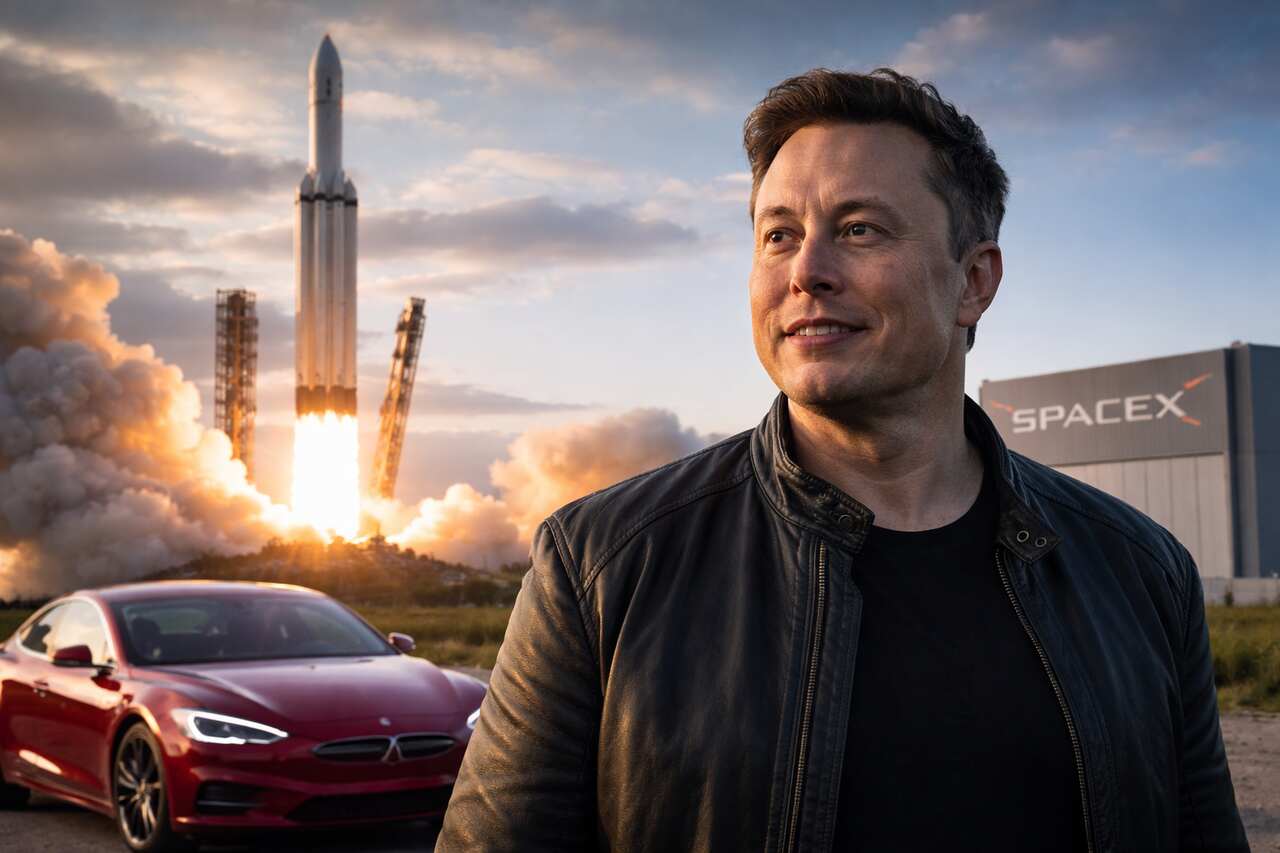
Main Story: As rumors of a potential SpaceX IPO grow stronger, attention shifts to how Elon Musk’s influence (aka the ‘Musk Premium’) affects Tesla’s valuation and perception among investors.
Investor Sentiment Pivot: Retail and institutional investors may reallocate capital from Tesla to SpaceX, considering the latter’s rapid revenue growth, satellite dominance via Starlink, and clearer future cash flows.
Musk Premium Explained: Tesla has historically enjoyed a valuation buffer due to Musk’s visionary leadership. With SpaceX nearing IPO, analysts question whether Tesla’s brand equity is inflated due to Musk’s halo effect.
Cross-Entity Dynamics: Both Tesla and SpaceX are driven by Musk’s narrative control, but their underlying business models, risk profiles, and market maturity stages are diverging fast.
Valuation Reevaluation: Market discourse is increasingly centered on whether Tesla’s valuation multiple includes unrealistic assumptions tied to Musk’s broader brand, especially with SpaceX’s IPO offering a more technically attractive growth vehicle.
What Is the ‘Musk Premium’ and How Does It Affect Tesla’s Valuation?
The ‘Musk Premium’ represents the additional valuation Tesla receives due to Elon Musk’s perceived genius, cult-like following, and disruptive vision. Investors frequently attribute exponential future potential to Musk-led firms, leading to inflated price-to-earnings ratios and growth multiples in Tesla’s stock.
Narrative Capital as Financial Asset: Elon Musk’s storytelling ability directly influences Tesla’s stock. The premium includes investor confidence in Musk’s ability to push boundaries, from electric vehicles to AI-driven autonomous fleets.
Influencer Effect on Retail Sentiment: Social media and public appearances by Musk create surges in Tesla’s stock value, often unconnected to core business metrics. Retail investors, in particular, heavily rely on Musk’s cues.
Tech Messiah Archetype in Financial Markets: Musk occupies a unique space in financial imagination as both a CEO and cultural icon. This duality drives long-term loyalty, giving Tesla a valuation not grounded in automotive fundamentals.
Capital Access Advantage: Due to the Musk Premium, Tesla has been able to raise capital at ultra-low dilution rates. Investors trust Musk to execute on futuristic ambitions, thereby subsidizing high-risk projects.
How Could a SpaceX IPO Redirect Investor Capital Away from Tesla?
The SpaceX IPO introduces a new Musk-led investment alternative that directly competes with Tesla for investor dollars. Capital from Musk loyalists may shift to SpaceX, reducing Tesla’s unique funding appeal.
SpaceX as a Growth Equity Magnet: With Starlink’s recurring revenue and proven aerospace dominance, SpaceX presents more measurable growth. Investors seeking tangible fundamentals may prefer SpaceX post-IPO.
Competing Capital Allocation within Musk Ecosystem: Portfolio managers and retail investors often have a ‘Musk allocation.’ A public SpaceX would fragment this loyalty, forcing decisions between high-growth space tech and maturing EV segments.
Higher Technological Moat: Unlike the competitive EV market, SpaceX dominates satellite launches and military contracts. This dominance may offer a better risk-reward ratio, making SpaceX the new institutional darling.
Risk Redistribution: Investors once tolerating Tesla’s high volatility due to faith in Musk may rebalance into SpaceX, which offers similar vision-driven upside with diversified business lines.
Is Tesla’s Valuation Inflated Due to Narrative, Not Fundamentals?
Tesla’s valuation is heavily skewed by sentiment rather than automotive performance or financial fundamentals. While vehicle deliveries and profit margins are growing, they do not fully justify the market capitalization.
Forward Multiples Exceed Sector Benchmarks: Tesla trades at higher multiples than legacy automakers and many tech firms. Much of this discrepancy is justified not by financials but by Musk’s long-term vision.
Underperforming AI & Robotaxis: Promises about autonomous driving, FSD (Full Self-Driving), and Tesla Bots have yet to mature into revenue drivers. Valuation metrics, however, often price them as if they’re already mainstream.
Dependence on External Hype Cycles: Tesla’s value often spikes due to external, unrelated hype Bitcoin purchases, AI narratives, or unrelated Musk ventures diluting the stock’s connection to car sales.
No Longer the Only Disruptor: With competitors like BYD, Rivian, and Lucid growing rapidly, Tesla’s disruptive aura is fading. This weakens the intangible narrative premium tied to the brand.
How Do Tesla and SpaceX Differ in Business Model and Maturity?
Tesla operates as a mass-consumer hardware company with global competition, while SpaceX remains a government-backed, B2B-centric space infrastructure firm with monopoly-level advantages in its niche.
Revenue Model: Tesla’s earnings depend on individual vehicle sales, software subscriptions, and energy storage. SpaceX relies on high-margin contracts, launch services, and expanding satellite internet infrastructure.
Customer Base: Tesla’s customers are individual consumers highly sensitive to price, brand, and competition. SpaceX’s main clients are NASA, defense agencies, and enterprise internet buyers.
Market Saturation Level: The EV market is becoming saturated, especially in China and Europe. SpaceX, however, is entering an untapped market of space logistics, lunar missions, and planetary communication.
Risk Profile: Tesla faces regulatory, macroeconomic, and supply chain risks. SpaceX, being private (for now), has more flexibility and fewer quarterly pressures, allowing long-term R&D cycles.
What Happens If Musk’s Attention Shifts More Toward SpaceX?
Tesla’s valuation is partially sustained by Musk’s active leadership. A visible pivot toward SpaceX could trigger concerns over execution, future innovation, and Tesla’s long-term competitiveness.
Perceived Leadership Vacuum: Musk stepping back from day-to-day Tesla operations could be read as loss of visionary leadership. Institutional investors often penalize firms with ambiguous succession planning.
Market Confidence in Execution Declines: Tesla’s bold product roadmap including Cybertruck expansion and full autonomy requires Musk’s attention. SpaceX’s IPO could dilute that focus.
Brand Identity Crisis: Tesla’s brand is intertwined with Musk. If public discourse shifts toward SpaceX, Tesla could struggle to maintain its cultural relevance and media presence.
Narrative Split Risk: Investor storytelling around Musk may fracture. Instead of unifying under a single empire, attention and belief may now be split between two different directions ground mobility vs. interplanetary expansion.
Final Thoughts
The looming SpaceX IPO signals more than just a new investment opportunity it forces a reevaluation of Tesla’s intrinsic and narrative value. As investors recalibrate expectations, the true strength of the ‘Musk Premium’ will be put to the test across both companies.
