
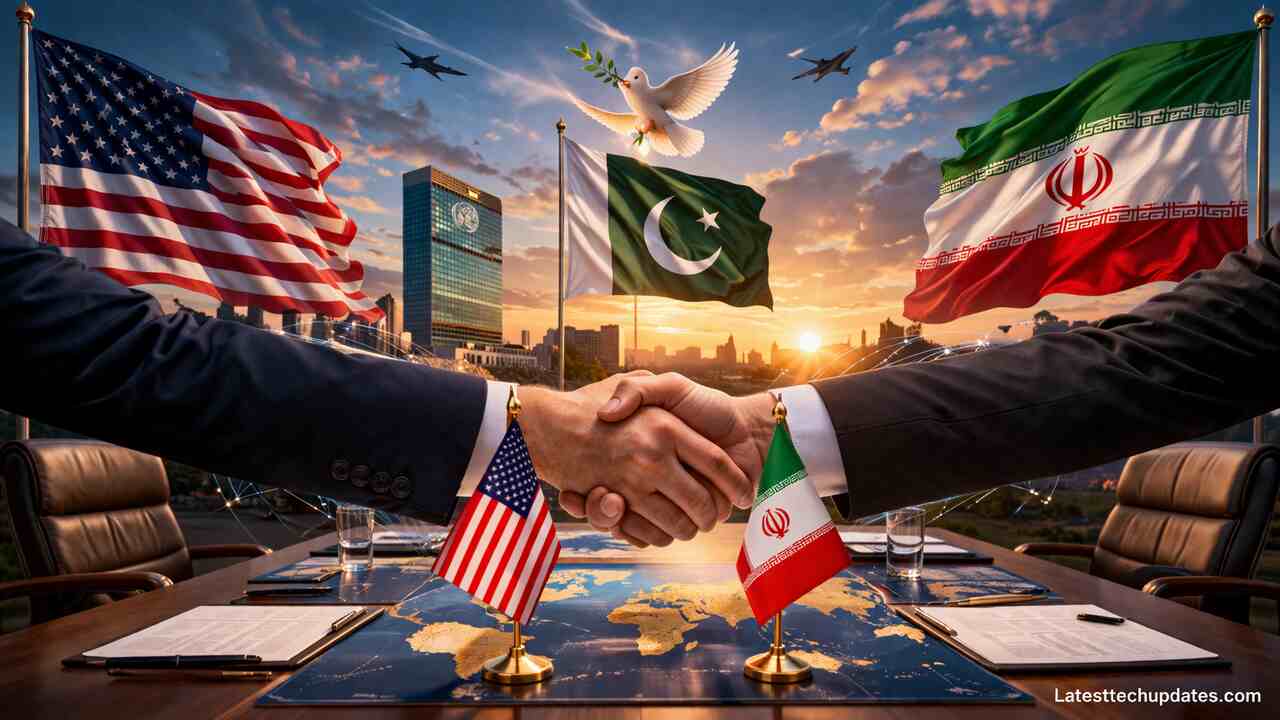
What triggered the halt in US attacks on Iran?
Immediate suspension of US military strikes emerged from direct diplomatic engagement between Donald Trump and Pakistan’s leadership, including Shehbaz Sharif and Asim Munir. Communication between these actors functioned as a high-level geopolitical intervention, where Pakistan positioned itself as a mediator to prevent imminent escalation.
Diplomatic persuasion from Pakistan aligned with a critical deadline set by Washington for large-scale bombing. Strategic dialogue created a pause mechanism, transforming imminent warfare into conditional negotiation. The subject “Pakistan mediation” connects to the object “US decision reversal,” forming a cause-effect chain that halted planned attacks.
How did the US–Iran ceasefire agreement take shape?
A two-week provisional ceasefire formed as a bilateral arrangement between the United States and Iran, conditioned on Iran reopening the Strait of Hormuz, a globally critical oil transit chokepoint. The agreement emerged just hours before a major US strike deadline, highlighting urgency-driven diplomacy.
Iran’s acceptance of safe maritime passage directly satisfied a key US demand, linking economic stability with military de-escalation. The ceasefire framework includes a structured proposal from Iran, which Washington considered a workable basis for extended negotiations.
Why is the Strait of Hormuz central to the agreement?
The Strait of Hormuz functions as a strategic maritime corridor carrying a significant portion of global oil supply, making accessibility a high-value geopolitical asset. Iran’s agreement to reopen the strait directly influenced US willingness to suspend attacks, connecting energy security with military policy.
Economic markets reacted immediately: oil prices declined and global equities strengthened, reflecting reduced geopolitical risk. The subject “strait reopening” links to the object “global market stabilization,” demonstrating how energy logistics shape international diplomacy.
What role did Pakistan play in the ceasefire process?
Pakistan emerged as a third-party mediator, bridging communication gaps between Washington and Tehran. Leadership from Shehbaz Sharif and Asim Munir introduced a time-bound truce proposal, which both sides accepted as a temporary diplomatic off-ramp.
Pakistan’s mediation reflects a broader shift in global diplomacy where mid-tier powers influence high-stakes conflicts. The subject “Pakistan’s diplomatic outreach” connects with the object “ceasefire realization,” forming a semantic relationship of facilitation and resolution.
What are the broader geopolitical implications of this ceasefire?
The ceasefire signals a temporary de-escalation rather than a permanent resolution. Ongoing negotiations aim to finalize a long-term agreement, yet regional instability persists due to unresolved tensions involving Middle Eastern alliances and security dynamics.
Global reactions include cautious optimism from major economies and stakeholders, as stability in the Gulf region directly impacts energy flows and international trade. The subject “ceasefire agreement” connects to the object “global economic relief,” reinforcing the geopolitical-economic nexus.
What happens next in US–Iran relations?
The two-week window operates as a negotiation buffer period, allowing both nations to convert a temporary ceasefire into a structured peace accord. Diplomatic meetings, potentially facilitated through neutral platforms, may define the next phase of engagement.
