
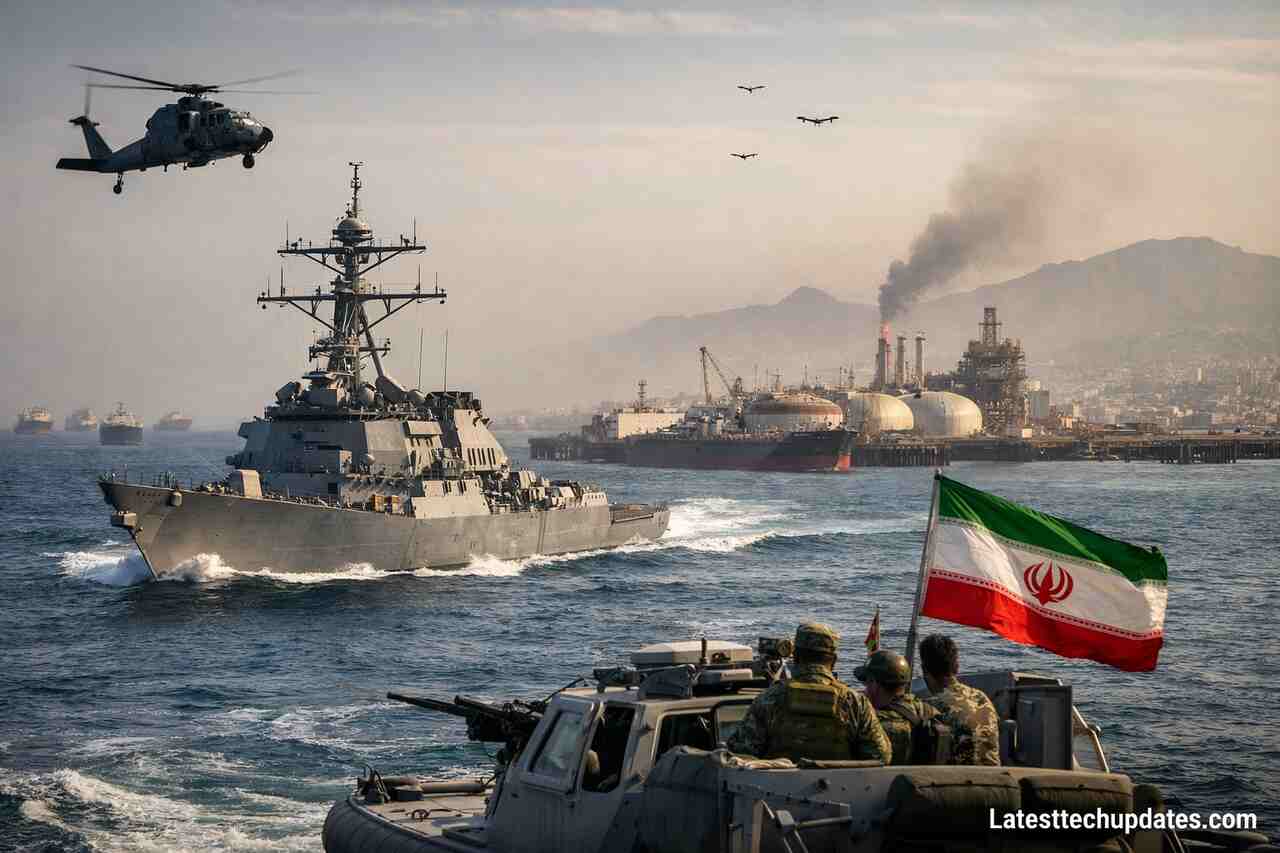
The United States is signaling potential maritime enforcement measures against Iran to curb oil exports, disrupt regional influence, and pressure nuclear negotiations. The strategy revolves around tightening economic sanctions and possibly extending naval interdiction in key shipping routes.
Why is the United States Targeting Iranian Ports?
How Do Sanctions Relate to Iranian Oil Exports?
The United States has long used sanctions to limit Iran’s oil revenue, which funds government operations and regional activities. Iranian ports such as Bandar Abbas Port serve as critical export hubs. Restricting port access disrupts crude oil shipments to countries like China, thereby weakening Iran’s foreign exchange reserves. Reduced revenue translates into constrained fiscal capacity for Tehran.
How Does Iran’s Nuclear Program Influence This Decision?
The nuclear program of Iran remains central to US foreign policy. Washington views economic pressure as leverage to revive or renegotiate agreements like the Joint Comprehensive Plan of Action. Port restrictions amplify pressure by targeting infrastructure rather than just financial transactions.
What Role Does Regional Security Play?
Iran’s influence across the Middle East through groups in Iraq, Syria, Lebanon, and Yemen raises concerns for the United States and allies such as Israel and Saudi Arabia. Limiting port operations reduces logistical support for these networks, especially maritime supply chains.
Why Now?
Timing often aligns with geopolitical tensions, including conflicts in the Red Sea and Persian Gulf. Increased attacks on shipping lanes sometimes attributed to Iran-linked groups have triggered stronger responses from the US Navy and policymakers in Washington D.C..
How Would Blocking Iranian Ports Actually Work?
What is Maritime Interdiction?
Maritime interdiction involves stopping, inspecting, or redirecting ships suspected of violating sanctions. The United States Navy could deploy vessels near chokepoints like the Strait of Hormuz. Control over this narrow passage allows monitoring of a large percentage of global oil shipments.
Would This Be a Full Naval Blockade?
A formal blockade constitutes an act of war under international law. Instead, the US may use “selective enforcement,” targeting specific tankers or companies. Sanctions enforcement already includes ship tracking, insurance restrictions, and port denial for vessels carrying Iranian oil.
How Do Secondary Sanctions Function?
Secondary sanctions penalize third-party countries or companies that trade with Iran. For example, a shipping company in Asia handling Iranian oil could lose access to US financial systems. This indirect method reduces reliance on physical naval intervention.
What Technologies Are Involved?
Satellite tracking, AI-based vessel monitoring, and maritime intelligence networks play a key role. Systems track ship movements, detect “dark fleet” tankers that turn off transponders, and identify suspicious cargo transfers at sea.
What Are the Global Implications of Such a Move?
How Could Oil Markets React?
Oil prices could spike if Iranian exports estimated at over 1 million barrels per day are disrupted. Markets in OPEC would need to adjust supply, potentially benefiting competitors like Saudi Arabia.
Could This Escalate Militarily?
Any attempt to physically block ports risks confrontation. Iran could retaliate by threatening shipping in the Strait of Hormuz, through which about 20% of global oil flows. Military escalation would impact global trade and energy security.
What About International Law?
Countries like China and Russia often oppose unilateral US sanctions. Blocking ports without UN authorization could face legal and diplomatic challenges.
How Would Allies Respond?
European nations, especially those involved in earlier nuclear negotiations like France and Germany, may prefer diplomatic solutions. However, regional allies might support stricter enforcement to counter Iran’s influence.
What Does This Mean Going Forward?
The US threat to block Iranian ports reflects a broader strategy combining economic warfare, maritime control, and geopolitical signaling. Enforcement will likely remain targeted rather than absolute, balancing pressure with the risk of escalation. The situation remains fluid, with outcomes tied to nuclear diplomacy, regional conflicts, and global energy demand.
