
Highlights
- Google now allows certain users to change their email address linked to their Google Account but only under specific conditions.
- Gmail users are excluded from the update; the change applies only to accounts created with non-Gmail addresses (e.g., Outlook, Yahoo, custom domains).
- Google Workspace and G Suite users remain restricted, due to organizational controls and identity security protocols.
- Email changes are subject to limitations, such as address availability, verification, and device reauthentication.
- The primary reason for restriction is Gmail’s role as a permanent identity anchor across Google’s ecosystem (e.g., Drive, YouTube, Play Store).
- This move signals early adoption of user-controlled identity models, potentially aligned with digital identity portability and Web3 frameworks.
Can Google Account Owners Now Change Their Primary Email Address?
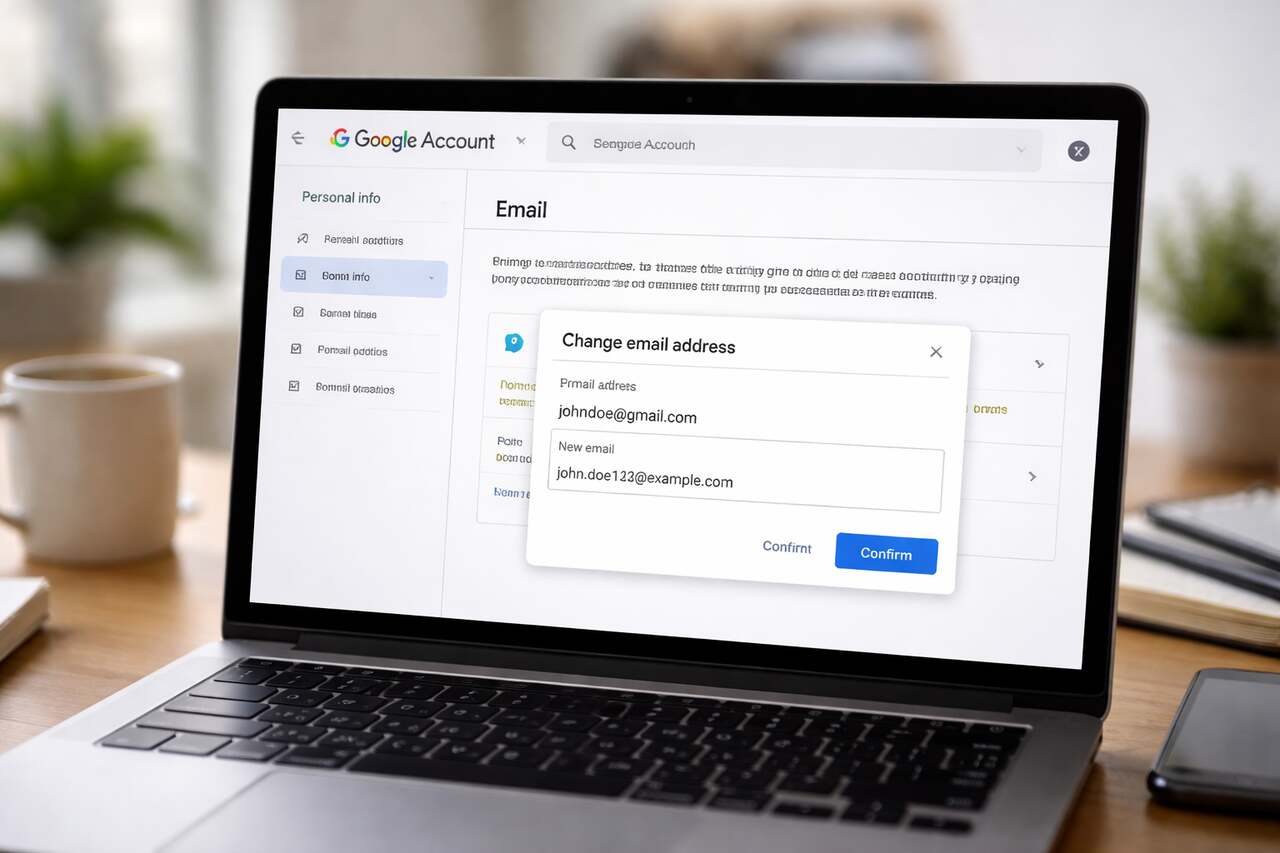
Google has begun rolling out a limited update that allows users to change their primary email address associated with their Google Account, marking a pivotal shift in identity control. For years, Google’s identity system has linked account ownership permanently to the original Gmail address, creating a rigid architecture for user data continuity. This change introduces flexibility, but with clearly defined restrictions that preserve the integrity of Google’s account infrastructure.
The new update does not universally apply to all Gmail users. The option primarily affects users with non-Gmail-based Google Accounts, commonly referred to as Google Accounts using third-party email addresses. The change also appears to exclude accounts deeply tied to Google Workspace, legacy G Suite, and Gmail-named accounts, maintaining organizational-level security and authentication policies.
Why Is Google Restricting Email Changes for Gmail Users?
Gmail addresses remain unchangeable due to Google’s reliance on email as a unique identifier in its identity graph. Gmail addresses act as permanent identity nodes across Google’s ecosystem, from Android device registration to personalized YouTube history. Changing the core identity would impact OAuth tokens, cross-platform syncing, and search personalization indexes critical for user experience and data integrity.
To maintain semantic alignment between account identity and data ownership, Google restricts modifications to Gmail addresses, preventing misattribution of stored credentials, app integrations, and ownership-linked content such as Google Drive files or Photos metadata.
What Types of Google Accounts Are Eligible for Email Change?

Eligible accounts include those created using non-Gmail addresses such as Outlook, Yahoo, or custom domain-based emails. These accounts fall under the “Google Account without Gmail” classification and are structurally different from native Gmail accounts. They operate through Google’s authentication layer without inheriting Gmail’s identity-locking mechanisms.
These accounts are often used by professionals, external app users, or those managing identity via alternative providers. The update allows them to change the login email, as long as the new address is not already in use across Google’s infrastructure, and passes multi-step verification to confirm identity continuity.
What Are the Risks and Limitations of Changing Google Email Addresses?
Users attempting to change their email must navigate multiple constraints:
- Email address reuse prohibition: Previously deleted or used emails are permanently blocked from re-registration due to Google’s persistent identity caching.
- Authentication resets: Changing the primary email requires revalidation across all connected services such as Google Calendar, Contacts, Play Store, and third-party OAuth apps.
- Workspace exclusion: Google Workspace accounts managed by an admin are excluded from this update, preserving enterprise policy controls and domain-level governance.
The update requires device-level reauthentication, particularly on Android devices, where Play Services maintain persistent account sessions.
What Is the Implication for Google’s Identity Infrastructure?
The move hints at a potential modular future for Google Account architecture. By enabling non-Gmail users to modify their credentials, Google may be testing decentralized identity tokens, where the email field acts as an editable attribute rather than a static identity anchor. This aligns with broader trends in user-centric identity management, portable identity protocols, and cross-service authentication frameworks.
This adjustment also impacts semantic relationships between users and services by allowing email identity decoupling, the system needs to reconstruct entity-attribute mappings for personalized services such as Search, Maps, and Assistant, ensuring accurate user targeting and data protection.
Will Gmail-Native Users Eventually Gain This Capability?
At present, Gmail-native users are structurally excluded from this feature. The foundational dependency of Google’s platform on Gmail as an identity root node makes such change risky. However, internal testing and user feedback may inform future transformations that separate identity from communication handles.
Such evolution would require Google to implement a layered identity model, where UIDs (unique IDs) replace emails as primary keys, and Gmail addresses become mutable metadata though that shift would necessitate reengineering of tokenization systems, app indexing, and account recovery pathways.
Final Insights
Yes. By enabling selective email changes, Google demonstrates early-stage support for user-owned identity, an essential component of Web3-ready platforms and federated account systems. As digital ecosystems push toward interoperability, Google’s move shows potential alignment with broader digital sovereignty principles.
However, due to limitations imposed on Gmail users and Workspace accounts, the feature remains a partial rollout, strategically balancing user freedom with platform stability.
