
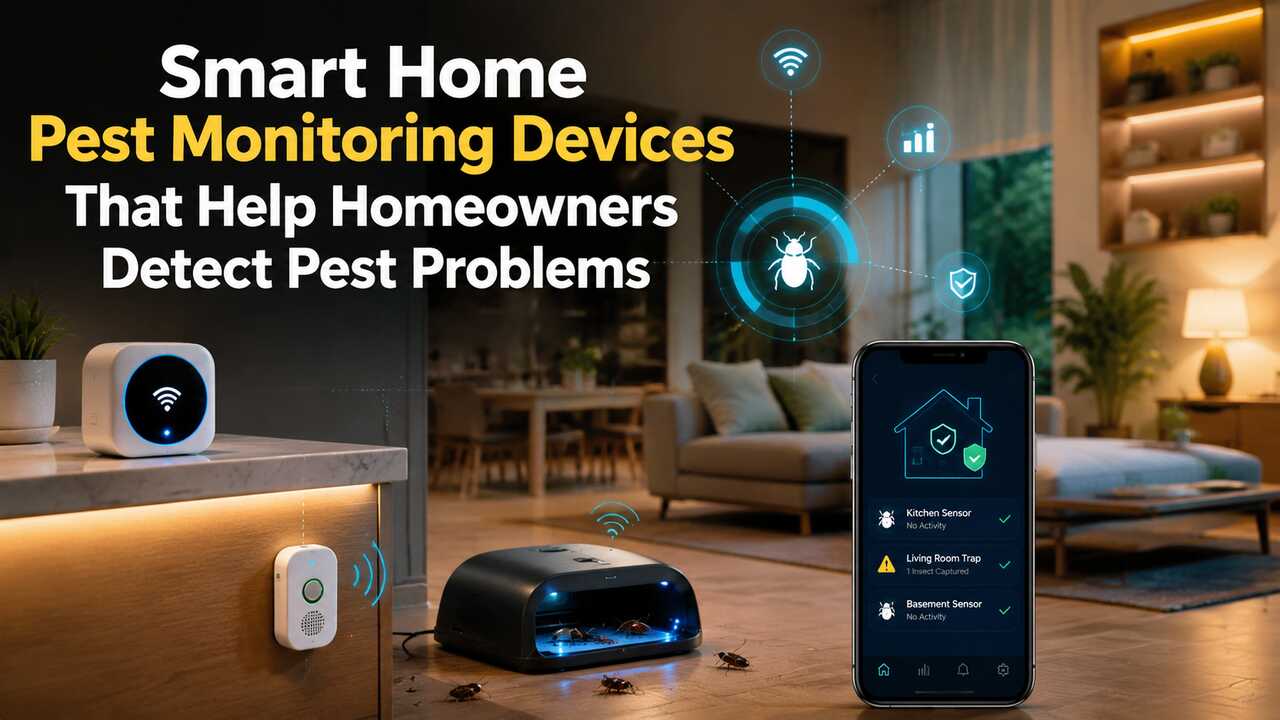
Smart home technology is changing the way homeowners think about pest control. Instead of waiting until pests are visible, connected devices can help monitor hidden areas, detect early warning signs, and make it easier to respond before a small problem turns into a larger infestation.
Why Use Smart Home Pest Control
Homeowners are using smart home pest control because it helps them spot pest activity sooner, track patterns more accurately, and respond before a minor issue becomes a larger infestation. Pest problems rarely begin in the places people notice first. A mouse may travel through a garage wall void for days before anyone sees it in the kitchen. Cockroaches may stay behind appliances long before they appear on a countertop, which is why early detection can support faster cockroach control. Moisture-loving pests may build activity under a sink or in a crawl space while the rest of the home looks normal.
Smart home pest control helps close that gap. Instead of waiting until they see droppings, hear scratching, notice damage, or find insects in living areas, homeowners can use connected traps, sensors, cameras, and app-based alerts to detect activity in basements, attics, garages, crawl spaces, pantries, utility rooms, wall-adjacent spaces, and other hidden areas. This is especially useful because many pest problems start quietly. Rodents, cockroaches, ants, termites, and stored-product pests often become established before they are obvious.
Smart pest control also appeals to homeowners who want a more targeted approach. When monitoring devices show where activity is happening, treatments can be more precise. That can help reduce guesswork, avoid unnecessary product use, and make follow-up inspections more effective.
The shift is not only about convenience. It is about better timing. Traditional pest control is still important, especially for inspection, treatment, exclusion, and long-term prevention. Smart home pest control adds another layer by giving homeowners more visibility between professional visits, especially in homes with recurring rodent activity, high moisture, wooded lots, older construction, or seasonal pest pressure.
How Smart Pest Control Devices Work
Smart pest control devices are monitoring tools that use technology to detect, record, or alert homeowners to possible pest activity. They may include smart traps, motion sensors, infrared sensors, vibration sensors, acoustic sensors, cameras, temperature and humidity sensors, or connected stations that send updates through a mobile app. Some devices detect when a trap has been triggered. Others track movement, moisture, vibration, temperature, or activity in a specific area of the home.
Smart pest control devices help detect pest activity earlier because they monitor areas that people do not check every day. A smart rodent trap, for example, may send an alert when a mouse enters or triggers the device. A sensor in a crawl space may detect movement or environmental conditions that make pest activity more likely. A camera near a garage door or attic access point may capture nighttime movement that would otherwise go unnoticed. A device placed in a garage, attic, crawl space, or under a sink can detect activity long before pests move into visible living areas.
Early detection matters because pests reproduce quickly, hide well, and often cause damage before homeowners realize there is a problem. Many household pests are secretive. Rodents travel along edges and behind stored items. Cockroaches hide in tight, dark spaces. Termites and carpenter ants may be active inside wood or moisture-damaged areas. Smart pest control devices do not replace a professional inspection, but they can provide useful clues about where pests are active, when they are moving, and how often activity is occurring. That gives homeowners a chance to investigate the source, remove attractants, seal openings, or call a professional before the problem spreads.
Best Pest Monitoring Devices For Homes
The most useful pest monitoring devices for homeowners are the ones that match the pest risk, the structure of the home, and the areas where activity is most likely to begin.
Smart rodent traps are often useful in garages, basements, attics, sheds, crawl spaces, and utility rooms because mice and rats usually travel along walls, corners, pipes, behind appliances, and through quiet spaces. Connected insect monitors can help detect cockroach, ant, pantry pest, silverfish, or occasional invader activity in kitchens, bathrooms, laundry rooms, storage areas, pantries, and mechanical rooms where pests may find food, warmth, moisture, or shelter. Similar monitoring around beds, furniture, and luggage storage areas can also support early bed bug control when there is a known risk.
Pest monitoring devices can also include moisture and humidity sensors, which are helpful in areas where pests are attracted to damp conditions, such as under sinks, near water heaters, in crawl spaces, around foundation walls, and near utility lines. A slow plumbing leak, poor crawl space ventilation, or condensation near a utility line can attract ants, cockroaches, silverfish, termites, and other moisture-seeking pests. Outdoor moisture-prone areas may also be worth monitoring, especially where standing water or damp conditions contribute to mosquito control concerns.
Cameras can be useful when homeowners suspect wildlife, rodents, or larger pest activity around exterior entry points, garage doors, trash storage areas, decks, vents, rooflines, foundation gaps, or attic openings. Termite monitoring stations and wood-destroying insect sensors may also be useful in certain regions, especially when paired with professional inspection and service.
For most homeowners, the best setup is not the most complicated one or a large collection of gadgets. It is a small number of well-placed pest monitoring devices in high-risk zones, such as known entry points, moisture sources, food storage, utility penetrations, and areas with past pest activity.
How Smart Pest Monitoring Tracks Pests
Smart pest monitoring systems collect information from devices placed around the home and turn that information into useful alerts or activity records. Sensors may detect motion, heat, vibration, trap activation, changes in humidity, or other signs that pests may be present. Cameras may capture images or short video clips when movement occurs. Connected apps then organize that information so homeowners can see where activity happened and when it was detected.
Smart pest monitoring can be especially helpful for understanding pest patterns. Instead of treating each sighting as an isolated event, homeowners can see whether activity is repeating in the same area, increasing after weather changes, or appearing near a specific entry point. For example, repeated alerts from the same basement wall may point to a nearby entry gap. Activity around a garage door may suggest rodents are entering from outside. Moisture readings under a sink may explain why cockroaches or ants are attracted to that area. A camera near an attic vent may show whether squirrels, birds, or rodents are investigating an opening.
The value of a connected system is not only the alert itself. It is the record over time. Pest activity that repeats in the same area usually means there is an attractant, entry point, nesting site, or environmental condition that needs attention, such as a gap under a garage door, a plumbing leak, stored pet food, foundation cracks, clutter, or vegetation touching the structure.
The best use of smart pest monitoring is not simply receiving an alert. It is using the alert to make a better decision. If activity keeps appearing in one corner of a garage, the issue may not be the trap location; it may be an entry gap nearby. If insects keep appearing near a bathroom wall, the real problem may be moisture behind or below that area.
Pests Detected By Smart Pest Control Devices
Smart pest control devices can help monitor several common household pests, depending on the device type and placement. Rodents are among the most commonly monitored pests because smart traps and motion-based devices can detect mice or rats in hidden areas or travel paths. Cockroaches, ants, pantry pests, silverfish, spiders, and other crawling insects can also be monitored with connected glue boards, insect stations, cameras, or sensors placed in likely travel zones, kitchens, storage areas, bathrooms, and utility spaces.
Some systems can help monitor conditions related to termites, carpenter ants, cockroaches, drain flies, and other pests associated with damp areas, especially when they track moisture, temperature, soil contact, or activity near vulnerable areas. Cameras and motion sensors may help homeowners monitor larger nuisance wildlife around the exterior of the home, such as squirrels, raccoons, opossums, birds, and other wildlife near vents, rooflines, roof edges, decks, and trash areas.
Smart monitoring is most effective when it is used to identify activity, not to make assumptions. Many smart devices detect activity; they do not always confirm the exact pest species or the full extent of the problem. A professional inspection may still be needed to identify the pest correctly, locate entry points, find the source, and recommend the safest and most effective treatment.
How Smart Traps Pest Control Work
Smart traps pest control work by detecting when a pest enters, contacts, or triggers the trap. Some devices use sensors that recognize movement or trap activation. Others use cameras, connected monitoring stations, or electronic notifications that alert the homeowner when activity occurs. Depending on the device, the trap may capture the pest, record activity, capture an image, update a connected app, or simply notify the user that something has happened. This allows homeowners to know when activity occurs without constantly checking traps by hand.
Placement is one of the most important parts of smart traps pest control performance. For rodents, traps should usually be placed along walls, behind appliances, near garage doors, near garage edges, in basements, in attics, near utility lines, and close to suspected entry points. Mice and rats prefer edges, corners, cluttered areas, and protected travel routes, so traps placed in open rooms are often less effective.
For insects, monitors should be placed near moisture, food sources, cracks, wall voids, cabinets, appliances, drains, storage boxes, and other sheltered areas. In kitchens, useful locations may include under sinks, behind refrigerators, behind stoves, inside lower cabinets, and near pantry storage. In bathrooms and laundry rooms, devices may be helpful near plumbing lines, floor-wall junctions, and damp areas. Exterior devices or cameras may be placed near foundation openings, vents, trash areas, crawl space doors, and other likely access points.
Homeowners should avoid placing smart traps pest control where children or pets can access them, where moisture may damage the device, or where normal household movement will cause repeated false alerts.
Benefits Of Pest Control Sensors
The main benefit of pest control sensors is earlier awareness. Homeowners do not have to rely only on visible signs, because sensors can monitor quiet, dark, or hard-to-reach areas where pest problems often begin. Pests often leave small clues before they create a visible infestation, and sensors can help detect those clues in areas that are easy to ignore.
Pest control sensors can also help identify patterns. They may show whether activity is happening at night, after rain, near a particular entry point, or in one specific part of the home. A single alert may call for inspection. Repeated alerts in the same location may suggest an entry point, nesting area, moisture problem, or food source nearby. This makes it easier to focus repairs, sanitation, exclusion work, and professional treatment where they are actually needed.
Another benefit is faster response. When a homeowner receives an alert, they can inspect the area, remove attractants, seal potential openings, or contact a pest control professional before the problem spreads. Pest control sensors can also support ongoing prevention by confirming whether activity has stopped after treatment or whether pests are returning.
For homeowners who travel often, own rental properties, manage seasonal homes, or have past infestations, smart monitoring can be especially useful because it provides visibility when no one is physically present.
Can Smart Pest Monitoring Prevent Infestations?
Connected monitoring devices can help reduce the risk of infestations, but they do not prevent pests on their own. Their main role is detection, tracking, and early warning. They help homeowners find activity sooner, which can prevent a small pest issue from growing into a full infestation.
True prevention still depends on the basics: sealing entry points, repairing screens and vents, reducing moisture, storing food properly, keeping trash contained, trimming vegetation away from the home, removing clutter, and scheduling professional inspections when needed. Smart devices work best when they support those prevention steps because they can show where activity is happening and whether it continues after changes are made.
For example, a sensor may alert a homeowner to rodent activity in a garage. That alert is useful, but the lasting solution may involve sealing a gap under the garage door, removing pet food, cleaning nesting material, and placing professional-grade control measures. A moisture sensor may point to conditions that attract insects, but the real fix may be plumbing repair or improved ventilation. Smart pest control is most effective when it helps homeowners act earlier and more precisely.
When Smart Home Pest Control Is Not Enough
Homeowners should contact a professional pest control company when smart devices show repeated activity, when they cannot confidently identify the pest, or when there are signs of a growing infestation. Multiple alerts from the same area, recurring trap activity, droppings, gnaw marks, nesting material, damaged food packaging, unusual odors, insect sightings, scratching sounds, or moisture-related damage should be taken seriously.
Professional help is especially important for rodents, termites, bed bugs, cockroaches, carpenter ants, stinging insects, wildlife, and any pest that may damage the home or create health concerns. These pests can be difficult to eliminate without knowing the species, nesting location, entry points, and conditions supporting the activity.
Homeowners should also call a professional if they have children, pets, allergies, structural damage, recurring pest problems, or a history of infestations. Smart devices can show that something is happening, but a trained pest control professional can explain why it is happening and how to stop it. The alert is only the beginning of the process. The real solution often requires expert inspection, exclusion, sanitation recommendations, targeted treatment, and follow-up monitoring.
