
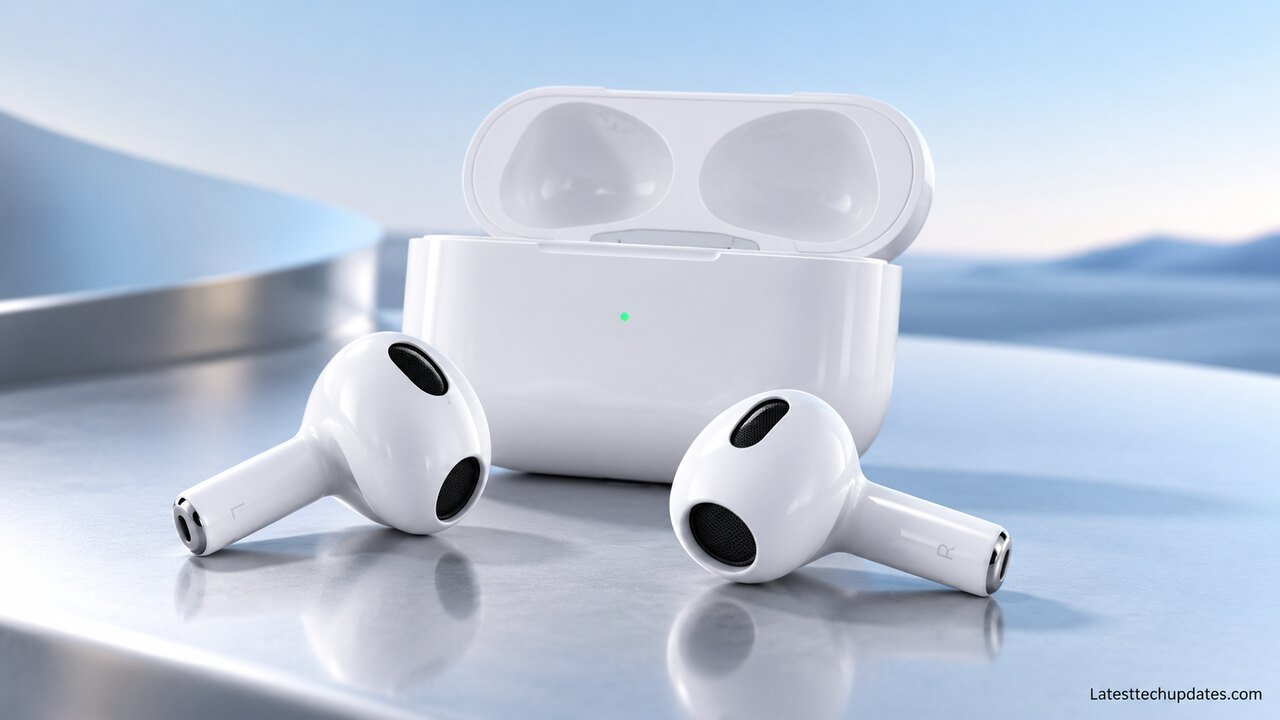
Apple AirPods 3rd Generation are wireless earbuds designed for comfortable everyday listening, clear phone calls, and seamless connectivity with Apple devices. Released in October 2021, they introduced a redesigned shape, Personalized Spatial Audio support, Adaptive EQ, and improved battery life compared with the second-generation AirPods.
What Are Apple AirPods 3rd Generation and Their Main Features?
Apple AirPods 3rd Generation are Bluetooth wireless earbuds that combine Apple’s H1 headphone chip with an open-ear design and several audio technologies previously associated with more expensive headphones. They were introduced on October 18, 2021, and became available on October 26, 2021.
The third-generation model brought meaningful improvements over AirPods 2, including shorter stems, a contoured shape, sweat and water resistance, and a force sensor for controlling playback. Apple also introduced support for Spatial Audio with dynamic head tracking, making compatible movies and music more immersive.
Unlike AirPods Pro, AirPods 3 do not use silicone ear tips or create a tight seal inside your ears. This makes them appealing to people who dislike the plugged-ear sensation of traditional in-ear earbuds. However, the same open design allows more surrounding noise to reach your ears.
What Are the Key Specifications of AirPods 3?
The following table summarizes the important technical specifications of Apple AirPods 3rd Generation.
| Feature | Apple AirPods 3rd Generation |
| Release date | October 2021 |
| Processor | Apple H1 headphone chip |
| Connectivity | Bluetooth 5.0 |
| Design | Open-ear, no silicone tips |
| Active Noise Cancellation | No |
| Adaptive EQ | Yes |
| Spatial Audio | Yes, with dynamic head tracking |
| Battery life | Up to 6 hours of listening |
| Total battery life | Up to 30 hours with charging case |
| Charging options | Lightning; MagSafe wireless charging on compatible case |
| Water resistance | IPX4 for earbuds and charging case |
| Controls | Force sensor |
| Microphones | Dual beamforming microphones and inward-facing microphone |
| Original U.S. price | $179 at launch |
These specifications describe Apple’s advertised capabilities. Actual battery performance, connectivity, and listening experience depend on usage conditions, device compatibility, and battery health.
How Are AirPods 3 Different From Earlier AirPods?
AirPods 3 improved on AirPods 2 by adding Adaptive EQ, Spatial Audio, longer battery life, and an updated design. The third-generation earbuds also feature a force sensor instead of the older tap-based controls, making playback commands more deliberate.
Another important difference is water resistance. AirPods 3 carry an IPX4 rating, while AirPods 2 do not have an official IP water-resistance rating. This makes the newer model better suited for workouts and occasional exposure to sweat or light rain, although neither model should be submerged.
How Good Is the Sound Quality of Apple AirPods 3rd Generation?
Apple AirPods 3 deliver balanced sound suitable for music, podcasts, videos, and everyday listening. Their custom high-excursion driver and high-dynamic-range amplifier help produce clear vocals, detailed midrange frequencies, and enjoyable bass for an open-ear design.
However, sound quality depends heavily on how well the earbuds fit your ears. Because AirPods 3 do not create an airtight seal, low-frequency sounds can escape more easily than with sealed earbuds. You may notice this particularly when listening to bass-heavy music or traveling through noisy environments.
For everyday listening at home, in an office, or during a walk, AirPods 3 can provide a satisfying experience. They are less suitable when you need strong sound isolation, especially on airplanes, trains, or busy city streets.
What Does Adaptive EQ Do on AirPods 3?
Adaptive EQ automatically adjusts the sound based on how the earbuds fit your ears. Inward-facing microphones measure what you hear, allowing the system to tune low and midrange frequencies in real time.
This feature is useful because an open-ear design cannot maintain the same acoustic seal for every user. Adaptive EQ helps compensate for some differences in fit, although it cannot completely overcome poor positioning or replace active noise cancellation.
How Does Spatial Audio Improve the Listening Experience?
Spatial Audio creates a more immersive listening experience with compatible Dolby Atmos music and supported video content. Dynamic head tracking can make sound appear to remain anchored to your device or screen as you move your head.
For example, when watching a compatible movie on an iPhone or iPad, dialogue and effects can feel more naturally positioned around you. Personalized Spatial Audio can further tailor the experience using a compatible iPhone to create a personal audio profile.
The effect depends on the content, device, and audio settings. Not every song or video supports Spatial Audio, and some listeners may prefer conventional stereo playback for music.
Are AirPods 3 Comfortable for Everyday Use and Workouts?
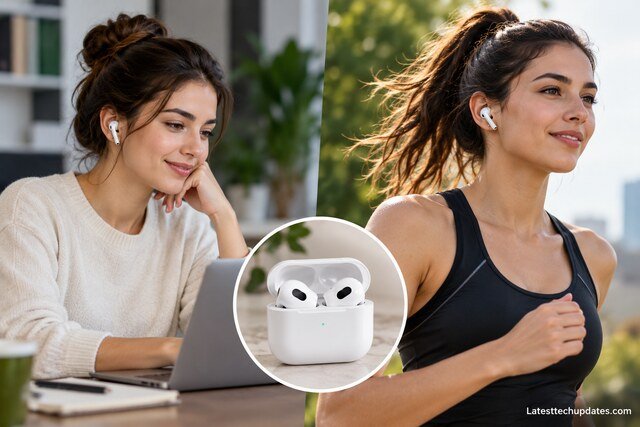
AirPods 3 are designed for lightweight, comfortable everyday use, particularly for people who prefer earbuds without silicone tips. Their contoured shape rests in the outer ear rather than sealing the ear canal, reducing the feeling of pressure that some users experience with in-ear headphones.
However, comfort is highly individual. The redesigned housing is larger than the earlier AirPods shape, which can make AirPods 3 less secure for people with smaller ears. Since Apple does not include interchangeable ear tips, you cannot adjust their fit in the same way as AirPods Pro.
For office work, studying, phone calls, and casual listening, the open design can be convenient. You can remain more aware of conversations and surrounding sounds without repeatedly removing the earbuds.
Can You Wear AirPods 3 While Running or Exercising?
Yes, AirPods 3 are suitable for many workouts, including walking, gym sessions, cycling on stationary equipment, and moderate running. Their IPX4 rating provides resistance against sweat and splashes from different directions.
However, the rating does not mean the earbuds are waterproof. You should not wear them while swimming or showering, and water resistance may decrease with normal wear. Let the earbuds dry completely before charging them.
For vigorous exercise, fit stability matters more than specifications. If the earbuds move or fall out during sudden movements, a model with adjustable silicone tips may be a better choice.
Do AirPods 3 Have Active Noise Cancellation?
No, Apple AirPods 3rd Generation do not support Active Noise Cancellation (ANC) or Transparency mode. Their open-ear design allows external sounds to remain audible, which can be useful when you need awareness of your surroundings.
However, this is a limitation when traveling, commuting, or working in loud environments. You may feel tempted to increase the volume to overcome background noise, which can increase listening-related hearing risks. If noise cancellation is a priority, consider a compatible AirPods model that specifically includes ANC.
How Long Does the AirPods 3 Battery Last and How Do You Charge Them?
Apple AirPods 3 offer up to six hours of listening time on a single charge, or up to five hours when Spatial Audio with dynamic head tracking is enabled. For phone calls, Apple advertises up to four hours of talk time per charge.
The charging case extends total listening time to as much as 30 hours and talk time to approximately 20 hours. These figures are based on Apple’s testing conditions, so your actual results may vary depending on volume, features, environment, and battery condition.
For example, if you listen to music for two hours daily, a healthy pair of AirPods 3 may last several days before the case needs recharging. However, batteries naturally degrade over time, making battery condition particularly important when buying a used or older pair in 2026.
How Fast Do AirPods 3 Charge?
AirPods 3 support quick charging through their charging case. According to Apple’s specifications, five minutes of charging in the case can provide approximately one hour of listening time or one hour of talk time.
This is especially useful when you forget to charge your earbuds before leaving home. However, quick-charge performance can vary with battery age, temperature, and remaining charge. Charging a heavily worn battery may not produce the same results as a new one.
Do AirPods 3 Support Wireless Charging and USB-C?
AirPods 3 were sold with different charging-case configurations. The original MagSafe Charging Case supports MagSafe, Qi-certified wireless charging, and Lightning cable charging. Apple later offered a Lightning Charging Case version that does not support wireless charging.
AirPods 3 do not have an official USB-C charging-case version. If you are buying them in 2026, verify the exact case included rather than assuming every AirPods 3 package supports wireless charging. This distinction is particularly important when comparing refurbished products and third-party marketplace listings.
How Do You Connect and Use AirPods 3 With Different Devices?
AirPods 3 connect most conveniently with compatible Apple devices, offering one-tap setup, automatic switching between supported devices, and integration with Apple’s Find My network. Their H1 chip helps manage wireless connectivity and supports hands-free Siri activation.
To connect AirPods 3 to an iPhone, enable Bluetooth, place the earbuds inside their charging case, open the lid near your unlocked iPhone, and follow the onscreen instructions. When paired with your Apple Account, the earbuds can also become available on other compatible Apple devices signed in to the same account.
AirPods 3 can also function as regular Bluetooth earbuds with many Android phones, Windows computers, and other Bluetooth-enabled devices. However, certain Apple-specific features are unavailable outside the Apple ecosystem.
Can You Use AirPods 3 With Android and Windows?
Yes, AirPods 3 can connect to Android smartphones and Windows computers through standard Bluetooth pairing. Open the charging-case lid with the earbuds inside, then press and hold the setup button until the status light flashes white. Select AirPods from your device’s Bluetooth settings.
Basic functions, including audio playback and calls, generally work. However, features such as Siri, Apple-style automatic device switching, and certain Spatial Audio capabilities are not available on non-Apple devices.
If you primarily use Android, compare AirPods 3 with earbuds that offer dedicated Android apps and more adjustable settings.
What Controls and Find My Features Are Available?
AirPods 3 use a force sensor on the stem of each earbud. Press once to play or pause audio or answer a call, twice to skip forward, and three times to skip backward. Pressing and holding can activate Siri on supported Apple devices.
Find My integration can help locate misplaced AirPods using their last known location or available network information. You can also play a sound through the earbuds when supported and within reach.
However, AirPods 3 do not provide the same precise case-finding capabilities available on certain newer AirPods Pro models. Location accuracy and available options depend on the device, software, and connectivity.
How Do AirPods 3 Compare With AirPods 4 and AirPods Pro?
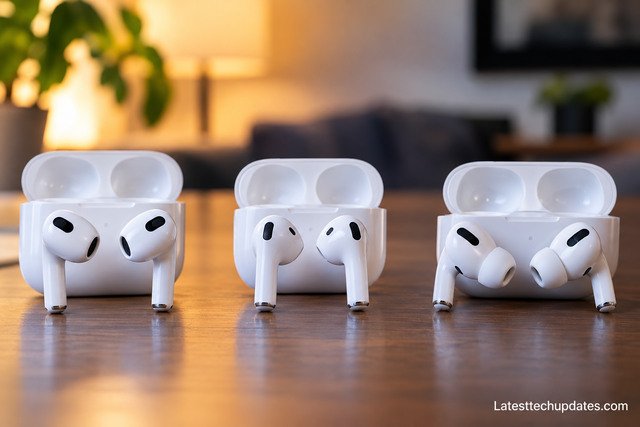
Apple AirPods 3 remain capable wireless earbuds, but newer generations offer improved processors, connectivity, and audio features. Apple discontinued AirPods 3 in September 2024 following the introduction of AirPods 4, making the third-generation model an older product rather than a current flagship option.
AirPods 4 introduced the H2 headphone chip, improved call-processing features, USB-C charging, and greater dust protection. Apple also released an AirPods 4 version with Active Noise Cancellation, providing additional flexibility for users who want an open-ear design with noise reduction.
By 2026, Apple has introduced additional AirPods models, including AirPods 5 and AirPods Pro 3. Consequently, AirPods 3 should be evaluated primarily as a discounted or refurbished purchase rather than compared only with their original 2021 competitors.
What Is the Difference Between AirPods 3 and AirPods 4?
AirPods 4 improve on several features of AirPods 3, although the older model retains an advantage in Apple’s advertised single-charge listening time.
| Feature | AirPods 3 | AirPods 4 |
| Release year | 2021 | 2024 |
| Chip | H1 | H2 |
| Bluetooth | 5.0 | 5.3 |
| Listening time | Up to 6 hours | Up to 5 hours |
| Total listening with case | Up to 30 hours | Up to 30 hours |
| Active Noise Cancellation | No | Available on ANC version |
| Water and dust resistance | IPX4 | IP54 |
| Charging connector | Lightning | USB-C |
| Spatial Audio | Yes | Yes |
| Original U.S. starting price | $179 | $129 |
The comparison shows why AirPods 4 became a meaningful upgrade. The H2 chip enables improved audio processing and features such as Voice Isolation for calls, while USB-C charging is more convenient for users who already own compatible chargers.
However, if your main priorities are basic music playback and longer single-charge listening time, AirPods 3 still offer practical advantages, especially when available at a substantially lower price.
Should You Choose AirPods 3 or AirPods Pro?
AirPods Pro are generally more suitable if you need strong noise cancellation, adjustable silicone ear tips, and advanced listening features. Their sealed design provides better passive sound isolation, while Active Noise Cancellation reduces additional environmental noise.
AirPods 3 are more appealing if you dislike silicone tips or prefer to hear your surroundings naturally. They also provide essential Apple conveniences without requiring the same premium hardware.
The choice ultimately depends on your listening environment. For quiet rooms and casual use, AirPods 3 may be sufficient. For frequent flights, busy offices, or noisy commutes, an AirPods Pro model is likely to be more useful.
Are Apple AirPods 3rd Generation Worth Buying in 2026?
Apple AirPods 3rd Generation can still be worth buying in 2026, but only under the right conditions. They offer reliable everyday functionality, useful Apple ecosystem integration, and a comfortable open-ear design for many listeners. However, their age, lack of noise cancellation, and older Lightning charging standard reduce their appeal compared with newer models.
Because Apple discontinued AirPods 3, availability now depends largely on remaining retailer inventory, resale platforms, and refurbished-device sellers. Prices vary according to condition, included accessories, battery health, and seller reputation. Their original $179 price should not be treated as a reasonable current purchase target.
For most U.S. buyers, comparing the actual selling price with newer AirPods is essential. A small discount may not justify purchasing several-year-old hardware, particularly when newer models offer better connectivity and longer potential service life.
What Should You Check Before Buying Used or Refurbished AirPods 3?
Start by verifying that the earbuds are genuine Apple products. Counterfeit AirPods can closely resemble authentic models, so packaging and serial numbers alone should not determine authenticity. Confirm the model information through a compatible Apple device and purchase from a reputable seller offering returns.
Battery condition is equally important. Ask how long the earbuds last during continuous playback, whether both sides discharge evenly, and whether the case charges correctly. Unlike iPhones, AirPods do not provide a standard battery-health percentage in their usual settings.
Also inspect the charging contacts, microphone openings, speaker grilles, and case hinge. Test both earbuds, the force sensors, Bluetooth pairing, and microphone quality before accepting a used pair.
Who Should Buy AirPods 3 and Who Should Avoid Them?
AirPods 3 are most suitable for existing Apple users who prefer an open-ear fit, primarily listen in quieter environments, and find a verified pair at a meaningful discount. They may also be useful as secondary earbuds for phone calls, podcasts, or occasional exercise.
You should consider alternatives if you need effective noise cancellation, USB-C charging, adjustable ear tips, or the latest Apple audio features. Buyers planning to use their earbuds for several years may benefit more from a newer generation with a fresh battery and current hardware.
The practical recommendation is simple: choose AirPods 3 only when their fit, condition, and price provide a clear advantage over newer alternatives.
FAQ’s
1. Are Apple AirPods 3rd Generation still good in 2026?
Yes, AirPods 3 remain useful for listening to music, watching videos, making calls, and everyday Bluetooth connectivity. They support Adaptive EQ, Spatial Audio, and up to six hours of listening per charge. However, their aging batteries and lack of active noise cancellation make newer AirPods a better choice for many buyers.
2. Do AirPods 3 work with iPhone 16 and iPhone 17?
Yes, AirPods 3 can connect to compatible iPhone 16 and iPhone 17 models through Bluetooth. Apple features such as automatic pairing, Find My, and supported Spatial Audio functions are available when the device meets the relevant software requirements. You do not need to own an older iPhone to use third-generation AirPods.
3. Are AirPods 3 waterproof?
No, AirPods 3 are water-resistant, not waterproof. Both the earbuds and their charging case have an IPX4 rating, which protects against splashes and sweat during non-water sports. They should not be submerged, worn while swimming, or washed under running water. Water resistance can also decrease over time.
4. Can AirPods 3 connect to two devices at the same time?
AirPods 3 support automatic switching between compatible Apple devices signed in to the same Apple Account. For example, they can move from music playback on an iPad to a phone call on an iPhone. However, this is not the same as conventional Bluetooth multipoint, where two independent devices maintain simultaneous active audio connections.
5. How can you tell if AirPods 3 are genuine?
Check the model number in your iPhone’s Bluetooth settings, compare the physical design with Apple’s specifications, and verify that expected features work correctly. You can also check the serial number through Apple’s coverage service. However, counterfeit products can copy valid serial numbers, so authentication should include physical inspection and purchasing from a trustworthy seller.
Conclusion
Apple AirPods 3rd Generation remain practical wireless earbuds for users who value comfortable open-ear listening, dependable Apple connectivity, Spatial Audio, and reasonable battery life. Their main limitations are the absence of active noise cancellation, Lightning charging, and the potential battery deterioration associated with older hardware. Although they can still handle everyday listening effectively, newer AirPods provide additional features and better long-term buying value. Before purchasing AirPods 3 in 2026, compare their price with current models, verify authenticity, and carefully evaluate battery condition. A well-maintained, significantly discounted pair can still be a sensible purchase.
