
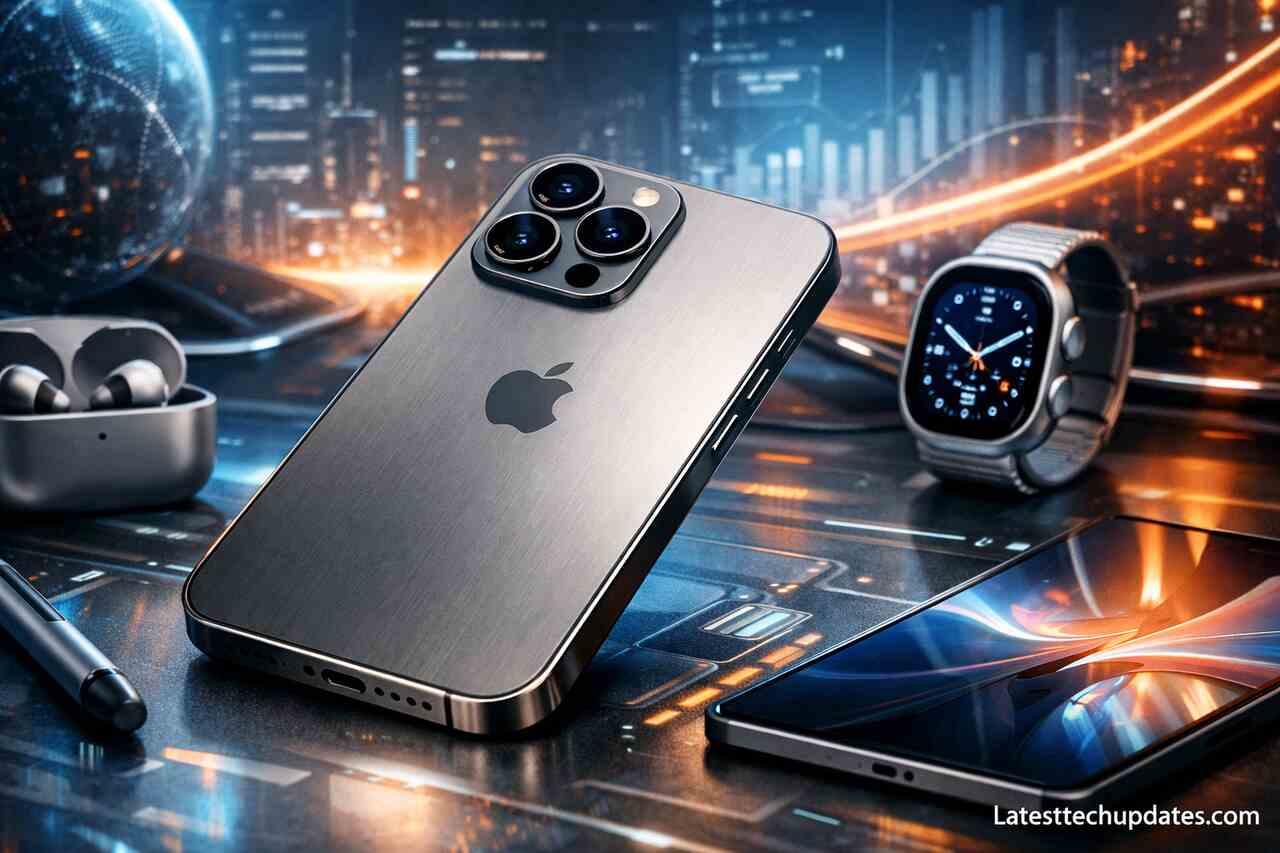
The iPhone 18 Pro emerges as a projected flagship device that aligns with long-term technological shifts, hardware-software integration, and ecosystem-driven user intent. Buyers evaluating upgrade timing increasingly prioritize longevity, AI integration, and silicon efficiency, making delayed adoption a rational decision under semantic search patterns related to “next-gen iPhone features,” “future-proof smartphones,” and “Apple innovation roadmap.”
Why Should Users Wait for the iPhone 18 Pro Instead of Upgrading Now?
Waiting for the iPhone 18 Pro provides strategic advantages tied to performance, design evolution, and ecosystem synergy. Each reason below reflects a distinct entity cluster influencing purchase decisions.
1. Will the A20 or Next-Gen Chipset Redefine Performance Benchmarks?
The upcoming chipset likely succeeding the Apple A17 Pro and Apple A18 chip will introduce enhanced transistor density, improved neural engine capabilities, and energy efficiency gains. Semiconductor advancements based on 2nm fabrication processes could significantly outperform current chips in multitasking, gaming, and AI-driven computations. Performance gains will directly impact augmented reality, computational photography, and real-time language processing.
2. Will Apple Intelligence Become More Integrated and Powerful?
The evolution of Apple Intelligence will likely reach deeper integration within iOS, enabling contextual awareness, predictive automation, and on-device generative AI. Future iterations may surpass current AI assistants by combining privacy-centric processing with cloud augmentation. Enhanced AI capabilities will transform user-device interaction, making waiting beneficial for those prioritizing smart ecosystems.
3. Could the Display Technology Shift to Under-Display Face ID?
Apple’s movement toward seamless design may result in under-display sensors replacing the current Dynamic Island. Under-display Face ID would enable a true full-screen experience, eliminating visual interruptions. Display innovation often correlates with user satisfaction, particularly for media consumption, gaming, and immersive applications.
4. Will Battery Technology See a Significant Leap Forward?
Battery innovation remains a core upgrade driver. The iPhone 18 Pro may incorporate stacked battery architecture or silicon-carbon cells, increasing energy density without expanding device size. Improved battery cycles, faster charging, and thermal efficiency will directly enhance usability for power users, travelers, and content creators.
5. Will Camera Systems Move Toward Computational Cinematography?
Camera systems in future iPhones may surpass traditional upgrades by integrating AI-enhanced image synthesis, real-time scene optimization, and periscope zoom improvements beyond current iPhone 15 Pro Max capabilities. Computational photography advancements will redefine professional-grade mobile imaging, benefiting videographers, photographers, and social media creators.
6. Could Apple Introduce a Portless or Fully Wireless Design?
Apple’s long-term design philosophy suggests a shift away from physical ports, even beyond the USB-C transition introduced after iPhone 14. A fully wireless iPhone would rely on MagSafe, cloud syncing, and wireless data transfer, reinforcing Apple’s ecosystem control while simplifying hardware design.
7. Will Vision Pro Integration Expand the Ecosystem?
The introduction of Apple Vision Pro signals Apple’s transition into spatial computing. The iPhone 18 Pro could act as a central hub for XR experiences, enabling seamless connectivity between mobile and wearable devices. Ecosystem integration will increase the value of waiting, particularly for early adopters of mixed reality.
8. Will iOS Evolution Unlock New Hardware Capabilities?
Future versions of iOS will likely include deeper AI integration, improved multitasking, and enhanced customization. Software evolution often unlocks latent hardware potential, meaning newer devices benefit disproportionately from optimized OS features compared to older models.
9. Could Sustainability and Materials Engineering Improve Durability?
Apple continues investing in recycled materials and stronger alloys. The iPhone 18 Pro may feature advanced titanium composites or graphene-based components, increasing durability while reducing environmental impact. Sustainability trends influence purchasing behavior, especially among environmentally conscious consumers.
10. Will Pricing Strategy Favor Waiting Over Incremental Upgrades?
Incremental upgrades between yearly releases often deliver marginal improvements. Waiting for a more substantial generational leap such as the iPhone 18 Pro provides better value per dollar. Consumers optimizing cost-to-performance ratios benefit from skipping intermediate models like the iPhone 16 Pro or 17 series.
Does Waiting for the iPhone 18 Pro Align with User Intent and Market Trends?
Waiting aligns with long-term user intent focused on durability, innovation, and ecosystem expansion. Market behavior shows increasing upgrade cycles, driven by diminishing returns in yearly updates. The iPhone 18 Pro represents a convergence point where hardware, AI, and spatial computing intersect, making delayed purchasing a strategically sound decision for tech-savvy users.
Conclusion
Delaying an upgrade until the iPhone 18 Pro release maximizes technological value, ensures access to next-generation features, and aligns with Apple’s broader innovation trajectory. Users seeking meaningful improvements rather than incremental updates will benefit most from waiting, especially as AI, display technology, and ecosystem integration continue evolving rapidly.
