
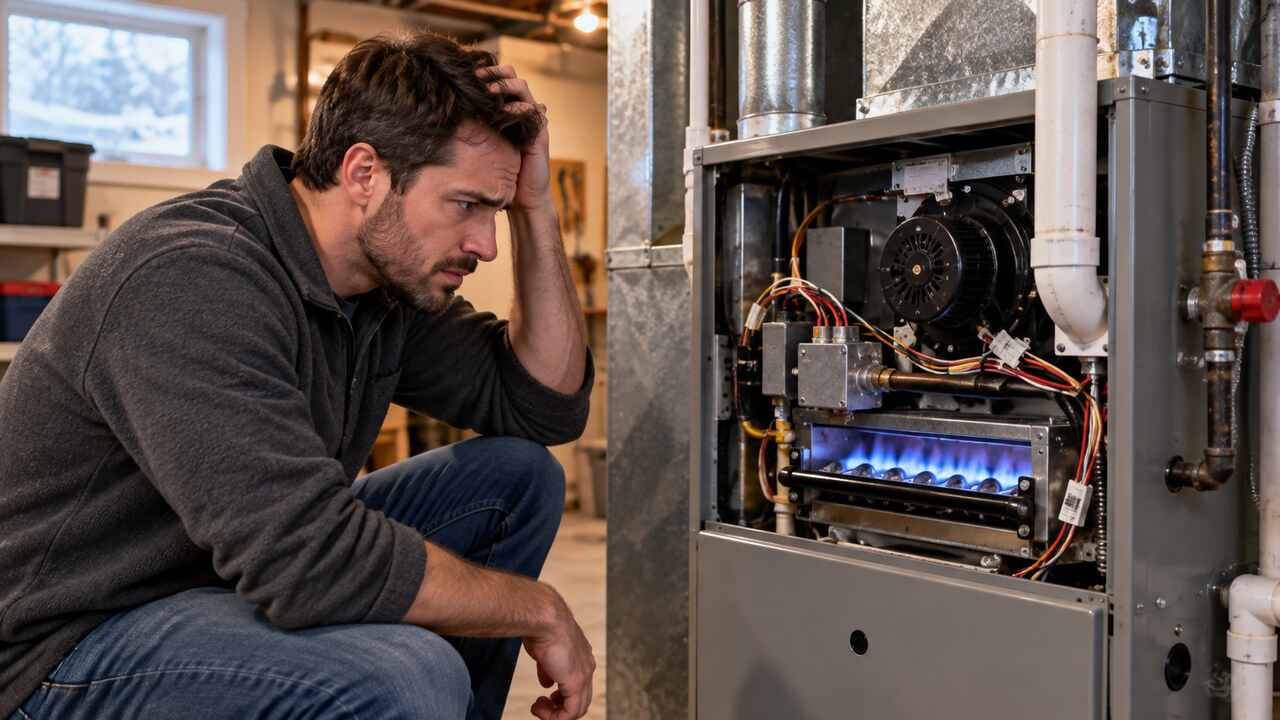
When your furnace keeps restarting without properly heating your home, it usually means something is interrupting the normal heating cycle. The cause may be as simple as restricted airflow or as complex as an ignition, sensor, or electrical issue. Understanding what happens during each restart can help you determine whether you need a basic adjustment or professional furnace repair.
Why Does My Furnace Keep Restarting
A furnace that repeatedly starts and restarts is often reacting to a problem that prevents it from completing a normal heating cycle. The failure may happen before ignition, immediately after ignition, or several minutes into the heating cycle. Common causes include restricted airflow, overheating, a dirty flame sensor, ignition trouble, thermostat problems, clogged venting, or an electrical interruption.
The sequence of events matters. If the inducer starts repeatedly but the burners never establish a steady flame, the problem may involve draft proving, venting, a pressure switch, condensate drainage on a high-efficiency furnace, or ignition. If the burners ignite and shut off within a few seconds, the furnace may be failing to prove flame. If the furnace runs for several minutes before shutting down and then starts again soon afterward, overheating or poor airflow becomes more likely.
When a furnace keeps restarting, repeated restarting should be treated as a symptom rather than a repair strategy. The furnace is often shutting itself down because a control or safety device has detected a condition that needs attention.
What It Means When Furnace Starts Stops And Restarts
When a furnace starts stops and restarts but the home remains cold, the heating cycle may be ending before enough warm air reaches the rooms. The furnace might be attempting ignition repeatedly, losing the burner flame, overheating and shutting down, running the blower without maintaining combustion, or losing the thermostat’s call for heat before the house warms up.
Watch what happens during each cycle. A typical gas furnace may begin with the inducer motor, ignite the burners, start the main blower shortly afterward, and continue heating until the thermostat is satisfied. A failure at any stage can interrupt that sequence. With a restarting furnace, identifying exactly where the sequence stops can help narrow down the cause.
The timing is useful. Burners that ignite and go out almost immediately can point toward flame-proving trouble. Burners that stay on for a few minutes before shutting down can indicate overheating. A furnace that never establishes a flame may have an igniter, gas-supply, pressure-switch, venting, or control problem. If the blower runs but the air from the registers is cool or only briefly warm, the burners may not be staying on long enough.
The problem can also be outside the furnace cabinet. Severe duct restriction, closed zoning dampers, poor return airflow, or a thermostat located in an unusually warm area can cause short heating cycles while other rooms remain cold. If the furnace starts stops and restarts despite normal thermostat settings, airflow throughout the home should also be considered.
Why Your Furnace Sounds Like It Keeps Restarting
Several furnace components operate before, during, and after burner operation, so repeated motor noises do not always mean the burners are successfully restarting. If the furnace sounds like it keeps restarting, identifying which component is actually cycling can provide an important clue.
The inducer motor, for example, normally runs before ignition to establish proper draft through the combustion system. If the furnace cannot confirm safe venting or cannot maintain a flame, the inducer may stop and restart during another ignition attempt. You may also hear the igniter energizing, relays clicking, or the gas valve opening during unsuccessful ignition attempts. That can create a repeated start-up sound even though the burners only ignite briefly or never ignite at all.
The blower can also continue running after the burners shut down. If an overheating furnace opens its high-limit switch, the gas burners may turn off while the blower remains operating to remove excess heat. Once the furnace cools, another heating attempt may begin. From outside the unit, that sequence can sound like the entire furnace is repeatedly starting and stopping even though different components are cycling at different times. This is another situation in which a furnace sounds like it keeps restarting even though the burners may not actually be completing each cycle.
Airflow Problems Behind A Furnace Restart
Restricted airflow is one of the most common reasons a furnace can shut down prematurely and begin another heating cycle soon afterward. In this situation, a furnace restart may occur after the unit cools enough for the safety control to allow another heating attempt.
A furnace produces heat faster than it can safely absorb if too little air moves across the heat exchanger. As internal temperatures rise, the high-limit switch may shut the burners off to protect the equipment. The blower may continue running while the furnace cools. Once temperatures fall, the burners may be allowed to operate again, creating a repeating on-off pattern.
A dirty filter is one possible restriction, but it is not the only one. High static pressure can also come from blocked return-air grilles, too many closed supply registers, dirty blower components, a dirty evaporator coil located above the furnace, incorrect blower-speed settings, undersized or restricted ductwork, zoning dampers, a restrictive filter design, or a weak blower motor or failing capacitor.
Checking the filter and making sure accessible supply and return vents are open is a reasonable first step. If a new filter does not stop the cycling, the rest of the airflow path may need to be checked. A furnace that continues hitting its limit after basic airflow checks should be inspected, because repeated overheating can place unnecessary stress on the heat exchanger and other components. Repeated limit trips are especially important because the limit switch may be responding correctly to a separate airflow or equipment problem.
Sensor Problems And Restarting Furnace
These components participate directly in the furnace’s operating and safety sequence, and problems with any of them can cause repeated start attempts. A restarting furnace may therefore be reacting to a sensor or safety-control signal rather than a simple thermostat issue.
A flame sensor verifies that the burners have actually established a flame. If the control board does not receive the expected flame signal, it can shut off the gas valve within seconds and attempt ignition again. A contaminated flame sensor is a common reason for burners that light normally and then shut down almost immediately, although grounding, wiring, burner flame quality, and control-board faults can also affect flame recognition.
Ignition problems can create a similar pattern. A weak or cracked hot-surface igniter, intermittent spark ignition, gas-valve trouble, or another ignition-sequence fault may prevent reliable burner operation. Depending on the furnace, the control board may retry several times before entering a temporary lockout.
The high-limit switch performs a different function. It monitors furnace temperature and can shut off the burners if the system becomes too hot. A limit-switch event usually happens later in the cycle. The burners may operate normally for a period, shut off when the furnace overheats, and restart after temperatures fall. Repeated limit-switch trips frequently point to an airflow problem, although the switch itself, blower operation, furnace setup, or control circuitry may also need evaluation. In that case, the switch may be doing exactly what it was designed to do, so replacing it without finding the cause of the overheating may not solve the problem.
Because these safety controls are interconnected, the furnace’s diagnostic code and exact operating sequence are often more useful than replacing a component based on symptoms alone.
Thermostat Issues Causing A Furnace Restart
A furnace depends on a steady call for heat and reliable electrical power. Interruptions in either can make the equipment start and stop unexpectedly. In some cases, the furnace starts stops and restarts because the heating call or electrical supply is being interrupted.
A thermostat can contribute to cycling if it has loose wiring, weak batteries, damaged contacts, incorrect settings, poor placement, or an internal fault. A thermostat near a supply register, fireplace, direct sunlight, exterior door, or another heat source may warm up faster than the rest of the house and end the heating call too early.
Electrical problems can affect the furnace control board, blower motor, inducer, ignition system, or low-voltage control circuit. Loose terminals, damaged wiring, a failing transformer, an intermittent safety switch or door interlock, a loose neutral, or an unstable control board can produce seemingly random restarts or cause the furnace controls to reset completely.
A furnace that completely loses power and then boots back up may indicate a different type of problem than one whose burners simply shut off. Check whether the thermostat display goes blank, whether the furnace’s control-board lights disappear, and whether other electrical devices on the same circuit are affected. If they do, the issue may involve the power or control circuit rather than normal burner cycling.
Repeated breaker trips should be evaluated by a qualified professional rather than repeatedly resetting the breaker.
Short Cycling Vs. A Normal Furnace Restart
Normal furnace cycling is controlled primarily by indoor temperature. The furnace runs long enough to raise the home toward the thermostat setting, shuts down, and starts again later as the house gradually loses heat. Normal cycling ends because the thermostat has received enough heat. Short cycling ends before the heating demand has been properly satisfied.
Short cycling usually produces noticeably shorter and more frequent operating periods. Signs can include the furnace restarting every few minutes, burners shutting off while the thermostat is still calling for heat, repeated ignition attempts within a short period, frequent limit trips, the furnace entering lockout, or the house temperature remaining below the thermostat setting despite repeated operation. When the furnace sounds like it keeps restarting during these short cycles, listen for whether the burners, inducer, or blower are actually stopping and starting.
Cycle length alone is not a reliable test because normal run times change with outdoor temperature, furnace size, insulation, duct conditions, thermostat settings, and heating load.
A more useful distinction is whether each cycle appears complete and productive. If the furnace establishes a stable flame, runs long enough to deliver sustained warm air, satisfies the thermostat, and remains off for a reasonable interval, the cycling may be normal. If the cycle is repeatedly interrupted by a safety control or failed operating step, it is more likely to be a fault. Frequent restarts accompanied by poor heating, repeated safety-code flashes, unusually hot furnace surfaces, burner shutdowns, or ignition failures deserve further investigation.
When Restarting Furnace Is Safe
A single restart can be reasonable after checking simple conditions such as the thermostat setting, furnace service switch, circuit breaker, and air filter, provided there are no signs of a safety problem. Follow the furnace manufacturer’s restart instructions whenever they are available. Before attempting a furnace restart, check for obvious warning signs such as gas odors, overheating, or electrical problems.
Repeated resets should be avoided, especially if the furnace immediately returns to the same fault. Modern furnaces use safety controls and lockout modes to stop operation when ignition, combustion, venting, overheating, or another abnormal condition is detected. Restoring power may temporarily clear the lockout without correcting the condition that caused it. Repeated resets can also erase or interrupt useful diagnostic information, making the original fault harder to identify.
Stop trying to restart the furnace if you notice a gas odor, a carbon monoxide alarm, smoke, scorching, unusual burning smells, visible flame outside the burner area, repeated breaker trips, loud mechanical noises, evidence that the furnace is overheating, or burners that appear unstable or abnormal.
If you smell gas, leave the building and contact the gas utility or emergency services from a safe location. Do not operate electrical switches or attempt additional furnace resets inside the building.
What To Do When Your Furnace Keeps Restarting
Start with observations that do not require opening or bypassing safety components. Confirm that the thermostat is set to heat and above the current room temperature, and check whether it is maintaining a steady call for heat. Inspect the furnace filter and replace it if it is heavily dirty. Make sure accessible return-air grilles and supply registers are open and unobstructed.
Then observe the furnace’s operating sequence without bypassing any safety controls. Note whether the inducer starts, whether the igniter operates, whether the burners light, how long the flame remains on, whether the main blower starts, whether warm air reaches the registers, and whether the furnace shuts down before the thermostat is satisfied. Observing a restarting furnace this way can help identify the stage at which the normal heating cycle is being interrupted.
If the furnace has a visible diagnostic light, record the flash pattern before cycling power. The flashing pattern can correspond to a fault code listed on the furnace door or in the manufacturer’s service information and may identify whether the furnace is seeing a pressure-switch fault, ignition failure, limit condition, flame-sensing problem, or another control issue.
If the burners repeatedly shut down, the furnace enters lockout, a limit switch keeps tripping, or the system continues cycling without raising the indoor temperature, professional diagnosis is appropriate if the basic airflow and thermostat checks do not correct it. An HVAC technician can measure temperature rise and airflow, test the flame-sensing signal, inspect the ignition and venting systems, verify pressure-switch operation, evaluate blower performance and electrical controls, and determine why the furnace is ending its heating cycle early.
Until the cause is identified, avoid repeatedly resetting a furnace that is clearly failing to complete a normal heating cycle. If the furnace keeps restarting after basic checks, another furnace restart is unlikely to correct the underlying fault.
For more informative insights please visit LatestTechUpdates.
