
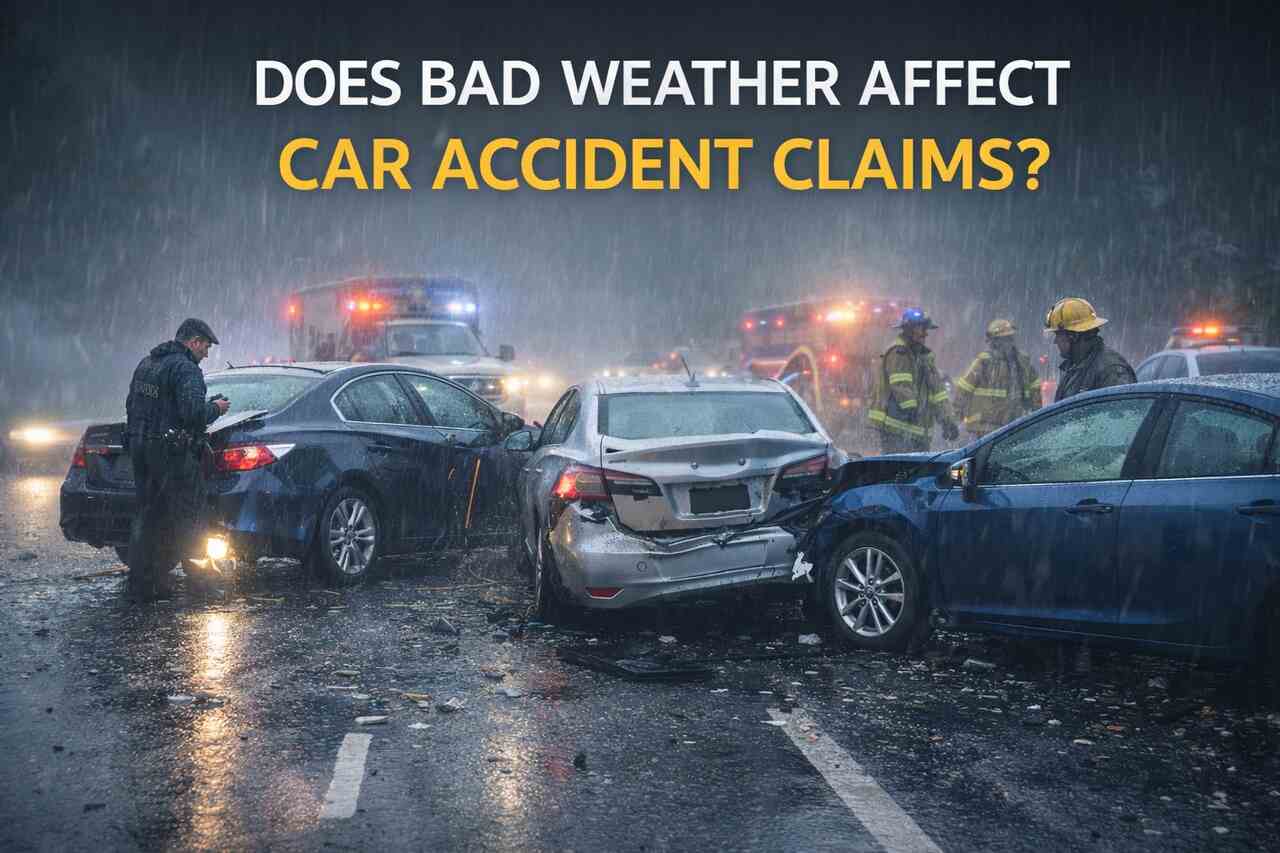
According to the Center for Disaster Philanthropy, more than 100 tornadoes were reported across the U.S. on March 14 and March 15, 2025. On March 13, heavy rain triggered several mudslides in Southern California, trapping people and cars and engulfing a roadway.
You can expect the dangerous driving conditions when the weather is bad. And it cannot be an excuse when a driver caused an accident. These conditions can contribute to accidents, but insurance companies and courts still examine the drivers’ reasonable reactions during these conditions.
So, can weather conditions impact liability in auto accidents? Let’s look into the challenges of filing claims due to severe conditions and its influence on a driver’s liability.
How Bad Weather Affects Car Accidents
The most dangerous driving situations occur during hazardous road weather conditions, which include rain, snow, and fog. The combination of poor visibility with unstable road surface conditions creates extreme difficulties for drivers who need to handle unexpected situations.
You may well have found that stopping distances have somehow extended, with a need to brake—not full-on—all the earlier.
Even a small turn can lead to a driver losing control of their vehicle on snow or ice. Also, tailgating or racing other cars creates dangerous driving situations. In such cases, law enforcement is needed to keep drivers safe.
Drivers need to pay attention to other motorists. This is because during this weather condition, drivers have less control over their vehicles.
Nighttime vigilance and careful driving practices serve as effective methods to maintain safety during rainy weather conditions.
How Insurers View Bad Weather in Claims
Insurers investigate severe weather situations because these conditions cause accidents, which impact their claims assessment process. The team assesses multiple factors, which include road conditions and driver performance during different weather situations.
The investigation will examine whether you made any attempts to decrease the hazardous situation through speed reduction and maintaining distance from nearby vehicles and whether you filed negligence claims against the other driver after an accident that occurred during severe weather conditions.
Newnan car accident lawyer Dalton Trammell says that driving recklessly, like not signaling before changing lanes, cutting other vehicles off, driving quickly in rain or snow, and swerving, can also have an impact on your claim.
The evaluation process will determine whether all involved individuals performed their duties according to what was reasonable at that particular time. Your claim may be impacted if you failed to complete this requirement.
Insurers utilize historical weather-related accident data, which assists them in their decision-making process. You must be ready to explain your actions during the incident.
Who’s at Fault in Bad Weather Accidents?
The responsibility for inclement weather accidents remains difficult to establish since multiple elements determine which party will face accountability. Drivers develop their behaviors through weather conditions, which include snow, fog, and rain.
People who drive without adjusting their speed to match external conditions will face negligent judgment if their driving results in accidents. Drivers create increased liability through their use of weather conditions and road surfaces that reduce visual perception and vehicle traction.
Drivers must demonstrate that they took reasonable safety measures according to the current weather conditions, which required them to drive with lights and reduce their speed. The rules of liability shifted for the one who ignored the weather because one driver acted too cautiously while the other driver showed complete disregard for the weather conditions.
The accident reconstruction will create a clearer understanding of the situation.
Driver Behavior in Adverse Weather Conditions
Your driving performance needs to adapt according to the current conditions after either rain begins or snow stops. In this situation, you should reduce your speed and maintain a greater distance while driving.
The vehicle becomes uncontrollable when you apply excessive force to the accelerator and clutch. You should not turn the steering wheel with force or apply the brakes suddenly. Moving through everything should happen at a slow pace.
Activate your windshield wipers and your vehicle lights because weather conditions create limited visibility. Have you checked your tires, by the way? Proper tread depth protects you from losing control of your vehicle. Be courteous to other road users too.
Drivers who already face adverse weather conditions fail to reduce their speed, which creates a dangerous driving situation.
Documenting Weather Conditions for Your Claim
If an accident occurs during bad weather conditions, your chance of winning the case increases with strong evidence of the existing weather conditions. Capture photographs of the location that show any potential weather conditions, including rain, snow, or fog.
Your case notes must include both the date and time of events. The forthcoming weather bulletins will contain information about severe weather conditions, which will assist you in your future assessment. The process of collecting eyewitness accounts together with weather-related visibility and roadway condition photographs will help establish strong evidence.
You should use all available official documents, which include police reports about road conditions and weather service reports about weather conditions at the time of the accident. The proofs demonstrate that weather conditions created conditions that caused the accident to occur. The evidence will benefit your case because it will reduce your responsibility for the incident.
Filing a Car Accident Claim During Bad Weather
The weather documentation process requires him to create his compensation claim. Contact your insurance company to inform them about your kit, which includes research on cylinder and hail fields. You must provide them all the accurate information, which includes the weather conditions during the accident. The weather conditions that caused the accident should be reported with complete honesty.
Collect additional materials that will assist your case, such as photographs and eyewitness location evidence. All documents that mention the other party involved in the accident must include evidence of their insurance coverage. Maintain all your personal items that relate to the car accident in one secure location.
Your claim processing will proceed faster when you submit your claim without delay, which will improve your chances of receiving all your entitled damages. You should not wait to get professional assistance on this specific issue.
Conclusion
Bad weather would definitely have an effect on car accident claims. An accident determination requires people to understand that visibility problems and slippery road conditions create fault assessment challenges. The combination of your driving changes and your weather documentation will establish your case.
All claimants must prepare to present their proof together with complete accounts of the incident whenever they submit their claims after bad weather events. Your expertise in this area will help you progress through the claims process while ensuring your rights to proper treatment.
