
Highlights
- Samsung Electronics secures the No.1 global gaming monitor position for the seventh consecutive year, signaling sustained dominance in display innovation and market share leadership.
- Market leadership connects directly with Samsung’s investment in QD-OLED and Mini-LED technologies, where advanced panel engineering improves brightness, contrast ratios, and response time performance for competitive gaming environments.
- High refresh rate adoption, ranging from 144Hz to 360Hz, strengthens Samsung’s alignment with esports demand, where low latency and motion clarity define professional gaming standards.
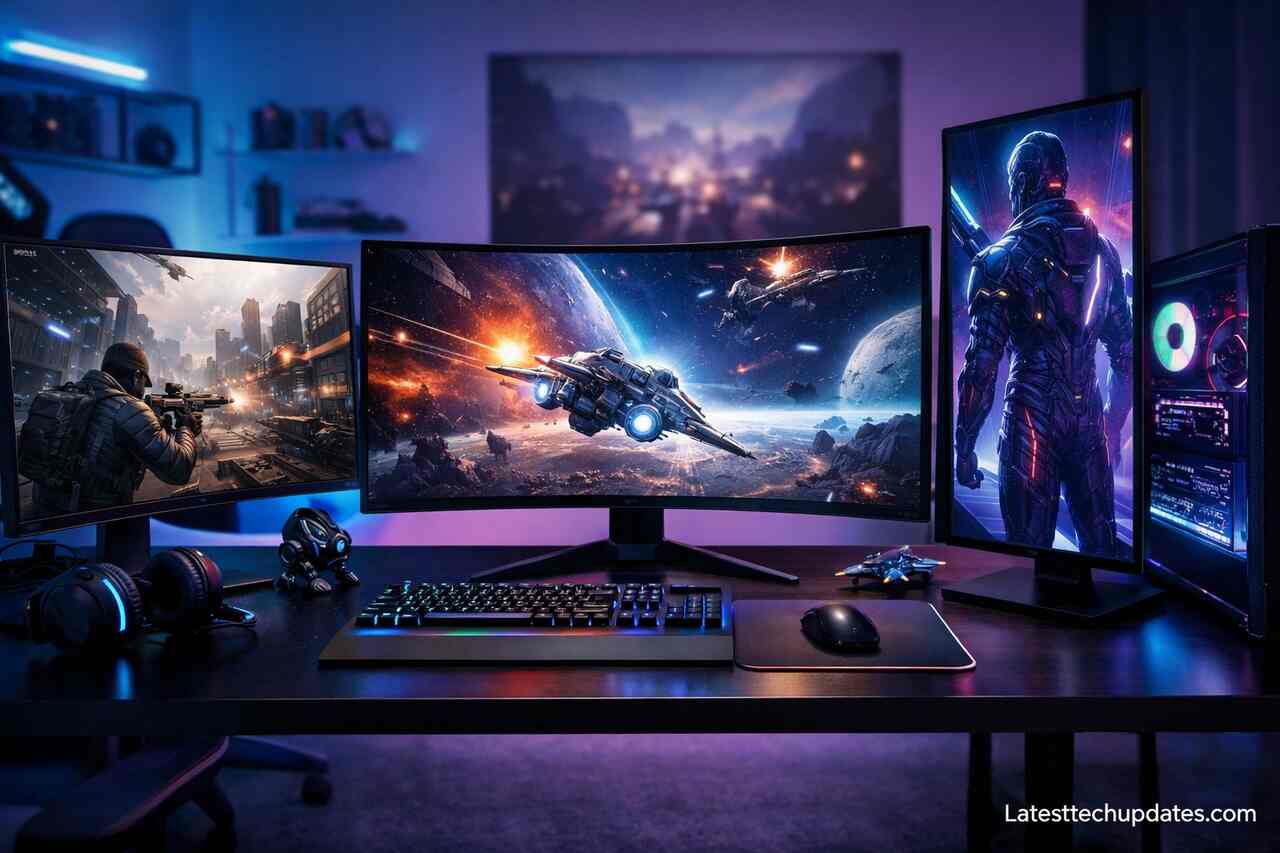
- Curved monitor innovation, especially 1000R curvature design, enhances immersive gameplay experiences, creating a differentiated value proposition compared to flat-panel competitors.
- Strong competition from LG Electronics and ASUS accelerates innovation cycles, pushing Samsung to continuously refine performance, design, and pricing strategies.
- Global gaming industry expansion, including esports, PC gaming, and console advancements, increases demand for high-performance monitors, directly benefiting Samsung’s product ecosystem.
- Integration of next-generation features such as HDMI 2.1, adaptive sync, and ultra-high resolution ensures compatibility with evolving GPUs and gaming consoles.
- Content creators and streamers contribute to demand growth, where color accuracy, ultrawide displays, and multitasking capabilities become essential attributes.
- Future-focused strategy includes AI-powered display optimization, cloud gaming compatibility, and sustainability initiatives, reinforcing long-term market leadership.
Why Does Samsung Electronics Continue to Dominate the Global Gaming Monitor Market?
Samsung Electronics sustains market leadership through a combination of advanced display technologies, aggressive innovation cycles, strong brand equity, and strategic alignment with gaming industry trends. Market leadership reflects not only shipment volume but also influence over premium segments such as curved monitors, OLED panels, and high-refresh-rate displays.
How Does Display Technology Innovation Strengthen Samsung’s Position?
Samsung integrates cutting-edge panel technologies such as QD-OLED, Mini-LED, and VA panels to deliver superior contrast ratios, color accuracy, and response times. QD-OLED panels combine quantum dot enhancement with OLED self-emissive pixels, improving brightness and lifespan. Mini-LED backlighting enhances local dimming precision, creating deeper blacks and brighter highlights. Technology leadership allows Samsung to differentiate products across both premium and mid-tier segments, reinforcing dominance.
How Does High Refresh Rate Adoption Impact Market Share?
High refresh rate monitors, ranging from 144Hz to 360Hz, align directly with competitive gaming requirements. Samsung develops panels optimized for ultra-fast response times, reducing motion blur and input lag. Reduced latency improves gameplay precision, especially in esports environments. Alignment with gamer performance expectations strengthens demand and increases brand loyalty among professional and casual gamers alike.
How Does Curved Monitor Leadership Contribute to Dominance?
Curved monitor design represents a core differentiator for Samsung. Deep curvature ratios such as 1000R mimic human eye curvature, enhancing immersion and reducing eye strain. Immersive viewing improves user engagement across gaming genres including racing, simulation, and open-world environments. Design innovation transforms user experience into a competitive advantage, allowing Samsung to capture a unique niche within the broader monitor market.
How Does Global Distribution Strengthen Samsung’s Leadership?
Samsung maintains an extensive global supply chain spanning North America, Europe, and Asia-Pacific regions. Strong retail partnerships and e-commerce presence ensure product availability across multiple price tiers. Distribution efficiency enables rapid market penetration for new models. Broad accessibility increases market share while reinforcing brand visibility across both developed and emerging markets.
What Role Do Competitors Like Lg Electronics and Asus Play in Shaping the Market?
Competitors influence innovation pace, pricing strategies, and feature standardization within the gaming monitor industry. Competitive pressure drives continuous improvement, forcing Samsung to maintain technological and strategic superiority.
How Does Lg Electronics Compete in Oled Gaming Monitors?
LG Electronics focuses heavily on OLED panel production, supplying both its own monitors and panels to other brands. OLED technology delivers true blacks and near-instant response times. LG’s expertise in panel manufacturing creates competition in premium segments. Competition pushes Samsung to refine QD-OLED technology, improving brightness and durability metrics.
How Does Asus Differentiate Through Gaming-focused Branding?
ASUS leverages its Republic of Gamers (ROG) brand to target hardcore gamers. Gaming-centric features such as adaptive sync, customizable lighting, and AI enhancements attract performance enthusiasts. ASUS positions itself as a performance-first brand, creating pressure on Samsung to balance performance with design and accessibility.
How Do Pricing Strategies Affect Competitive Dynamics?
Competitors often adopt aggressive pricing to capture market share in mid-range segments. Lower pricing increases accessibility for entry-level gamers. Samsung responds by offering diverse product lines, ensuring coverage across premium, mid-range, and budget categories. Pricing flexibility enables Samsung to defend market leadership while expanding its customer base.
How Does Innovation Rivalry Accelerate Technological Evolution?
Continuous competition between Samsung, LG, and ASUS accelerates advancements in refresh rates, resolution, and panel efficiency. Innovation cycles shorten as companies race to introduce new features. Faster evolution benefits consumers while reinforcing Samsung’s need to remain at the forefront of research and development.
How Does the Global Gaming Industry Growth Influence Samsung’s Market Leadership?
The expansion of the gaming ecosystem directly increases demand for high-performance monitors. Growth in esports, console gaming, and PC gaming creates a larger consumer base seeking advanced display solutions.
How Does Esports Expansion Drive Monitor Demand?
Esports tournaments require high-refresh-rate, low-latency displays to ensure competitive fairness. Professional players demand precision and responsiveness. Samsung’s gaming monitors meet these requirements, making them suitable for esports environments. Increased esports viewership also influences consumer purchasing decisions, boosting demand.
How Does Pc Gaming Growth Support Market Expansion?
PC gaming continues to grow due to customizable hardware and superior graphics capabilities. High-performance GPUs require equally advanced monitors to deliver full visual potential. Samsung designs monitors with high resolution and adaptive sync technologies, ensuring compatibility with modern GPUs. Alignment with PC gaming trends strengthens market relevance.
How Does Console Evolution Impact Monitor Innovation?
Next-generation consoles support higher resolutions and refresh rates, increasing demand for compatible monitors. Features such as HDMI 2.1, 4K resolution, and variable refresh rate become essential. Samsung integrates these features into its product lineup, ensuring compatibility with evolving console ecosystems.
How Does Content Creation Influence Monitor Demand?
Gaming-related content creation, including streaming and video production, requires accurate color reproduction and large screen real estate. Samsung monitors provide high color gamut coverage and ultrawide formats. Content creators benefit from enhanced productivity and visual fidelity, expanding the user base beyond gamers.
What Future Trends Will Define Samsung’s Continued Leadership?
Future leadership depends on technological adaptation, sustainability initiatives, and integration with emerging digital ecosystems such as AI and cloud gaming.
How Will Ai Integration Enhance Gaming Monitors?
AI-driven features optimize brightness, contrast, and color settings in real time based on content. Intelligent upscaling improves lower-resolution visuals. Samsung invests in AI-powered display processing to enhance user experience. Smart optimization creates differentiation in an increasingly competitive market.
How Will Cloud Gaming Impact Monitor Design?
Cloud gaming reduces reliance on local hardware, shifting focus toward display quality and network responsiveness. Monitors must support low latency and adaptive streaming. Samsung aligns product development with cloud gaming trends, ensuring compatibility with platforms like game streaming services.
How Will Sustainability Influence Product Development?
Environmental considerations drive energy-efficient designs and recyclable materials. Samsung adopts eco-friendly manufacturing processes and energy-saving technologies. Sustainability initiatives improve brand perception while meeting regulatory requirements in global markets.
How Will Immersive Technologies Redefine Gaming Displays?
Technologies such as ultra-wide screens, higher resolutions (5K, 8K), and VR integration expand immersion. Samsung continues to explore new form factors and display capabilities. Immersion remains a key driver of consumer preference, reinforcing Samsung’s strategic focus on experiential innovation.
Conclusion
Samsung Electronics maintains global leadership in gaming monitors by combining technological innovation, strategic competition management, and alignment with gaming industry growth. Market dominance reflects not only product quality but also the ability to anticipate and shape user expectations. Continuous evolution across display technology, AI integration, and immersive design ensures sustained leadership in the global gaming monitor ecosystem.
