

Highlights
- Ready-to-use ChatGPT prompt templates provide structured communication that improves response accuracy and reduces ambiguity in AI interactions.
- Structured prompts increase productivity by eliminating repetitive instructions and enabling faster execution of tasks.
- Clear role, task, constraints, and output format create predictable and high-quality results.
- Different template types support writing, business, research, and technical workflows efficiently.
- Consistent use of templates builds confidence and reduces the need for constant prompt adjustments.
- Customizing templates enhances flexibility and aligns outputs with specific goals and contexts.
- Future AI workflows will rely heavily on prompt templates for automation and personalization.
- Ready-to-use ChatGPT prompt templates act as a practical bridge between human intent and AI-generated output, allowing users to communicate ideas with precision and clarity.
These templates remove uncertainty from prompt creation by offering predefined structures that guide responses toward specific goals such as writing, problem-solving, or analysis. Modern workflows increasingly depend on AI assistance, and structured prompting ensures consistent, high-quality results across different tasks. When I started using these templates regularly, I noticed a clear shift in productivity because each prompt became purposeful, targeted, and aligned with the desired outcome rather than experimental or vague.
Why Are Ready-to-Use ChatGPT Prompt Templates Important?
Ready-to-use prompt templates improve communication between humans and AI by removing guesswork from input formulation. Structured prompts guide the AI toward the intended output format, tone, and depth. Consistent structure increases output accuracy and reduces the need for repeated corrections.
Prompt templates also enhance productivity by saving time. Instead of writing new instructions for every task, users reuse proven formats. Reusability creates efficiency, especially for repetitive tasks like content writing, coding, or customer support responses.
From my experience, using templates completely changed how I interact with AI. I noticed fewer vague answers and more actionable outputs. When I started using structured prompts, I spent less time editing and more time executing ideas.
What Problems Do Templates Solve?
Prompt templates solve issues like unclear instructions, inconsistent outputs, and wasted time. Clear input leads to predictable results, which improves workflow efficiency and reduces frustration.
How Do Templates Improve AI Accuracy?
Templates improve accuracy by defining role, context, constraints, and expected output. Defined structure reduces ambiguity and helps AI align with user intent more effectively.
How Do Ready-to-Use ChatGPT Prompt Templates Work?
Prompt templates function by providing a predefined framework that includes role assignment, task definition, constraints, and expected output format. This framework ensures the AI understands both the purpose and boundaries of the task.
Each template typically follows a logical sequence. First, the role defines perspective. Second, the task explains the objective. Third, constraints limit or guide the output. Fourth, formatting instructions shape the final response.
When I personally started using structured prompts, I realized that even small changes in wording could dramatically change the output. Templates eliminate that trial-and-error phase and replace it with predictable success.
What Is the Basic Structure of a Prompt Template?
A basic structure includes role, task, context, constraints, and output format. This structure ensures clarity and consistency in communication with AI systems.
Why Does Structure Matter in Prompts?
Structure matters because AI relies on patterns. Well-structured prompts align with those patterns, leading to more accurate and useful responses.
What Are the Best Types of Ready-to-Use ChatGPT Prompt Templates?
Different use cases require different prompt formats. Some templates focus on creativity, while others emphasize precision or analysis. Choosing the right type directly affects output quality.
Common categories include writing templates, business templates, coding templates, and research templates. Each category serves a specific purpose and optimizes results accordingly.
From my own workflow, I found that categorizing templates made everything faster. Instead of thinking about how to ask, I just pick a template and start working.
Writing Templates
Writing templates help generate blogs, articles, emails, and social media content. These templates define tone, audience, and structure for consistent output.
Business Templates
Business templates assist with reports, strategies, and communication. These templates ensure clarity, professionalism, and actionable insights.
How Can You Use Prompt Templates for Content Creation?
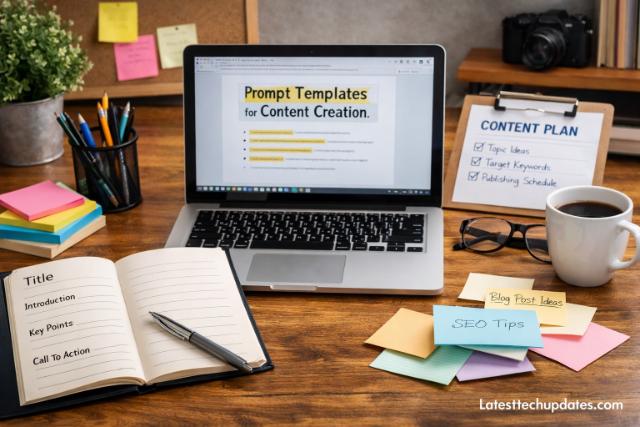
Content creation becomes significantly easier with structured prompts. Templates guide the AI to produce coherent, engaging, and SEO-friendly content without repeated instructions.
A well-designed content template includes target audience, tone, keywords, and structure. This ensures the output aligns with both user intent and search engine requirements.
I personally rely on content templates daily. Without them, I would spend more time refining prompts than actually creating content. Templates allow me to focus on ideas rather than instructions.
Blog Writing Template
A blog template includes introduction, headings, detailed explanations, and conclusion. Structured flow improves readability and engagement.
Social Media Template
A social media template focuses on brevity, tone, and engagement triggers. These templates help create compelling and shareable posts.
What Are the Benefits of Using Ready-to-Use Prompt Templates?
Prompt templates offer multiple advantages, including efficiency, consistency, and scalability. Structured inputs reduce errors and improve overall output quality.
Another major benefit includes learning acceleration. Templates help users understand how effective prompts are constructed, improving long-term skills.
From my experience, the biggest benefit was confidence. I stopped second-guessing my prompts because I knew the structure worked every time.
Time Efficiency
Templates save time by eliminating repetitive prompt writing. Faster input leads to quicker results and improved productivity.
Consistency in Output
Templates ensure consistent tone, format, and quality across multiple outputs. Consistency is essential for professional and scalable work.
What Are the Limitations of ChatGPT Prompt Templates?
Despite their benefits, prompt templates have limitations. Over-reliance on templates can reduce creativity and flexibility. Templates may also require adjustments for complex or unique tasks.
Another limitation involves context sensitivity. Templates work best when adapted to specific scenarios rather than used blindly.
I learned this the hard way. At first, I used templates exactly as they were, but results improved significantly when I started customizing them based on the situation.
Lack of Flexibility
Rigid templates may not adapt well to unique or complex tasks. Customization becomes necessary for optimal results.
Context Dependency
Templates require proper context to function effectively. Missing details can lead to incomplete or inaccurate outputs.
How Can You Create Your Own ChatGPT Prompt Templates?
Creating custom prompt templates involves understanding task requirements and structuring inputs accordingly. Start with defining the role, then add task details, constraints, and output format.
Testing and refining templates improves effectiveness. Iteration helps identify what works best for specific use cases.
From my experience, building my own templates gave me full control. Instead of relying on generic formats, I created prompts tailored to my workflow, which made everything faster and more precise.
Step-by-Step Creation Process
Define role, specify task, add constraints, and set output format. Testing ensures the template produces consistent results.
Optimization Tips
Use clear language, avoid ambiguity, and include examples when necessary. Refinement improves accuracy and usability.
What Is the Future of Ready-to-Use ChatGPT Prompt Templates?
The future of prompt templates involves automation, personalization, and integration with AI workflows. Advanced systems may generate templates automatically based on user intent.
Integration with tools and platforms will make templates more accessible and dynamic. Personalized templates will adapt to user behavior and preferences.
Based on what I have seen, prompt templates are becoming a core skill. Learning how to use and create them effectively will be essential for anyone working with AI in the future.
Role in AI Automation
Templates will power automated workflows, reducing manual input and increasing efficiency across industries.
Evolution with AI Advancements
As AI improves, templates will become more adaptive, intelligent, and context-aware, enhancing overall performance.
Comparison of Prompt Types
| Prompt Type | Purpose | Key Benefit | Best Use Case |
| Writing Template | Content creation | Structured output | Blogs, articles |
| Business Template | Professional tasks | Clarity and precision | Reports, emails |
| Coding Template | Programming assistance | Accuracy and logic | Code generation |
| Research Template | Data analysis | Depth and detail | Reports, summaries |
Key Elements of Effective Prompt Templates
| Element | Description | Importance |
| Role | Defines AI perspective | Improves relevance |
| Task | Explains objective | Ensures clarity |
| Constraints | Sets boundaries | Controls output quality |
| Format | Shapes final response | Enhances usability |
Conclusion
Ready-to-use ChatGPT prompt templates transform the way users interact with AI by providing structure, clarity, and efficiency. Structured prompts reduce ambiguity, improve output quality, and save valuable time. Practical experience shows that templates not only enhance productivity but also build confidence in AI usage. Continuous refinement and customization allow users to unlock the full potential of AI systems. Future advancements will further integrate templates into everyday workflows, making them an essential skill for modern digital tasks.
FAQ’s
What is a ChatGPT prompt template?
A ChatGPT prompt template is a structured input format designed to guide AI in generating accurate and relevant responses.
Are prompt templates suitable for beginners?
Prompt templates are highly suitable for beginners because structured formats simplify interaction and improve results.
Can prompt templates be customized?
Prompt templates can be customized based on specific needs, making them flexible and adaptable for different tasks.
Do prompt templates guarantee perfect results?
Prompt templates improve accuracy but do not guarantee perfection. Refinement and context adjustment are still necessary.
How many templates should I use?
The number of templates depends on your workflow. Creating separate templates for different tasks improves efficiency and organization.
