
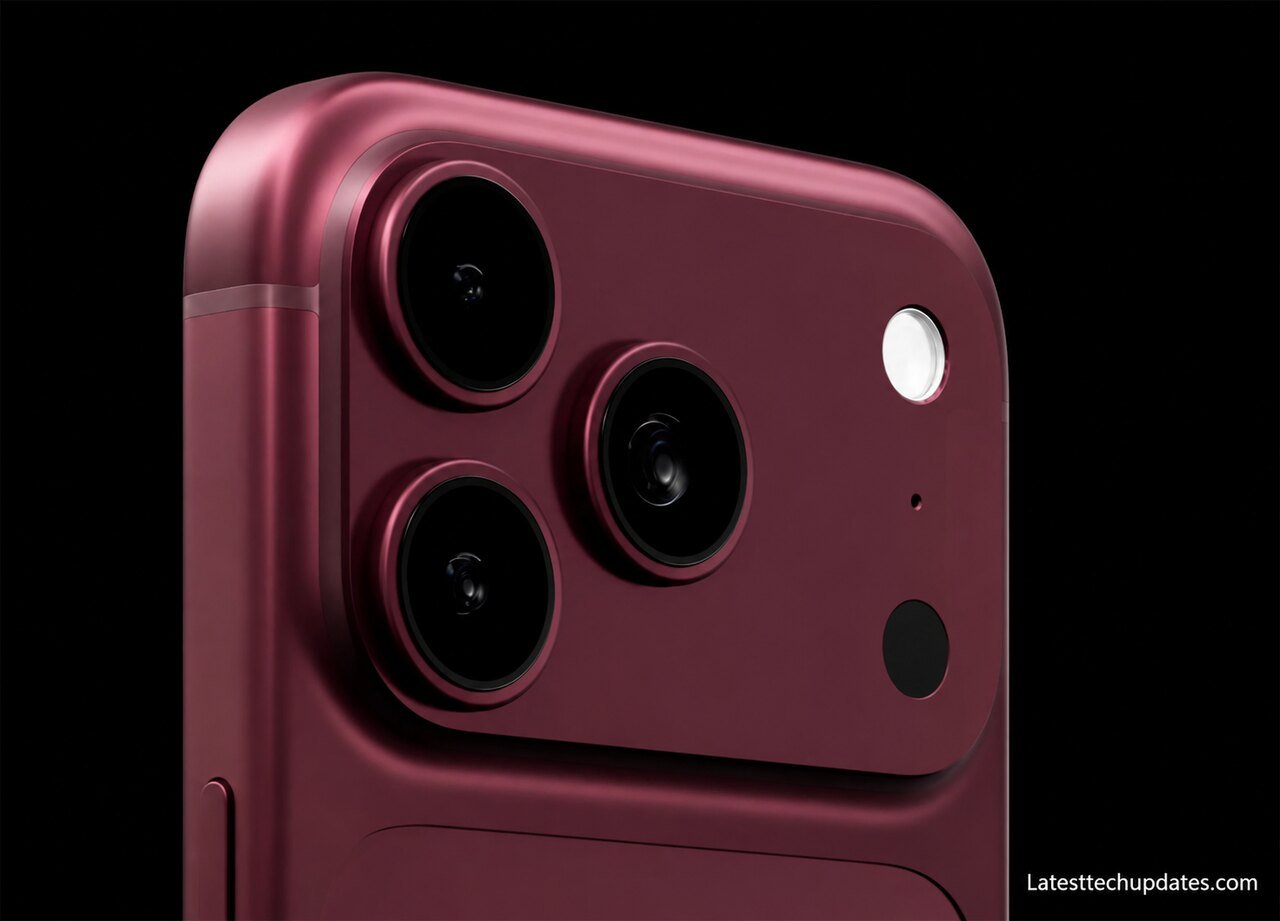
The iPhone 18 Pro Max gives you 4x true telephoto framing, 8x optical-quality telephoto zoom, and digital zoom up to 40x for photos. Its telephoto camera uses a 48MP sensor with a 100mm-equivalent 4x view, while the 8x option produces a 12MP 200mm-equivalent image using the center portion of that high-resolution telephoto sensor. For video, digital zoom is limited to 24x.
That distinction matters because 4x, 8x, and 40x do not produce the same kind of image quality. The 4x setting uses the dedicated telephoto camera directly. The 8x setting is what Apple calls “optical-quality” zoom rather than a separate 8x optical lens. Beyond that, progressively stronger digital enlargement becomes more dependent on cropping and computational processing.
iPhone 18 Pro Max zoom specifications
Apple uses three 48MP rear cameras on the iPhone 18 Pro Max: a Main camera, an Ultra Wide camera, and a Fusion Telephoto camera. The zoom system combines those physical cameras with high-resolution sensor cropping and digital processing.
| Camera setting | Equivalent focal length | How it works | Resolution / practical role |
| 0.5x | 13mm | Dedicated Ultra Wide camera | 48MP, very wide scenes |
| 1x | 24mm | Dedicated Main camera | 24MP or 48MP |
| 2x | 48mm | Optical-quality crop from Main camera | 12MP, useful for portraits and closer framing |
| 4x | 100mm | Dedicated Fusion Telephoto camera | Up to 48MP, native long-range camera |
| 8x | 200mm | Optical-quality crop from the 48MP Telephoto sensor | 12MP, substantially longer reach |
| Above 8x | Up to 40x | Digital zoom | Increasing image-quality loss as magnification rises |
Apple describes the overall system as offering 8x optical-quality zoom in, 2x optical zoom out, and a 16x optical-quality zoom range.
The wording can be confusing, so it is worth separating those numbers.
What telephoto camera does the iPhone 18 Pro Max have?
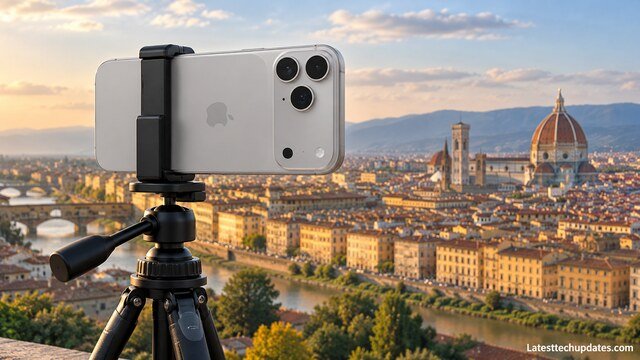
The dedicated 48MP Fusion Telephoto camera is a 100mm-equivalent 4x camera with an ƒ/2.8 aperture. It uses a tetraprism optical design along with 3D sensor-shift optical image stabilization and autofocus. Apple supports 24MP and 48MP super-high-resolution photography at the native telephoto setting.
The 100mm-equivalent focal length is important in practical photography. It gives a much narrower field of view than the 24mm Main camera, so you can photograph a person, building detail, stage performance, landscape feature, or distant object without physically moving as close.
A longer lens also changes perspective when you move farther from the subject. For portraits, this can create a more compressed-looking background and avoid the exaggerated facial perspective that can occur when taking a close portrait with a wide-angle camera.
The telephoto camera has an ƒ/2.8 aperture. By comparison, the Main camera can open as wide as ƒ/1.48. That means the Main camera has a significant light-gathering advantage in dark conditions. The telephoto system’s optical stabilization can help control camera movement, but very low light remains more demanding for a long focal length.
Is 4x zoom real optical zoom?
Yes. 4x is the native telephoto camera setting.
The iPhone 18 Pro Max’s Fusion Telephoto camera has a 100mm-equivalent focal length, which Apple labels as 4x compared with the 24mm-equivalent 1x Main camera.
For users who care about maximum telephoto image information, 4x is therefore an important setting. You are using the dedicated 48MP telephoto sensor at its native field of view rather than relying on the stronger digital enlargement used at zoom levels beyond the optical-quality range.
This makes 4x particularly relevant for portraits, pets, architectural details, outdoor sports from moderate distances, concerts where phone photography is permitted, and landscape details.
Is 8x on the iPhone 18 Pro Max optical zoom?
This is where Apple’s terminology needs explanation.
Apple calls 8x “optical-quality” zoom, not simply a separate native 8x optical lens. At 8x, the camera produces a 12MP image with a 200mm-equivalent field of view. Apple lists that capability alongside the 48MP 100mm Fusion Telephoto camera.
Independent technical descriptions indicate that the 8x mode uses a crop from the 48MP telephoto sensor, similar to the way the 2x setting uses part of the 48MP Main sensor. The resulting 8x image is 12MP rather than a 48MP native 200mm capture.
In simple terms, the physical telephoto lens provides the 4x view. Because the sensor behind that lens contains 48 megapixels, the iPhone can use the center area of the sensor to create a narrower 8x composition while retaining enough pixels for a 12MP photo.
That is much more useful than taking a small low-resolution image and merely stretching it afterward, but it is still important not to interpret “8x optical-quality” as meaning that the phone contains a separate physical 200mm lens.
4x versus 8x
At 4x, you get the telephoto camera’s native 100mm framing and potentially higher-resolution output.
At 8x, you get much tighter 200mm-equivalent framing without entering Apple’s ordinary digital-zoom range, but the output is 12MP.
For distant subjects in good lighting, 8x can therefore be a very practical choice when getting physically closer is impossible. If you expect to crop extensively afterward, however, the extra resolution available from a less aggressive camera setting may sometimes be useful.
What does Apple’s 16x optical-quality zoom range mean?
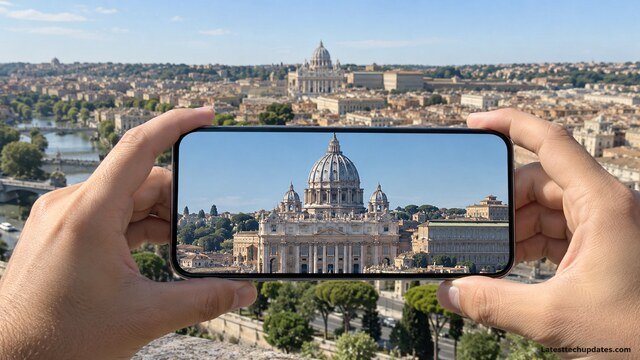
It does not mean the iPhone 18 Pro Max contains a 16x optical telephoto lens.
Apple calculates the range from the widest 0.5x Ultra Wide view to the longest 8x optical-quality view. Since 8 divided by 0.5 equals 16, Apple describes this as a 16x optical-quality zoom range.
This terminology describes the difference between the widest and tightest supported optical or optical-quality fields of view.
So the practical camera progression is:
0.5x Ultra Wide → 1x Main → 2x optical-quality → 4x Telephoto → 8x optical-quality → digital zoom beyond 8x
That is more useful than thinking of the phone as having a continuously variable 16x optical zoom lens. Smartphone cameras normally switch between separate sensors and then use cropping and computational imaging to cover the gaps between them.
How good is the 40x digital zoom?
The iPhone 18 Pro Max can reach 40x digital zoom for still photos. Apple limits digital zoom to 24x for video.
Digital zoom is fundamentally different from optical zoom. Instead of obtaining additional magnification from the physical optics, the phone enlarges a progressively smaller portion of the image and applies computational processing.
That means 40x gives you much more reach, but it does not give you the same image information that a physical 40x optical lens would capture.
As magnification rises beyond 8x, several limitations become more noticeable. Fine textures have fewer original pixels available, small hand movements become more visible, atmospheric haze between the phone and a distant subject matters more, and image processing has to do more work to produce a usable result.
This does not make digital zoom useless. Strong digital zoom can be valuable when your priority is seeing or recording something distant rather than producing the highest-quality photograph. Reading a distant sign, checking a landmark, documenting an inaccessible object, or quickly framing something far away are reasonable examples.
For an important photo that you intend to print, crop heavily, or edit, staying closer to the native and optical-quality camera settings generally gives the camera more original image information to work with.
2x zoom also deserves attention
Although the telephoto discussion usually focuses on 4x and 8x, the iPhone 18 Pro Max also has a useful 2x optical-quality option.
The 2x view corresponds to approximately 48mm and produces a 12MP image using the high-resolution Main camera.
A roughly 48mm-equivalent field of view is useful because it sits between the normal 1x camera and the much tighter 4x telephoto. It works well for everyday portraits, food, products, pets, street photography, and situations where 1x feels too wide but 4x is too restrictive.
Because it comes from the Main camera, it also benefits from that camera’s substantially wider aperture. The iPhone 18 Pro Max Main camera has selectable ƒ/1.48, ƒ/1.8, ƒ/2.8, and ƒ/4 aperture settings.
Which iPhone 18 Pro Max zoom setting should you use?
For everyday photography, the most useful approach is not to chase the highest zoom number.
Use 1x when you want the Main camera’s strong general-purpose image quality and light gathering. Use 2x when you want natural-looking tighter framing without moving all the way to the dedicated telephoto camera. Use 4x when you want the native telephoto perspective and greater subject isolation from a distance. Use 8x when the subject is genuinely far away and the extra reach is more valuable than retaining the telephoto sensor’s full native field of view.
Zoom beyond 8x is best treated as digital reach. It can solve a real problem, but the 40x figure should not be interpreted as the phone having anything close to a physical 40x camera lens.
Does the iPhone 18 Pro Max have better zoom than the iPhone 17 Pro Max?
In terms of the headline rear zoom specifications, the two generations are remarkably similar.
Apple’s iPhone 17 Pro Max also used a 48MP 100mm-equivalent 4x Fusion Telephoto camera, supported a 12MP 8x optical-quality 200mm view, offered a 16x optical-quality zoom range, and reached 40x digital zoom for photos.
That means buyers moving from an iPhone 17 Pro Max should not expect a major increase in maximum telephoto magnification simply because the phone is a generation newer. The iPhone 18 Pro generation brings other camera changes, particularly the new variable-aperture Main camera and additional Pro controls, but the published telephoto focal lengths and maximum photo zoom remain similar.
For someone upgrading from an older iPhone with a shorter telephoto camera or lower maximum zoom, the difference may be much more significant.
iPhone 18 Pro Max zoom for video
Zoom behaves differently in video.
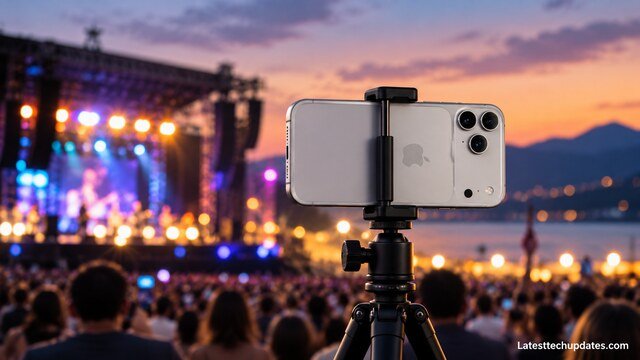
Apple specifies digital zoom up to 24x during video recording, compared with 40x for still photos. The Fusion Telephoto camera retains its 3D sensor-shift optical stabilization and autofocus for video, which are especially valuable at longer focal lengths because small movements become more obvious as magnification increases.
For video, aggressive zoom is also harder to hide because every small movement occurs continuously rather than in a single still frame. Keeping the phone steady, supporting it against a solid object, or using a suitable tripod can make long-range footage easier to watch.
Does more zoom always mean a better camera?
No. Maximum magnification is only one part of camera performance.
For telephoto photography, sensor resolution, physical focal length, lens aperture, optical stabilization, autofocus, available light, processing, subject movement, and how steadily the phone is held all affect the final result.
The iPhone 18 Pro Max’s 48MP telephoto sensor is useful because it supports both a native 4x view and an 8x optical-quality crop. Its stabilization system is also particularly relevant at long focal lengths. But a 40x digitally enlarged image should still be judged differently from a photograph produced directly by the 4x telephoto camera.
FAQ’s
What is the maximum zoom on the iPhone 18 Pro Max?
For photos, the maximum is 40x digital zoom. For video recording, Apple specifies digital zoom up to 24x.
Does the iPhone 18 Pro Max have an 8x telephoto lens?
Not as a separate native 8x lens. It has a 48MP 4x Fusion Telephoto camera at 100mm equivalent, which also enables a 12MP 8x optical-quality 200mm-equivalent view.
Is 8x better than 4x?
It gives you more reach, but not necessarily more image information. The native 4x setting uses the full telephoto field of view, while 8x provides a 12MP optical-quality crop from the high-resolution telephoto sensor.
What does 16x optical-quality zoom range mean?
It describes the range from 0.5x Ultra Wide to 8x optical-quality telephoto. It does not mean the phone contains a 16x optical zoom lens.
Is 40x optical zoom?
No. The 40x setting is digital zoom. Apple’s optical-quality range ends at 8x for zooming in.
Final assessment
The iPhone 18 Pro Max zoom system is best understood as several different levels of camera technology working together. Its 4x, 100mm-equivalent Fusion Telephoto camera is the native long-range camera. The 8x, 200mm-equivalent option uses the 48MP telephoto sensor to create a 12MP optical-quality image, providing substantially more reach without immediately dropping into ordinary digital zoom. Beyond 8x, the phone continues digitally up to 40x for photos.
For photography where detail matters, 1x, 2x, 4x, and 8x are the settings worth prioritizing. The 40x mode is valuable when reach itself matters most, but it should be treated as a convenience feature rather than the equivalent of a huge optical telephoto lens.
The distinction between optical, optical-quality, and digital zoom is the key to understanding what the iPhone 18 Pro Max camera can actually deliver.
Writing approach follows the supplied Technology Writing Framework.
Read Also: Expected Display Sizes for Apple’s Foldable iPhone Revealed
